
Last updated November 16, 2026
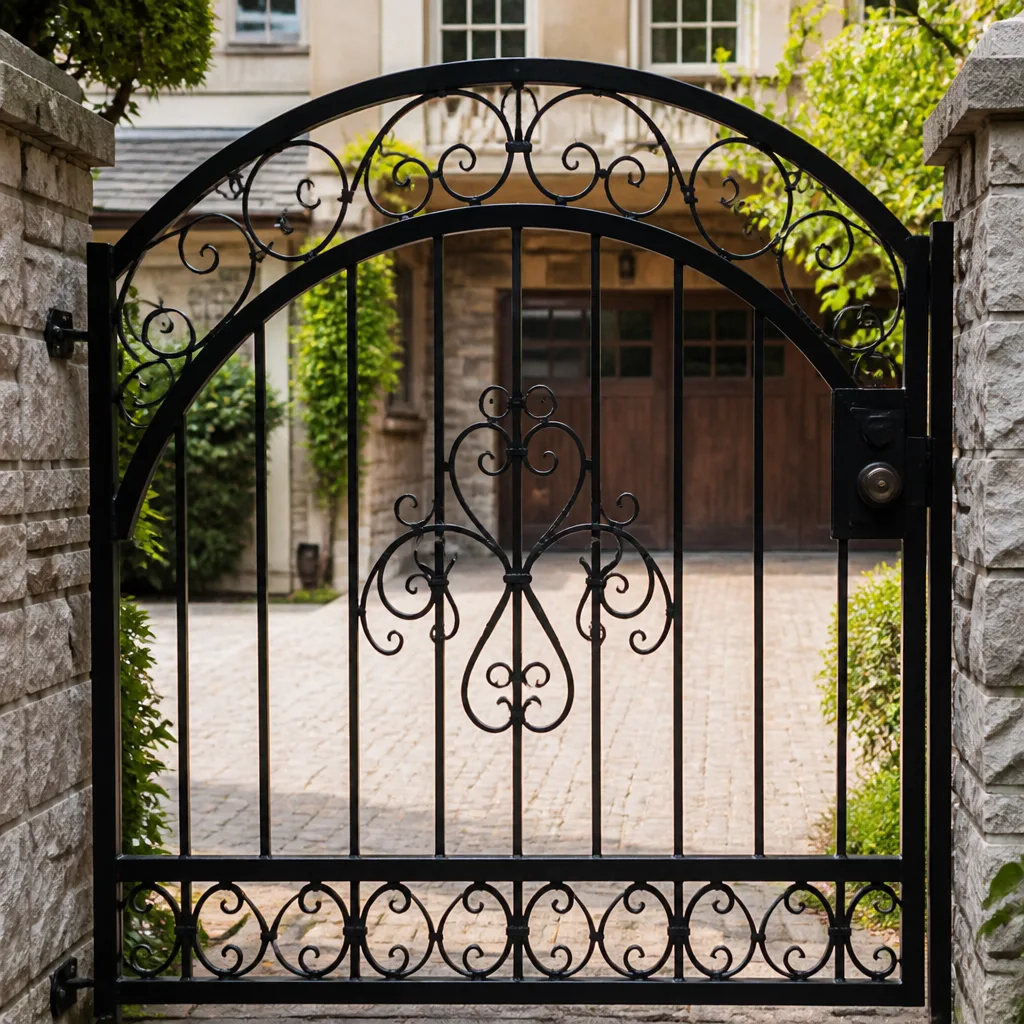 Wrought iron
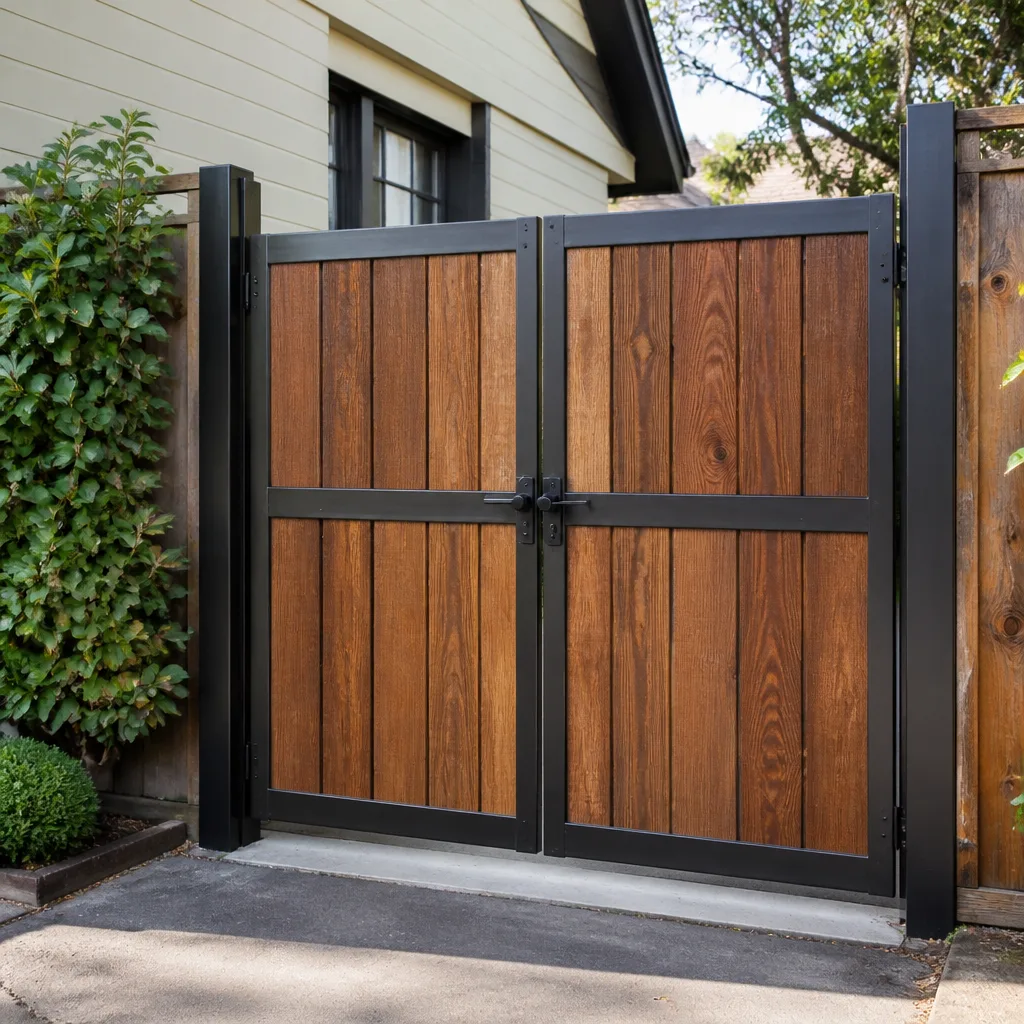 Wood & steel frame
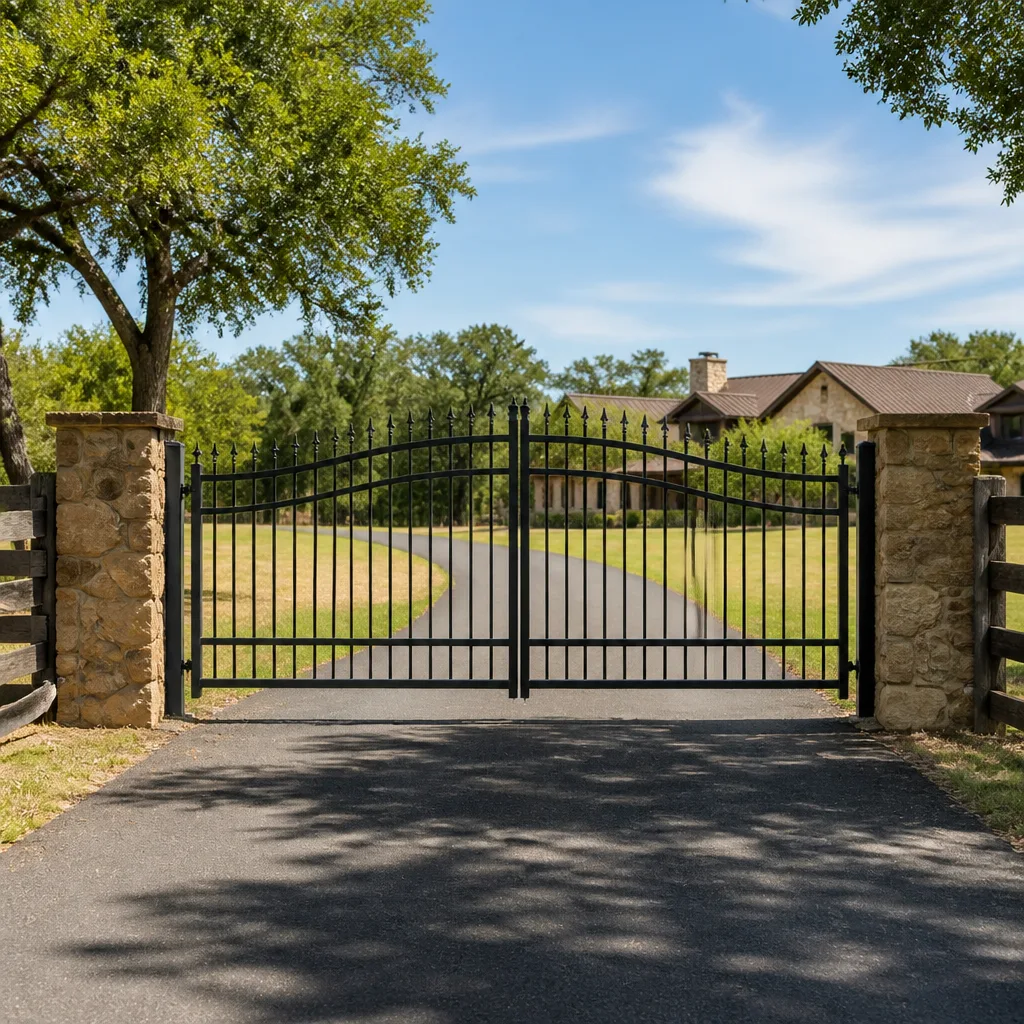 Farm & ranch
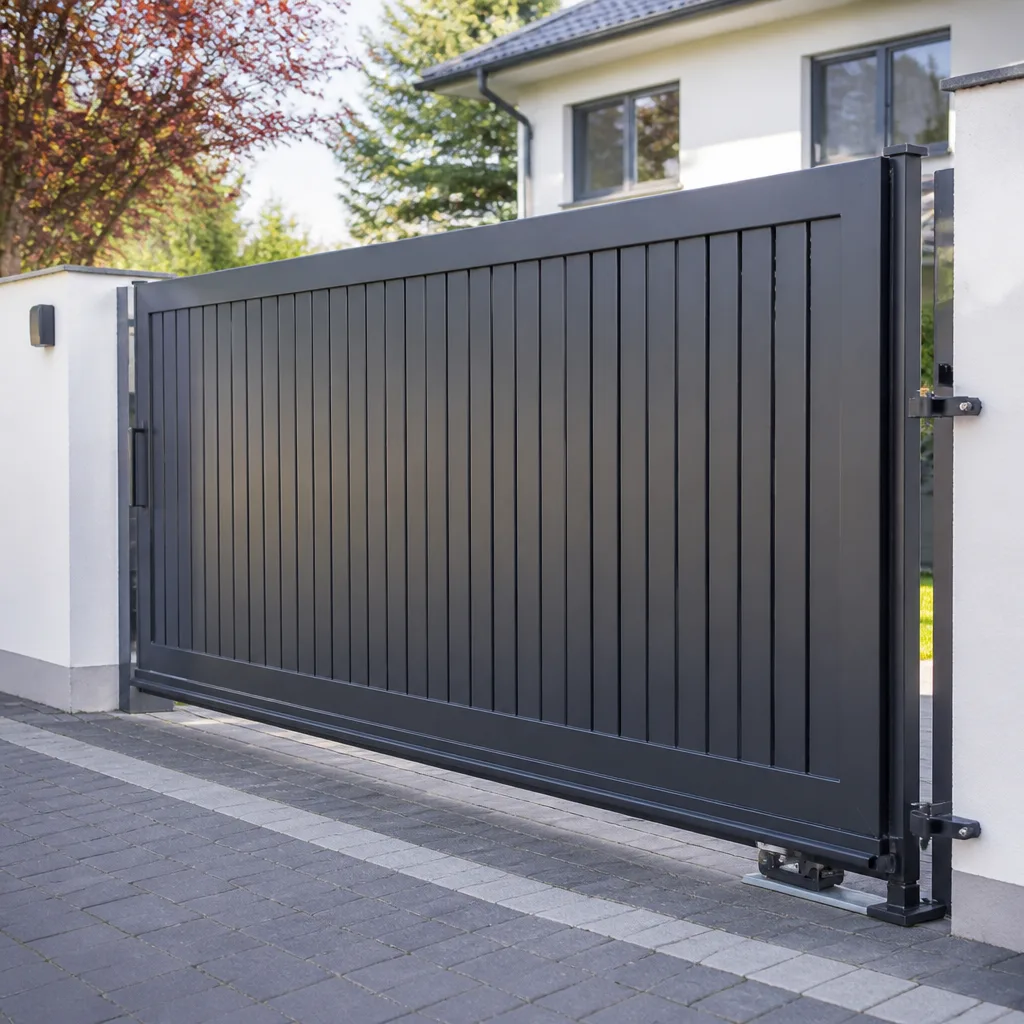 Sliding driveway gates
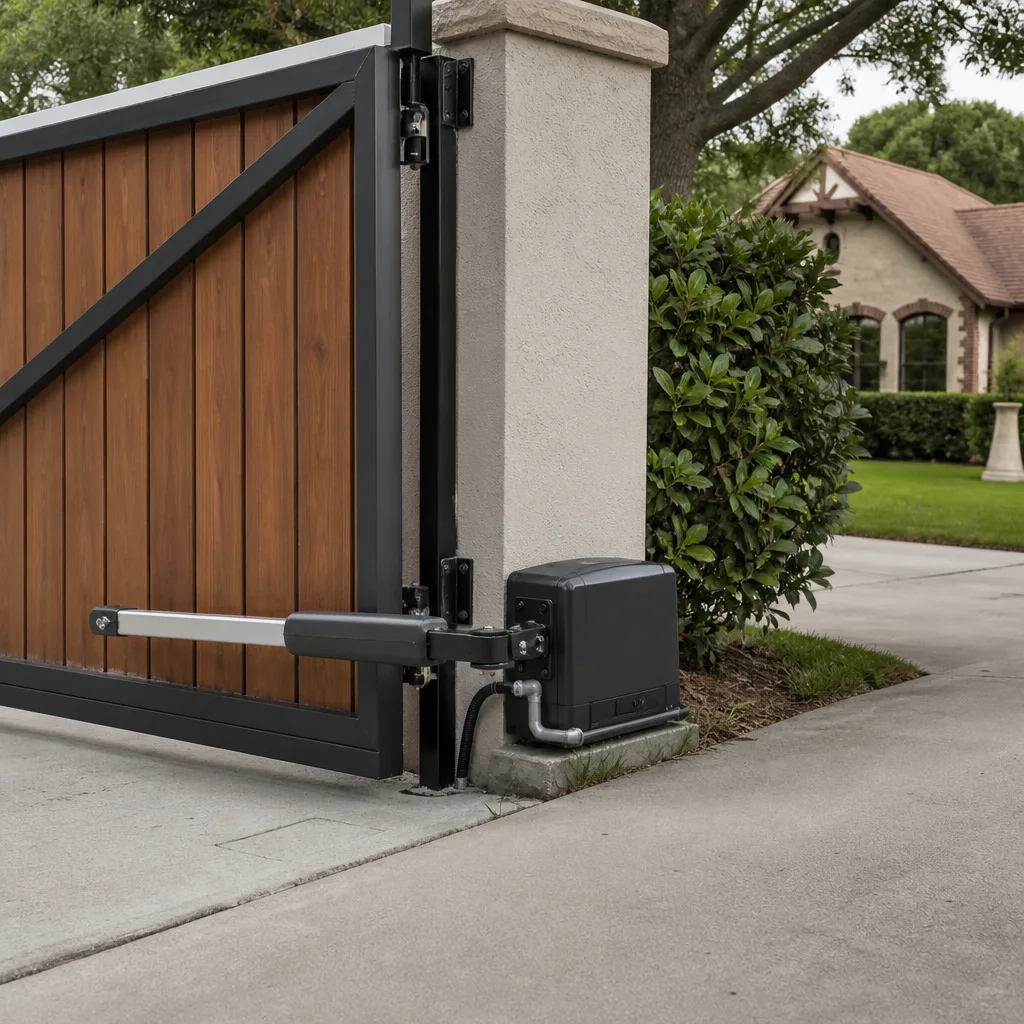 LiftMaster operators
Free on-site gate assessment - hinges, posts, and your LiftMaster or Nice gate operator checked before anything is quoted
The assessment is free and the quote is the invoice.
Get your free estimateThe Complete Guide to Gate Repair in Newark
A gate that stops working overnight almost never failed overnight. Long before it quit, there were warning signs: a stutter at the halfway point, a remote that needed two presses instead of one, a faint grinding note that wasn’t there last month. Most homeowners in Newark walk past all of them. That’s the first thing worth understanding about gate repair: failures are usually a chain, not an event. In this guide we’ll map each type of gate system to the failures it’s most prone to in Newark’s particular conditions, explain how to tell an operator problem from a control board problem from a sensor problem, and show you a practical way to decide whether your gate is worth repairing or replacing.
Quick Answer
Gate repair in Newark usually means diagnosing one of three things: the operator (the motor and arm or gear), the control board (the logic that tells the operator what to do), or the safety devices (photoelectric sensors, loop detectors, edge sensors) that stop the gate from closing on something. Most gate failures we see are traceable to one of those three, and the fix depends far more on which one it is than on the brand on the housing. A correct diagnosis on the first visit usually means a single repair rather than a cycle of return trips.
Styles & brands we work with
- Wrought iron
- Wood & steel frame
- Farm & ranch
- Sliding driveway gates
- LiftMaster operators
Table of Contents
- Why Newark Gates Fail Differently
- Slide, Swing, Overhead, and Barrier Arm: What Breaks First
- Operator, Control Board, or Sensor: Three Failures That Look the Same
- Repair or Replace? A Practical Decision Framework
- What a Legitimate Gate Repair Visit Should Include
- Electric and Automated Gate Repair: Where It Gets Technical
- The Brand on the Housing Matters Less Than You Think
- Preventing the Chain From Starting
Why Newark Gates Fail Differently
Newark sits in a climate that stresses gate hardware in ways that rural or mild-climate installations don’t experience. The biggest driver is freeze-thaw cycling. Water gets into a seam, a hinge pin, a track, a control enclosure, or the base plate of a post. Then it freezes, expands, and works the metal a little further apart each time. Over a winter, that repeated expansion and contraction loosens fasteners, cracks seals, and widens clearances that the operator was designed around.
Layer in urban humidity. Newark’s summers carry enough moisture that control board enclosures and terminal blocks are prone to condensation, especially when a gate sits in full sun during the day and cools at night. That moisture film accelerates corrosion on low-voltage terminals and sensor wiring connections, which is one reason sensor faults show up as intermittent rather than permanent.
Then there’s road salt drift. Even where a gate isn’t directly on a salted route, wind and vehicle traffic carry salt-laden dust into the mechanisms of gates near arterial roads. That dust bonds to grease on slide tracks, swing hinges, and operator arms, and becomes an abrasive paste. It wears pivots faster and it fouls the very surfaces that should stay smooth.
What this means practically is that the failure order in Newark gates is predictable. Slides and hinges and sensor brackets go first because they’re exposed to the most moisture and salt. Control boards go next because of condensation. Motors generally go last because they’re sealed and run cooler than people assume. When you understand that order, you stop chasing the wrong component. If you want to understand the broader scope of what we handle in the city, the Newark service overview lays it out.
Slide, Swing, Overhead, and Barrier Arm: What Breaks First
Every gate system has a designed weak point, and knowing yours helps you recognize the early warnings before the gate quits completely.
Slide gates
The slide gate’s failure hierarchy runs bottom-up: the track first, the rollers second, the operator last. Debris in the track is the single most common cause of a slide gate that stalls or reverses. In Newark, freeze-thaw widens cracks in the concrete footing under the track, which allows the track to shift and the rollers to ride unevenly. If you hear a rhythmic thump as the gate moves, the rollers have likely flat-spotted and the track has moved out of alignment. Left alone, this stresses the operator gear until it fails, which is why a track issue can become a motor replacement if ignored.
Swing gates
Swing gates live or die on their hinges and posts. Urban humidity and salt drift attack the hinge pins first; the swing arm or actuator is next; the control logic last. A swing gate that droops, scrapes the ground at the end of its arc, or fights the operator mid-swing is usually suffering from hinge wear or a post that has shifted. Heavy panels amplify the problem. When a swing gate panel comes loose from a tired hinge under load, that’s a genuine safety concern, not a convenience issue, and it should be addressed before the operator is run again.
Overhead and vertical-pivot gates
Overhead gates carry more moving parts than slides or swings, and the balance system is usually the first thing to fail. Springs, counterweights, or hydraulic assist components lose tension over time. A gate that seems sluggish or that the motor has to “push over the top” is out of balance. Running an unbalanced gate accelerates wear on the operator and can overload the control board’s current sensing, producing false obstruction stops.
Barrier arms
Barrier arms are the simplest system in the trade and the most abused. The arm itself usually goes first (impact, wind, or fatigue at the mounting bracket), then the drive mechanism, then the loop detector. Urban traffic and lot entrances are hard on barrier arms.
Whatever system you have, the practical repair decision often comes down to whether the gate is beyond economic repair. That’s exactly the sort of conversation covered in our guide to gate repair in general terms.
Operator, Control Board, or Sensor: Three Failures That Look the Same
This is where misdiagnosis costs double. Three different failures produce nearly identical symptoms – a gate that won’t open, won’t close, opens partway, or reverses without warning – and if you fix the wrong one you pay for a part you didn’t need and still haven’t solved the problem.
Here’s how the three fail differently in practice:
- Operator (motor/arm/gear) failure: the gate moves weakly, makes grinding or humming sounds, or doesn’t move at all while the control board shows power and the display or status LED reads normally. The board is telling the operator to move; the operator isn’t responding.
- Control board failure: the gate may move but behaves erratically – reversing randomly, ignoring commands, losing memory of travel limits, or failing to respond to any input including manual buttons on the board itself. Corrosion at the terminal blocks is a common catalyst in humid conditions.
- Safety device / sensor failure: the gate opens but refuses to close, or stops and reverses partway. This is the most commonly misdiagnosed category because a sensor fault looks like a closing command that was rejected. Photoelectric sensors, loop detectors, and edge sensors all produce this symptom when they fail or are misaligned.
A proper diagnosis starts with the symptoms, follows the wiring, and verifies each component with a meter before anything is replaced. Our electric gate repair work is built around that sequence precisely because the wrong part removes the wrong symptom. If a technician replaces a control board without first confirming the sensor wiring is sound, the new board may behave exactly like the old one, and you’ve paid twice for the same problem.
Repair or Replace? A Practical Decision Framework
The repair-versus-replace decision is not a gut call, and it should never be made on the first glance at the gate. Here’s the framework we use.
- Identify what actually failed. If you haven’t confirmed whether it’s the operator, the board, or a sensor, you don’t have enough information to make a repair-or-replace decision. Fix the diagnosis first.
- Check part availability for the brand you actually have. This is where brand skill pays off. A LiftMaster or Elite part is generally available, while certain older or discontinued models can be harder to source. If the failed part isn’t obtainable, replacement of the operator may be the only sensible path.
- Do the labor math. Consider the cost of the part plus the labor to install it against the cost of a new operator plus installation. The tipping point varies by gate type. For slide operators, repair usually wins when the track and rollers are sound. For swing arms with a failed motor and a rusty arm, replacement can be more economical.
- Assess the gate panel itself. If the gate structure – the posts, hinges, track, or panel – is failing, repairing only the operator puts a new motor on a compromised gate. The panel has to be evaluated as part of the decision.
- Consider the control board’s compatibility. On older systems, a new operator may need a new board and new safety devices to match. That’s a bigger scope than a simple repair, but it can be the right call when the existing electronics are at the end of their service life.
Our technicians have up to 10 years of experience making exactly these calls, and they know that a customer who replaces a gate because no one could source a part has been poorly served. That’s a big part of why we review the parts and the labor before we ever recommend replacement.
What a Legitimate Gate Repair Visit Should Include
Before any quote is given, a proper gate repair visit should produce a diagnosis you understand. Not a vague “it’s the operator,” but a specific finding you could explain to someone else. Here’s what that looks like.
- A walk-through of the whole gate system. Not just the part that stopped working. The technician should look at the track, hinges, posts, panel, operator, control enclosure, and wiring.
- A manual check first. The gate should be moved by hand (when safely possible) before powering up any diagnostics. This tells the technician whether the gate is bound or freely moving, and whether the obstruction is mechanical or electrical.
- Verification of each safety device. Photoelectric sensors, loop detectors, and edge sensors each get checked individually. A sensor that looks fine can still be misaligned or have a broken wire inside the jacket.
- Control board review. The status indicators, terminal block condition, and any error codes should be observed and explained.
- A written for-you explanation. What failed, why, and what the fix is – and what the fix doesn’t include. If a component is still working but in decline, say so, so the homeowner knows what to watch.
- A written quote before any work begins. The estimated price is set by the written estimate, and the price is agreed before any tools come out. That’s not a formality. A gate repair where the final invoice surprises the customer is a repair that was misdiagnosed or mis-scoped from the start.
If a visit produces a quote without a diagnosis, ask questions. A technician who can’t tell you which component failed and how it was verified is guessing.
Electric and Automated Gate Repair: Where It Gets Technical
Electric gates combine mechanical hardware with low-voltage control and line-voltage power, and that’s where most general handymen draw a line. The safe part to inspect as a homeowner is the gate hardware. The wiring that powers an operator, the terminal blocks inside the control enclosure, and the runs from a loop detector back to the board involve line voltage and should be worked on by a trained professional. Do not open the control enclosure or probe wiring inside it yourself.
What a gate specialist brings to electric repair:
- Control board diagnosis. Error states, travel limits, reversing logic, and the way a board handles a lost sensor signal.
- Safety sensor alignment and replacement. Photoelectric pairs, edge sensors, and safety mats.
- Loop detector commissioning. Barrier arm and vehicle-detection loops are sensitive to the concrete they’re set in, and a loop that has shifted or been cut is a common cause of phantom obstructions.
- Access control interfacing. Keypads, receivers, and intercom connections that tell the operator to open.
- Motor and gear assembly replacement. Matching an operator to a gate’s weight, travel, and duty cycle.
If the gate fails completely and the failure is a known fault like a sensor that will need replacing or a loop that needs re-commissioning, we can often schedule the repair before the next opening. Call (833) 983-2324. We answer 24/7. Fast dispatch from 7am to 7pm, Sunday through Friday.
The Brand on the Housing Matters Less Than You Think
Gate operators come from a handful of manufacturers, and a lot of gate companies specialize in one or two. That’s a limitation, not a specialty. In our experience, the technician’s diagnostic approach matters more than the nameplate, because the underlying physics is the same across brands: a motor, a gear or arm, a control board, and a set of safety devices. If it opens and closes a gate, we service it.
That said, brand knowledge is not irrelevant. Certain platforms have characteristic failure points. DoorKing systems show up frequently on commercial driveway and access-controlled gates, and their loop detection and board behavior is familiar to us. Elite operators appear in mixed residential setups, and knowing their travel-limit behavior helps avoid misreading a sensor symptom as a board fault. Mighty Mule and LiftMaster are common on residential driveways, and their diagnostics each have quirks. We work on the brand you already have, and we don’t turn away systems other companies consider too old or too mixed.
What we don’t do is tell you a new operator is necessary because a part is unfamiliar. Repairing what’s there is almost always the lower-cost path for our customers, and finding a part for an older brand beats telling a homeowner their gate is beyond saving. For more on our full range, see the Gate Repair Newark home page.
Preventing the Chain From Starting
Most of the failures in this guide can be walked off the cliff, so to speak, if they’re caught at the warning-sign stage. The chain matters because each step accelerates the next. A little track debris becomes a misaligned roller, which stresses the operator gear, which overloads the board, which burns out a $300 component. The inspection that would have stopped it took twenty minutes.
Here’s what to check on your own gate:
- Listen once a week. A healthy gate sounds the same every time. Any new grinding, thumping, or stuttering note is a warning.
- Clear the track. Sweep or blow out slide-gate tracks in fall and again after a hard freeze. Leaf litter and road grit are the usual culprits.
- Look at the alignment. If the gate scrapes at one end of its travel, don’t let it ride – a post that’s shifted early is a post repair, not an operator repair.
- Push it by hand. With the operator disengaged, the gate should move smoothly through the full arc. If it binds, the operator is doing extra work and will fail sooner.
- Wipe the sensor lenses. A dirty photoelectric lens will intermittently stop the gate from closing. It looks like a failure; it’s a cleaning.
- Note anything intermittent. A gate that fails to close once a week is a gate with a wiring or alignment problem forming. Catch it before it fails every time.
Winter is when most chains reach the end. Freeze-thaw is hard on every fastener, and a gate that starts the cold season with a slightly loose hinge ends it with a bent hinge. If your gate is showing any of these signs, a single visit before the hard freeze is the cheapest visit you’ll make.
Common Mistakes to Avoid
- Replacing the control board to fix a sensor. The most expensive mistake we see. If a gate opens but won’t close, the sensor or loop is the first suspect, and the board is confirmed with a meter before anything is ordered.
- Lubricating the wrong part. Grease on a slide track collects grit and salt and makes the problem worse. Use a dry coating on tracks and the correct lubricant at the hinges.
- Ignoring the track. A slide gate that sticks twice and then runs fine is a gate with a track problem. By the time it stops completely, the operator may already be damaged.
- Letting a broken safety sensor sit. A gate that won’t close because the sensor is blocked is technically “protected,” but the sensor also protects the gate from closing on a person or vehicle if it fails the other way. Get it fixed, don’t bypass it.
- Opening the control enclosure. Line voltage inside. Even with the breaker off, capacitors in some units hold charge. That’s a job for a trained technician, not a homeowner with a flashlight.
- Buying a new operator before checking part availability. Many gate operators continue to have parts available for years after they stop being manufactured. A little research can turn a replacement into a repair.
- Calling a general handyman for an electric gate. The mechanical side is one thing; the low-voltage control and the line-voltage run are a different skill set. A wrong diagnosis here costs more than the original repair.
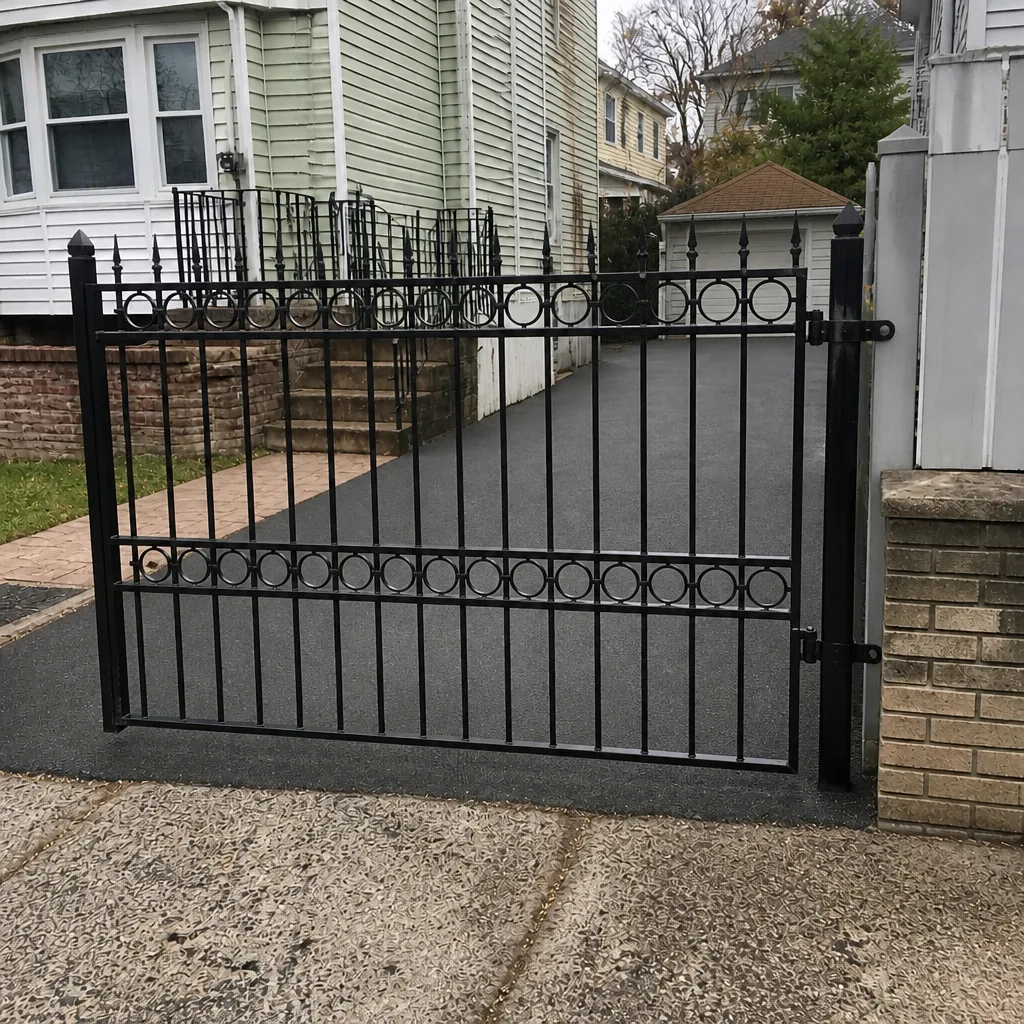
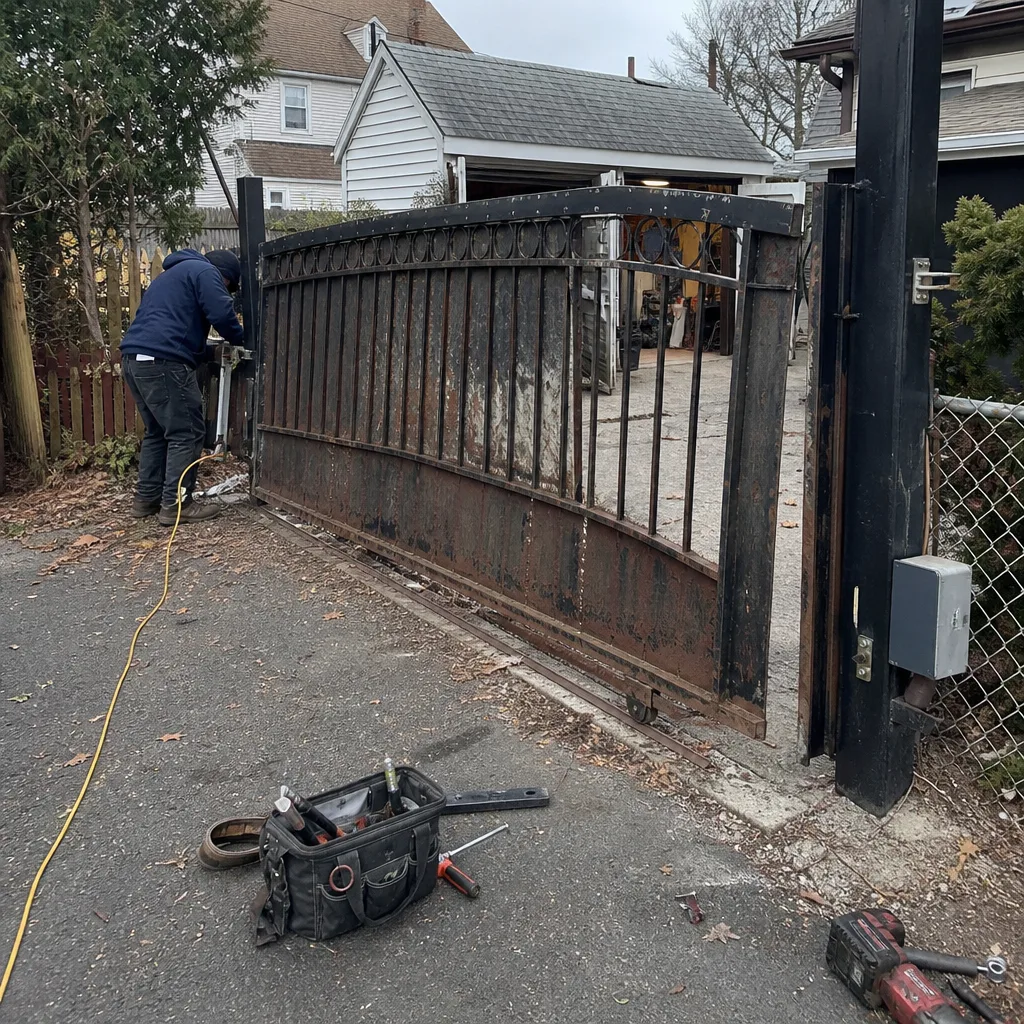
See the difference
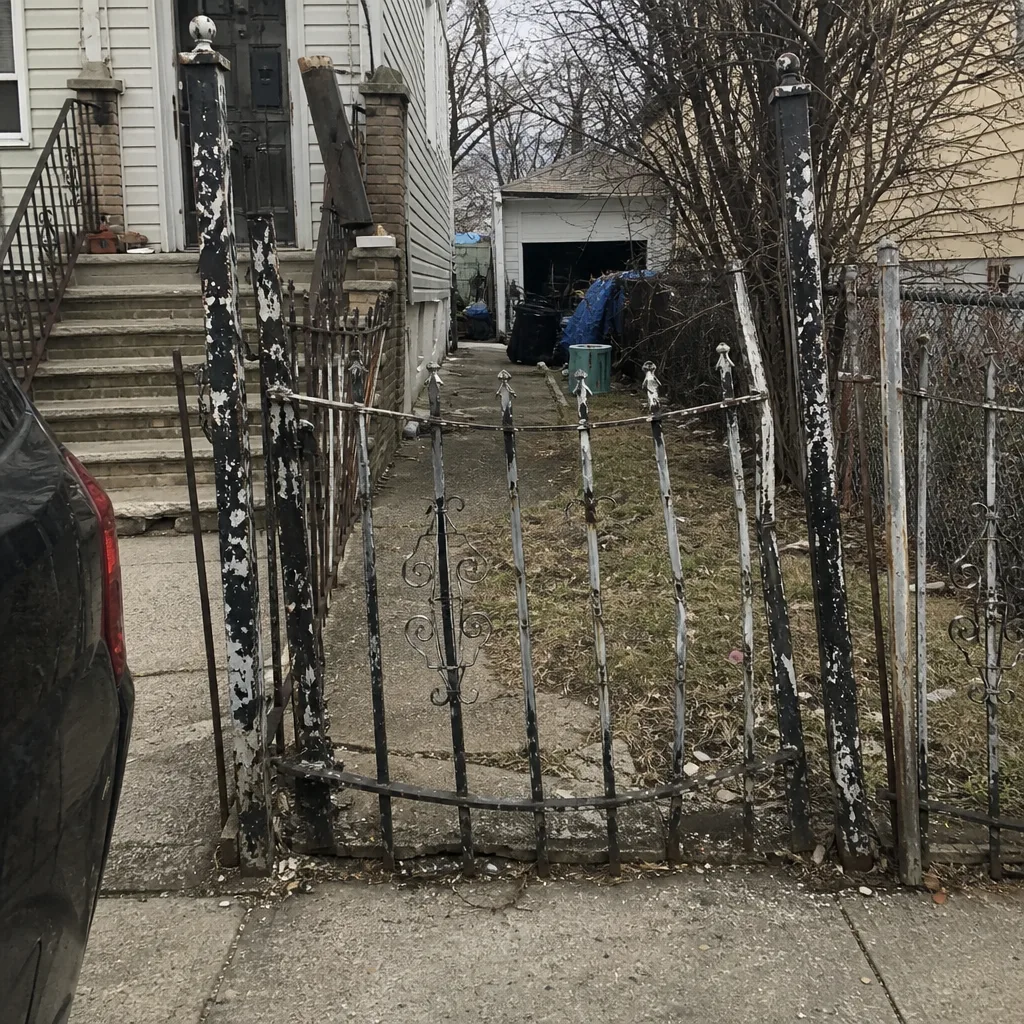 Before
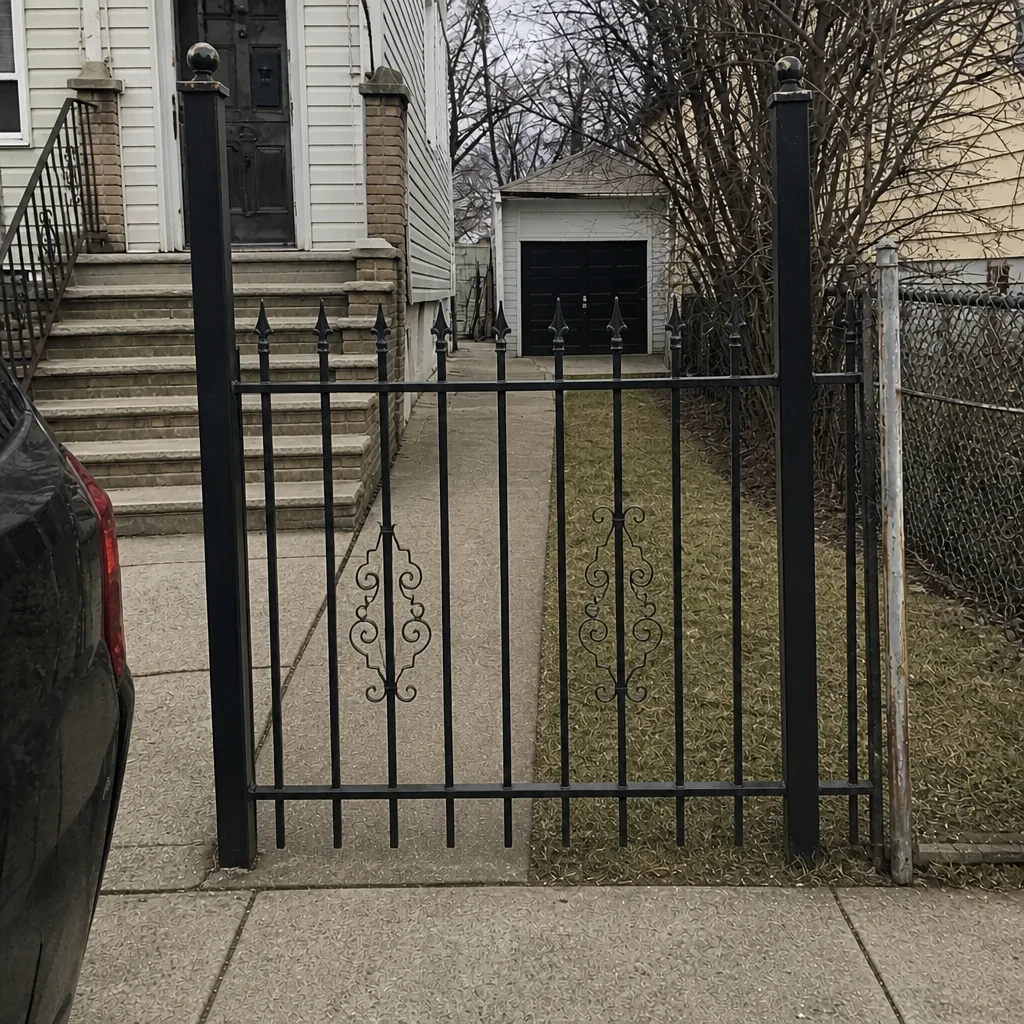 After
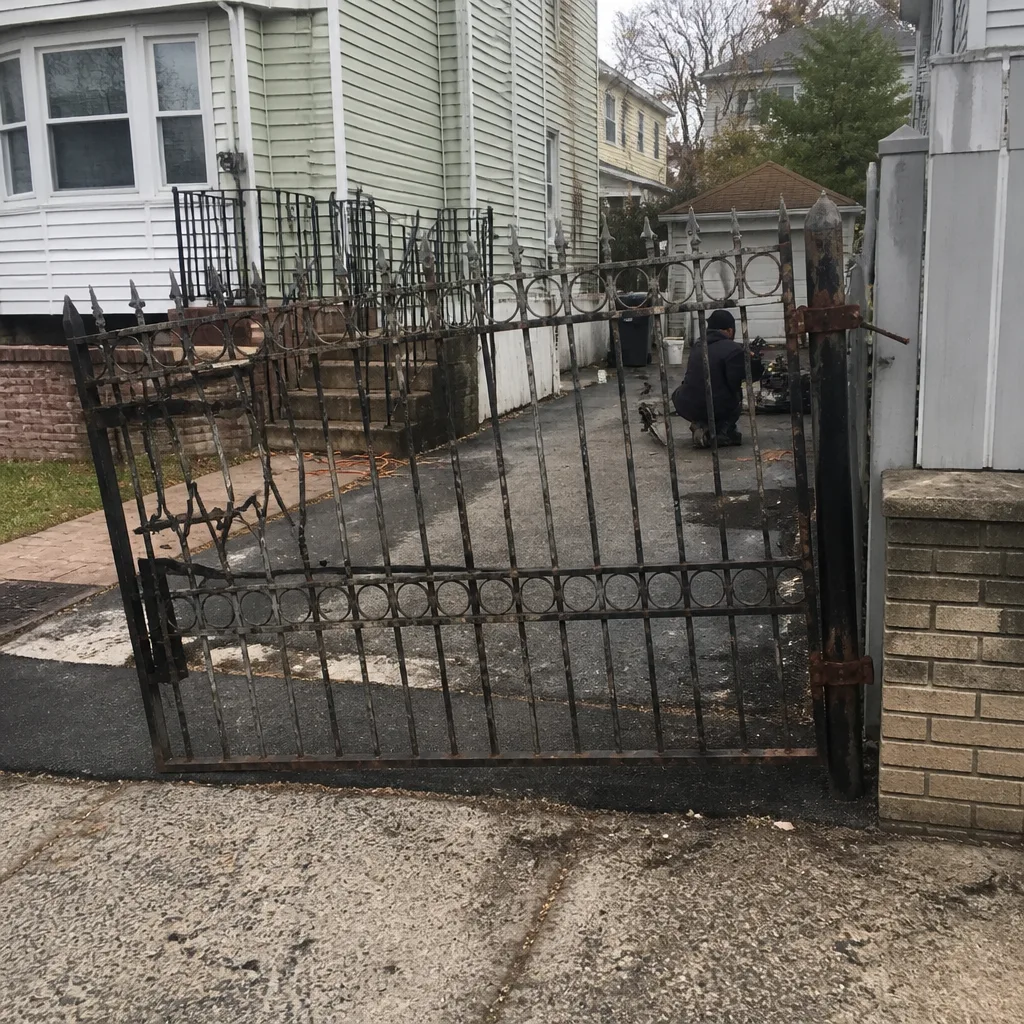 Before
 After
 Before
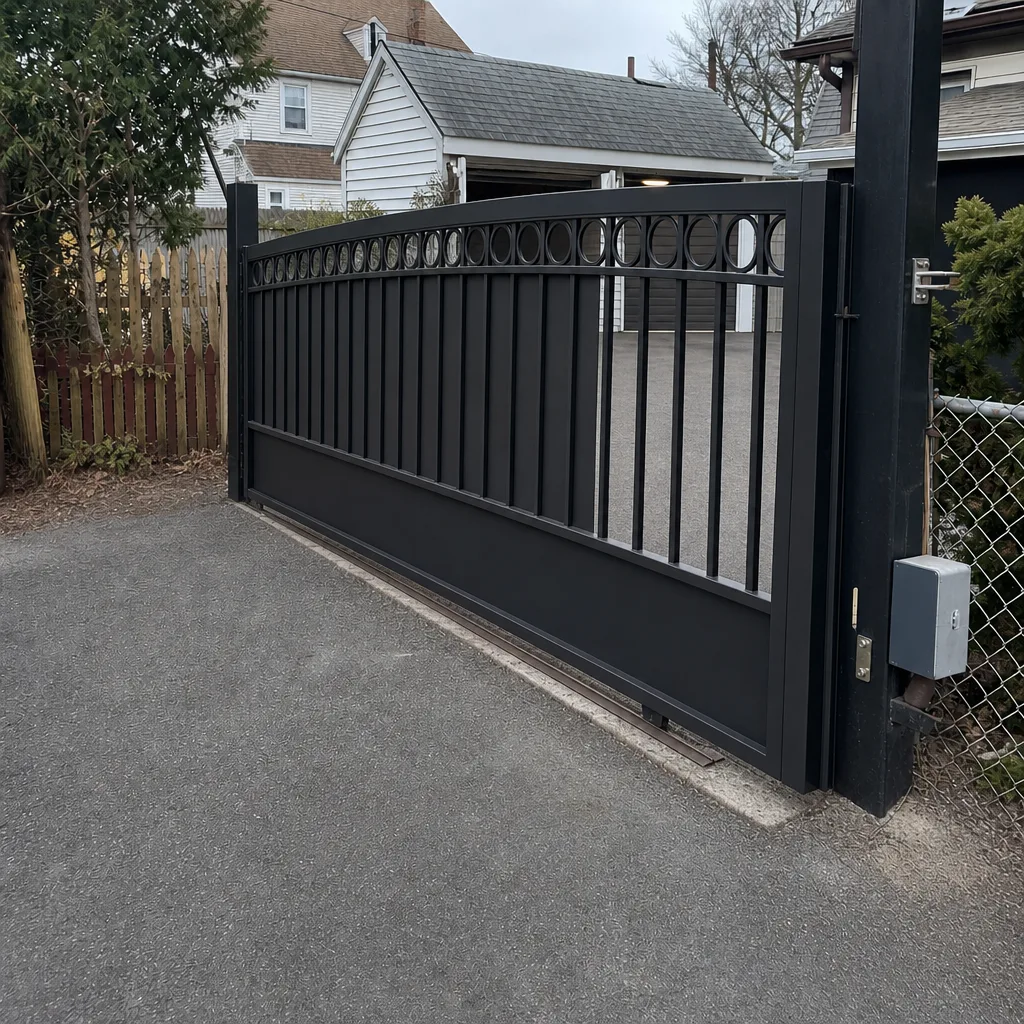 After
When to Call a Professional
Some gate issues are safe to inspect yourself; some are not. Call a professional if the gate has stopped moving entirely, moves erratically or reverses without warning, has a broken or drooping hinge or a visibly shifted post, or if any part of the control enclosure or sensor wiring looks damaged or is wet. Never keep running an operator on a gate that binds, and never try to defeat a safety sensor to get the gate to close. If a swing gate panel has come loose from a hinge under load, stop using the gate until it’s repaired. Gate Repair Newark offers free estimates in Newark – call (833) 983-2324. We answer 24/7. Fast dispatch from 7am to 7pm, Sunday through Friday.
Frequently Asked Questions
Gate repair is priced per job by a written estimate, so the real cost depends on which component failed and whether parts are available for your model. A sensor or loop fix is typically lower than an operator or control board repair, which is lower than a full operator replacement. The written estimate sets the price and it’s agreed before any work begins. Call (833) 983-2324 for an exact quote – estimates are free.
We answer 24/7, and we offer same-day service with fast dispatch from 7am to 7pm, Sunday through Friday. A call outside dispatch hours is booked into the next opening, Sunday through Friday, 7am to 7pm. Call (833) 983-2324 to schedule.
The gate opens but won’t close in most cases because a safety device – a photoelectric sensor, edge sensor, or loop detector – is reporting an obstruction. This is the single most common misdiagnosed gate problem, and it’s usually not the control board. A technician can verify each safety device in a single visit. Call (833) 983-2324 for an estimate.
Often yes, especially if the gate’s structure – track, hinges, posts – is still sound and the failed part is available for the brand you have. Replacement makes sense when the operator’s part isn’t obtainable or when the panel itself is compromised. The decision should come after a diagnosis and a check of part availability, not before. Call (833) 983-2324 and we’ll walk through it.
Yes. Electric and automated gate repair is a core part of what we do, including control boards, photoelectric sensors, loop detectors, motor assemblies, and the keypad or intercom connections that tell the operator to open. We handle both residential and commercial systems. Call (833) 983-2324 for a free estimate.
Start with the diagnosis. If the failed part is available and the gate structure is sound, repair typically wins on the labor math. If the operator is discontinued, the failed part is unobtainable, or the gate’s posts and hinges are failing, a replacement can be the better path. A written estimate for both paths should be provided before any work. Call (833) 983-2324 and we’ll help you compare.
The Bottom Line
Gate failures in Newark follow a chain, and the chain usually starts with the components most exposed to freeze-thaw, humidity, and road salt drift: tracks, hinges, sensor brackets. Understanding that order is the difference between fixing the actual problem and paying for the wrong replacement. Diagnose first, check part availability for the brand you actually have, and let the written estimate set the price before any tools come out. Whether it’s a jammed arm, a dead control board, or a full installation, we’d rather repair what’s already there than sell a new gate around it.
Written by the team at Gate Repair Newark.