
Last updated November 16, 2026
 Wrought iron
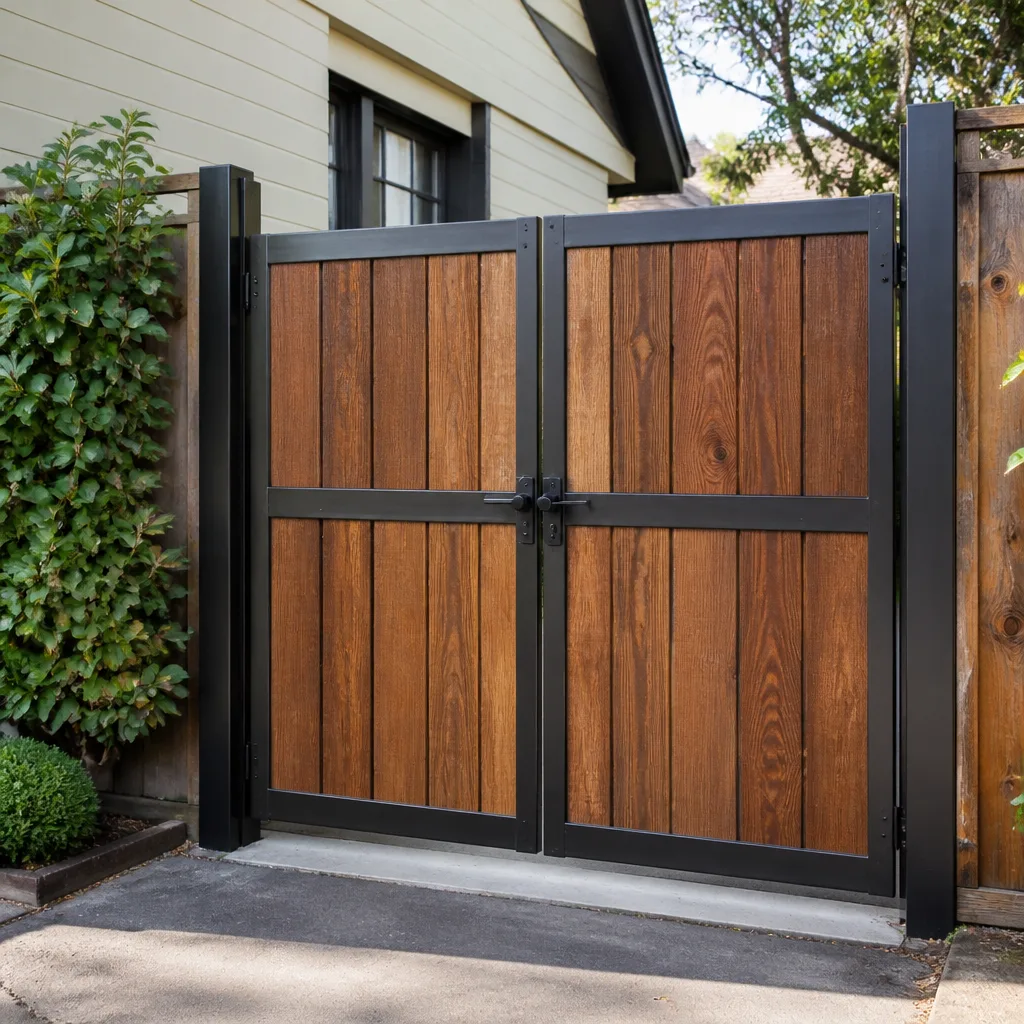 Wood & steel frame
 Farm & ranch
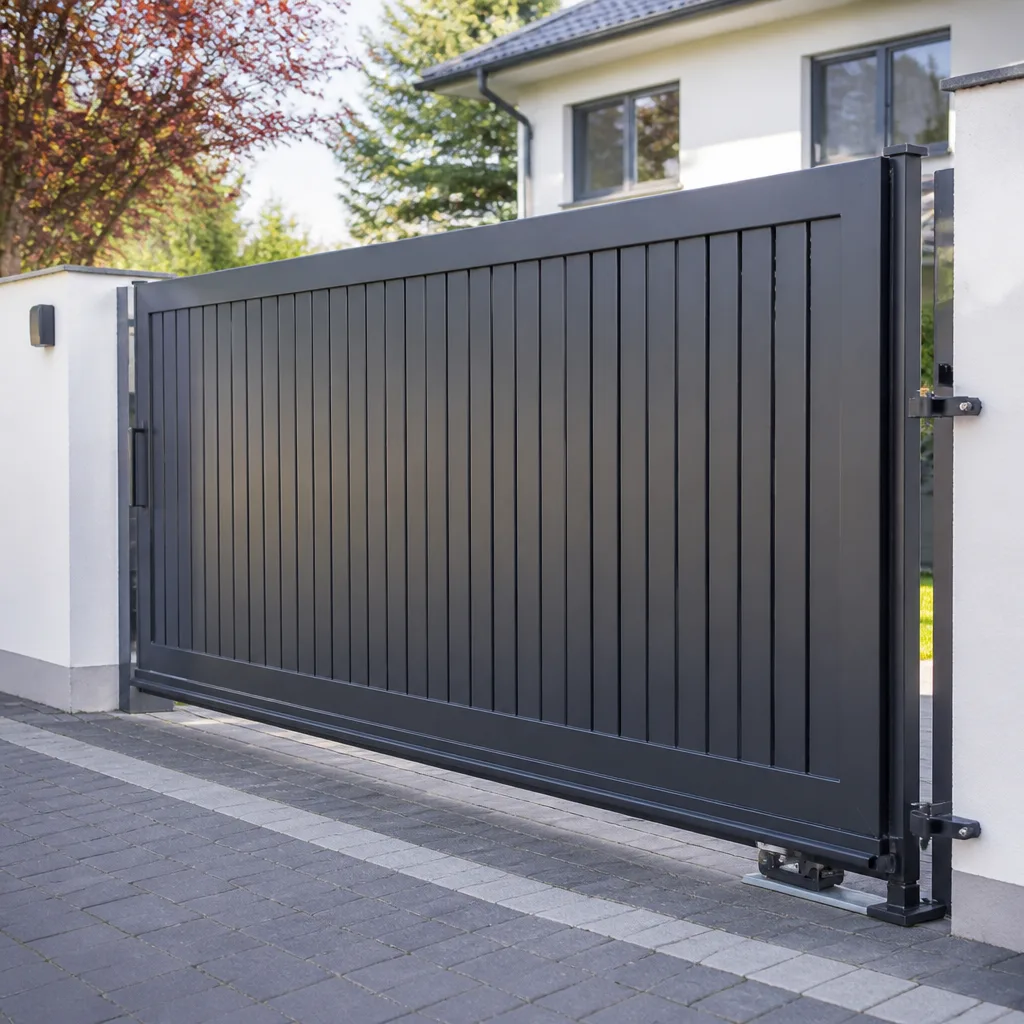 Sliding driveway gates
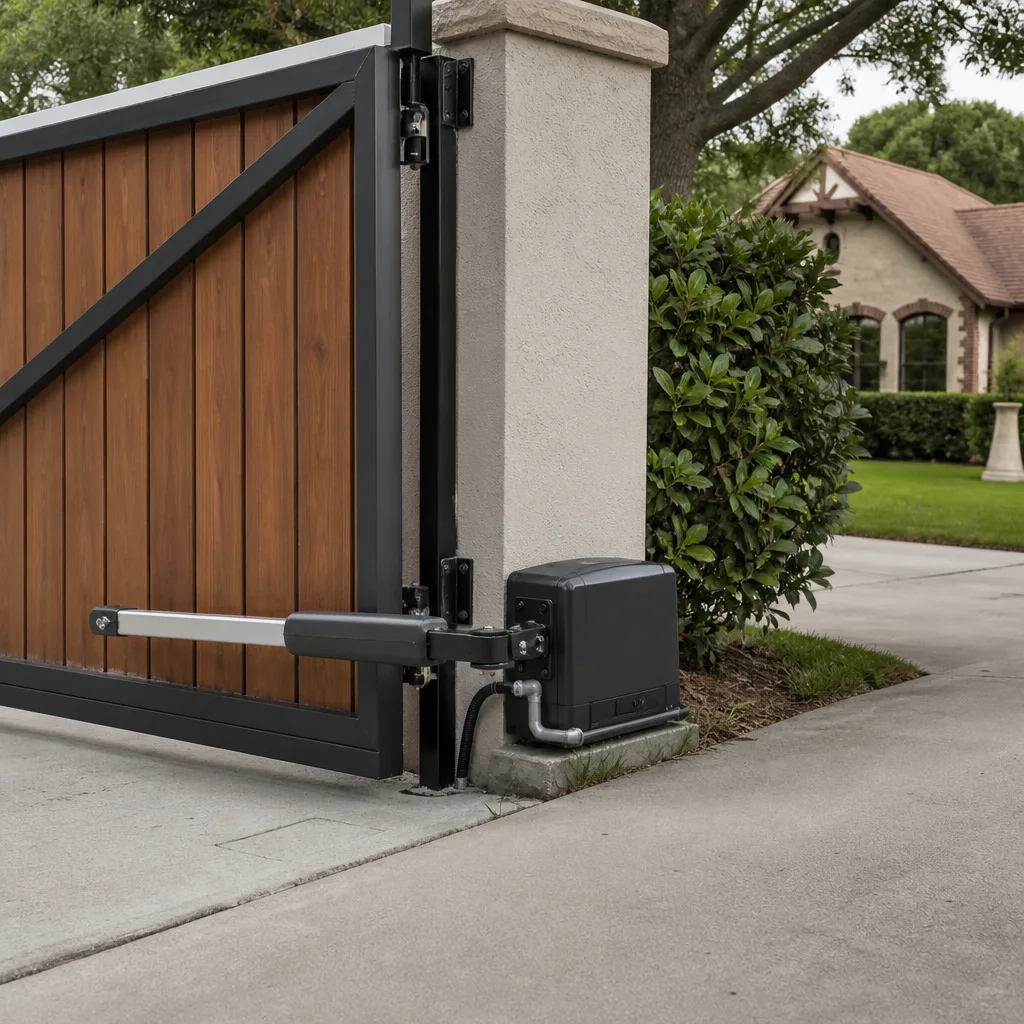 LiftMaster operators
Free on-site gate assessment - hinges, posts, and your LiftMaster or Nice gate operator checked before anything is quoted
The assessment is free and the quote is the invoice.
Get your free estimateDIY vs Professional Gate Repair: The Newark Homeowner’s Decision Guide
Replacing a broken hinge on a manual swing gate is a reasonable weekend project. Adjusting the force settings on an automated gate operator without understanding entrapment protection thresholds can get someone hurt. The gap between those two tasks is where most DIY gate repair goes wrong. It isn’t about confidence or budget. It’s about which specific components fail safely and which ones don’t. A latch that sticks costs you a few minutes. A gate that reverses with too much force, or doesn’t reverse at all when it meets a person, is a different category of problem. This guide draws the line task by task, so a Newark homeowner can look at a broken gate and know exactly what’s safe to touch and what belongs in the hands of a trained technician.
Quick Answer
The safe DIY gate repairs are mechanical and low-consequence: hinges, latches, physical stops, loose bolts, and cosmetic hardware on a manual gate. Anything involving the operator motor, control board, force limits, safety sensors, photo-eyes, or loop detectors should go to a professional, because those systems fall under UL 325 entrapment protection standards and a wrong adjustment can defeat the gate’s safety response. If your gate is automated and the problem is electrical or force-related, stop and call a technician.
Styles & brands we work with
- Wrought iron
- Wood & steel frame
- Farm & ranch
- Sliding driveway gates
- LiftMaster operators
Table of Contents
- The decision starts at the component, not the gate
- What a homeowner can safely handle
- What requires a professional: the automated side
- Why UL 325 matters in Newark
- Common DIY mistakes and what they cost
- Tools and knowledge you need before you start
- How to talk to a technician and cut labor cost
- When to call a professional
The Decision Starts at the Component, Not the Gate
Most homeowners frame the DIY question around the whole gate: should I fix it myself or call someone? That framing hides the real answer, because a single gate is a stack of very different systems. A driveway swing gate might have a welded steel frame, a set of hinges, a latch, a manual release, a motor arm, a control board, a transformer, two safety photo-eyes, and a radio receiver. Each of those fails in its own way, and each carries its own risk if you get the repair wrong.
The better approach is to sort the gate into two layers.
- The mechanical layer – frame, hinges, latches, physical stops, chains, wheels, tracks, and hardware. These parts are visible, they’re bolted or welded on, and if you get one wrong the gate usually just binds or fails to close. The consequence is inconvenience.
- The control layer – the operator motor, control board, force sensing, safety sensors, photo-eyes, loop detectors, and access control. These parts decide when the gate moves and when it stops. If you get one wrong, the gate can move when it shouldn’t or fail to stop when it should. The consequence is injury or property damage.
That split is the whole guide in two sentences. Mechanical work on a manual gate is often a fair DIY job. Control-layer work on any automated gate is not. In our experience across Newark, the repair calls that turn into a bigger bill almost always start with someone reaching into the control layer to save a service visit.
Why the automation line is sharper than homeowners expect
A manual gate that sticks is annoying. An automated gate that sticks is a machine that keeps trying to push through an obstruction, and the operator’s own safety logic is what’s supposed to prevent that. The moment you start adjusting that logic to make the gate “work,” you’ve moved past a repair and into defeating a safety feature. That’s the boundary. It has nothing to do with whether you’re handy. It has everything to do with whether the task changes how the machine behaves around a person.
What a Homeowner Can Safely Handle
There are real, satisfying DIY jobs on a gate, and doing them yourself isn’t reckless. Here’s what a competent homeowner can usually handle without specialized training, along with the tools each job needs. This applies to manual gates and to the non-electrical hardware on automated gates.
- Replacing worn hinges on a swing gate. Match the hinge size and load rating, support the gate leaf so it doesn’t sag while the pin is out, and rehang so the gate swings level. If the gate is powered, put the operator in manual release first so it can’t move while your hands are in the hinge.
- Adjusting or replacing a latch or strike plate. Misalignment after a season of ground movement is common. Loosen, realign, retighten. This is a five-minute job and it’s fully within reach.
- Replacing a manual gate handle, drop rod, or cane bolt. These are bolt-on parts with no interaction with the operator’s safety logic.
- Tightening loose hardware and anchoring bolts. A gate that rattles is telling you something is loose. Find it, torque it, then check that the gate still swings clear of the ground and stops.
- Clearing debris from tracks and guide rollers on a sliding gate. Sweep the track, remove grit, and check that wheels roll freely. This is maintenance, not repair, and it prevents most premature wear.
- Touching up paint and treating rust on the frame. Cosmetic, safe, and it keeps a Newark gate from rusting into a bigger job.
- Resetting a tripped breaker or a dead battery in a fob or keypad. Only do this if it’s a straightforward change and you know the part spec. If the operator keeps tripping, that’s a control-layer call.
What to check before you pick up a wrench
Before any mechanical DIY job, run through this short checklist. It takes two minutes and prevents most self-inflicted damage.
- Put the operator in manual release so the gate can’t move under power while you’re working.
- Support the gate leaf or slide panel so it can’t fall or jump the track while a component is removed.
- Confirm the replacement part matches the gate’s load and the original fitting. “Close enough” hardware causes premature failure.
- Make sure the gate still swings or slides freely, and stops, before you re-engage the operator.
- If any part of the job touches the motor, board, sensors, or force settings, stop. That’s the next section.
What Requires a Professional: The Automated Side
This is where the honest answer gets firm. Electric gate work isn’t a harder version of mechanical work. It’s a different discipline, and the tasks below should be handled by trained technicians. This isn’t a sales line. It’s a liability line: a professional carries the knowledge and coverage that stand between a mistake and someone getting hurt. electric gate repair covers the full set of tasks below, and they’re the ones that most often turn a small fault into a large one when a homeowner tries to fix them alone.
- Force-limit and stall-force settings. These calibrate how hard the gate pushes before it reverses. The wrong value defeats the gate’s primary entrapment protection. Never guess with these.
- Safety photo-eyes and loop detectors. These detect a person or vehicle in the path. Misaligning one, or bouncing the terminals to “get it working,” can leave the gate’s detection dead while it looks functional.
- Control board diagnosis and replacement. A board can fail from a surge, a bad limit switch, or a short in the motor. Diagnosing which of those is the cause takes a meter and the model’s fault logic. Swapping a board blind is expensive and can destroy the new one.
- Motor and gearbox work. Motor windings, gearbox wear, and drive arms on swing operators. This is load-bearing, dangerous work under tension.
- Wiring a new operator, transformer, keypad, or access control. Any new power run falls under electrical code and needs proper conductors, conduit, and grounding. That’s licensed electrical work, and the building or electrical department is the authority on what’s required.
- Anything on a commercial gate. Higher weights, higher duty cycles, and heavier consequences. Commercial gate repair belongs with specialists.
- Mixed-brand and legacy setups. When a system is running a control board from one manufacturer with a motor from another and sensors from a third, the fault logic gets nonstandard. We service that kind of setup rather than walking away, but it’s never a DIY prospect.
If your operator is a DoorKing, Elite, Mighty Mule, or LiftMaster unit – or any of the other major brands – the brand matters less than whether the diagnosis is done properly. A good technician troubleshoots the system in front of them, not a brand’s script. If it opens and closes a gate, we service it.
Why UL 325 Matters in Newark
Automatic gate operators in the U.S. are built to UL 325, the safety standard for gate and door operators. UL 325 is the reason your automated gate is supposed to stop or reverse when it meets an obstruction, and it’s the reason equipment is designed around entrapment protection: photo-eyes, safety edges, and force sensing that work together. The standard also shapes how operators are installed, serviced, and adjusted. Working the standard correctly is the difference between a gate that detects a person and a gate that doesn’t.
What that means for a Newark homeowner is practical rather than legal:
- Force and entrapment settings are a safety system, not a preference. Bypassing them can turn a working gate into an undetected hazard.
- Injuries on an automated gate tend to involve a person in the path of a heavy moving panel. A correctly set operator is what prevents that. That’s why these settings need a professional who understands the thresholds.
- If you disable a photo-eye or a safety edge to get the gate “working,” you’ve removed the component that’s meant to protect a child, a pet, or a visitor. Don’t do it. Get it fixed properly.
- Any permit requirement depends on the job. Most gate and operator installations involve some level of local requirement, so check with the City of Newark’s building department before new installation. That’s true for a replacement operator and for a new power run.
We don’t tell homeowners what the code says in their exact ward or building. That’s the city’s call. What we do know is that on the service side, the standard exists for a reason, and it’s enforced by every manufacturer’s design and every responsible technician’s work.
Common DIY Mistakes That Turn a Small Fix Into a Bigger Problem
The mistakes below show up again and again, and each one starts as a reasonable effort to save a visit. The dollar figures here are illustrative, not quotes; the point is the pattern.
1. Using the wrong lubricant on tracks, rollers, and moving parts
Heavy grease or sticky spray on a sliding gate track collects grit and dust, which turns into a grinding paste that wears out rollers and binds the panel. A light, clean lubricant on the correct components, or none on parts meant to run dry, is what the manufacturer specified. Wrong lubricant plus Newark street grit is a fast route to worn guides.
2. Tampering with force limits to make the gate “work”
Cranking up the force setting so a binding gate can push through an obstruction masks the actual fault – a bent arm, a worn roller, a misaligned track – and disables the protection that’s supposed to reverse the gate. A small mechanical fix becomes a motor and board replacement.
3. Bypassing or wiring around a sensor
Jumping the terminals on a photo-eye to stop the gate from reversing is the single most common shortcut, and the most dangerous. The gate runs, so it looks fixed, but the detection is gone. That’s a safety component bypassed, and the proper repair is replacing or realigning the sensor.
4. Jumping the safety edge
Similar to the sensor problem. A safety edge that trips on contact is doing its job. Jumping it to stop the nuisance is reversing a safety function. Call a technician and let them find the real cause, whether that’s a damaged edge, a bad connection, or a control-board fault.
5. Swapping a control board without diagnosing the fault
A failed operator often has a root cause upstream: a short in the motor wiring, a limit switch stuck, a surge path. Drop in a new board on top of a live fault and you can destroy the new board. Diagnose first, replace second.
6. Forgetting the manual release before working on a powered gate
Reaching into a hinge or latch while the operator is still engaged can let the gate move under power while your hand is in it. Put the operator in manual release every time.
7. Powering through an unfamiliar brand or legacy setup
On older gates, the motor, board, and sensors may come from three different manufacturers. That’s common in Newark and it’s not unusual. Guessing at the fault logic on a mixed setup is how a cheap fix turns into a control board plus a sensor replacement.
Tools and Knowledge You Need Before You Start
DIY repair goes wrong when tools and knowledge are gathered mid-job. Here’s what you actually need before you pick up a single tool. If you can’t tick most of this list, the job is above the safe line.
The right tools
- A socket set with the sizes that match your hardware, plus a torque wrench if you’re anchoring a gate post or hinge.
- A pin punch or drift for hinge pins, and a dead blow mallet for seating hinges without distorting the metal.
- A helper or a jack stand for supporting the gate leaf. Never let the gate hang on one hinge or one roller while you work.
- A multimeter if you’re checking a battery, a fuse, or a breaker. If you don’t have one and don’t know how to use it, don’t start an electrical check.
- A light, clean lubricant specified for the component, and cleaning brushes for tracks and rollers.
- Replacement parts matched to the gate’s brand, weight class, and duty cycle. Matching the part is half the repair.
The knowledge prerequisites
- You know exactly which layer of the gate you’re working on: mechanical or control.
- You know how to put the operator in manual release and confirm the gate is fully disengaged.
- You know the model of the operator and can find its documentation. If you can’t identify the operator, you’re already past the DIY line.
- You know what you’re not touching. Force limits, sensors, and control boards stay off the list.
A note on manual gates
Manual driveway and garden gates are the most forgiving place to build confidence. Hinges, latches, drop rods, and frame repairs are visible, mechanical, and low-risk. Start there. Most of the household tools above will cover it, and a well-maintained manual gate will keep doing its job for years without an operator at all.
How to Talk to a Technician and Cut Labor Cost
A lot of the repair bill is diagnosis and travel, not the actual repair. Homeowners who prep a job well can shorten the diagnosis and often reduce the labor. Here’s how to have a productive conversation with whoever you call, and what you can responsibly do before the technician arrives.
- Identify the operator brand and model before you call. Write down the nameplate details on the motor or control box. Being ready with “LiftMaster, model on the label” or “FAAC, control board number on the sticker” saves the technician a search and gets you to the right part faster.
- Describe the symptom, not your guess. “The gate opens but won’t close, and the photo-eye light is blinking” is useful. “I think the board is dead” sends us down the wrong path. Let the technician do the diagnosis.
- Have the gate at manual release and clear of the path. If the gate is stuck open or won’t retreat, say so. It helps the technician plan the visit, and it’s safer for everyone.
- Clear access to the operator and any control box. Move planters, bags, and anything blocking the housing, conduit, or the walkway to the gate. Ten minutes of clearing can shorten a call.
- Ask what you can do to reduce the cost. A good technician will tell you honestly. Minor prep – clear access, identify the part, support the gate – can be handled by you. The diagnosis, wiring, and force calibration stay with them.
- Ask about repair vs. replacement before work starts. If the motor is at the end of its life, you deserve that conversation before the invoice, not after. Our gate repair visits include that discussion, and installation is available if the honest answer is replacement.
What we don’t ask you to do is open a control box or adjust a setting before we arrive. Prep is fine. Diagnosis is what we’re here for.
When to Call a Professional
Call a professional the moment the problem touches the control layer, or when a mechanical repair is beyond your tools or your confidence. The clearest triggers: the gate reverses or won’t reverse on its own, a photo-eye or safety edge light misbehaves, the operator hums without moving, a breaker keeps tripping, the board shows a fault, or the gate is a commercial system. On the mechanical side, call when a hinge is welded in place, when the frame is bent, when a slide gate has come off its track, or when the gate leaf is too heavy to support safely.
Gate Repair Newark offers free estimates in Newark. Call (833) 983-2324. We answer 24/7, and fast dispatch runs from 7am to 7pm, Sunday through Friday, closed Saturday. If something fails outside dispatch hours, call and we’ll book you into the next opening.
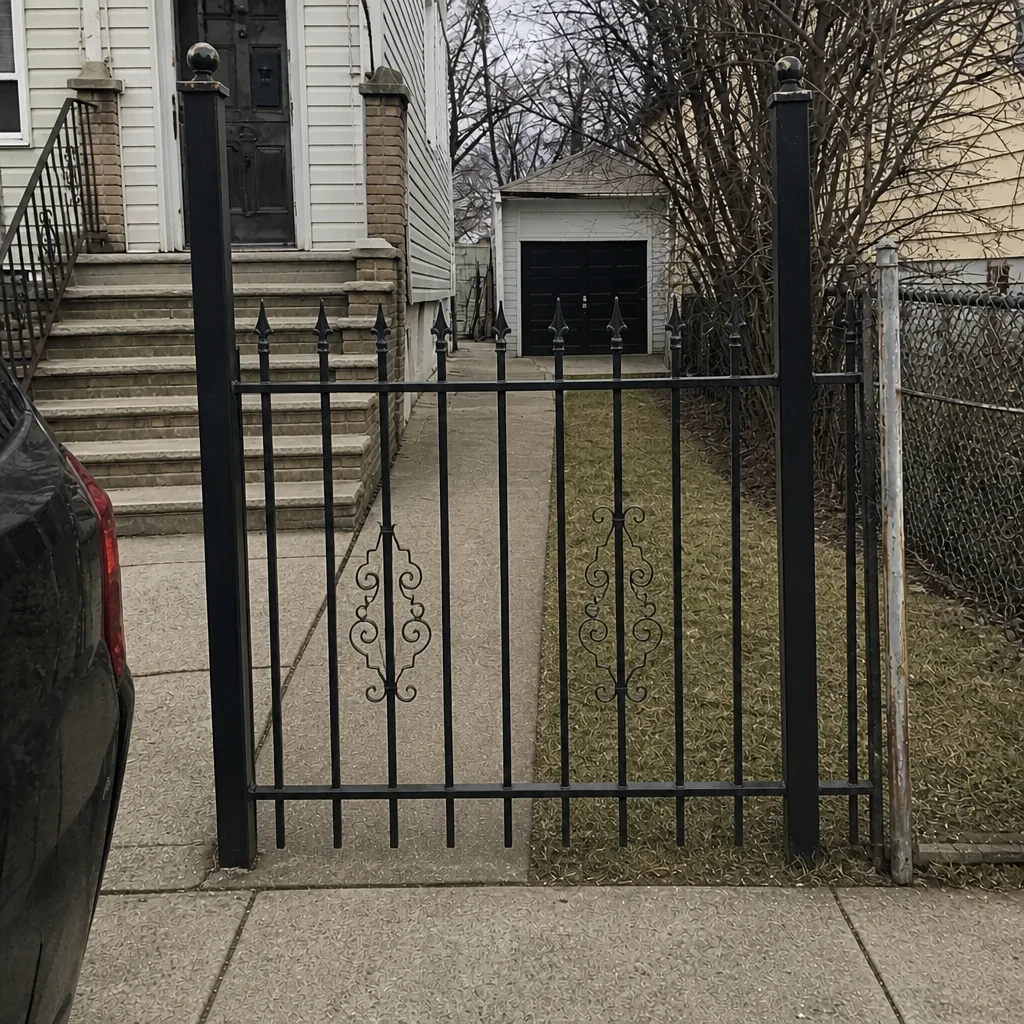
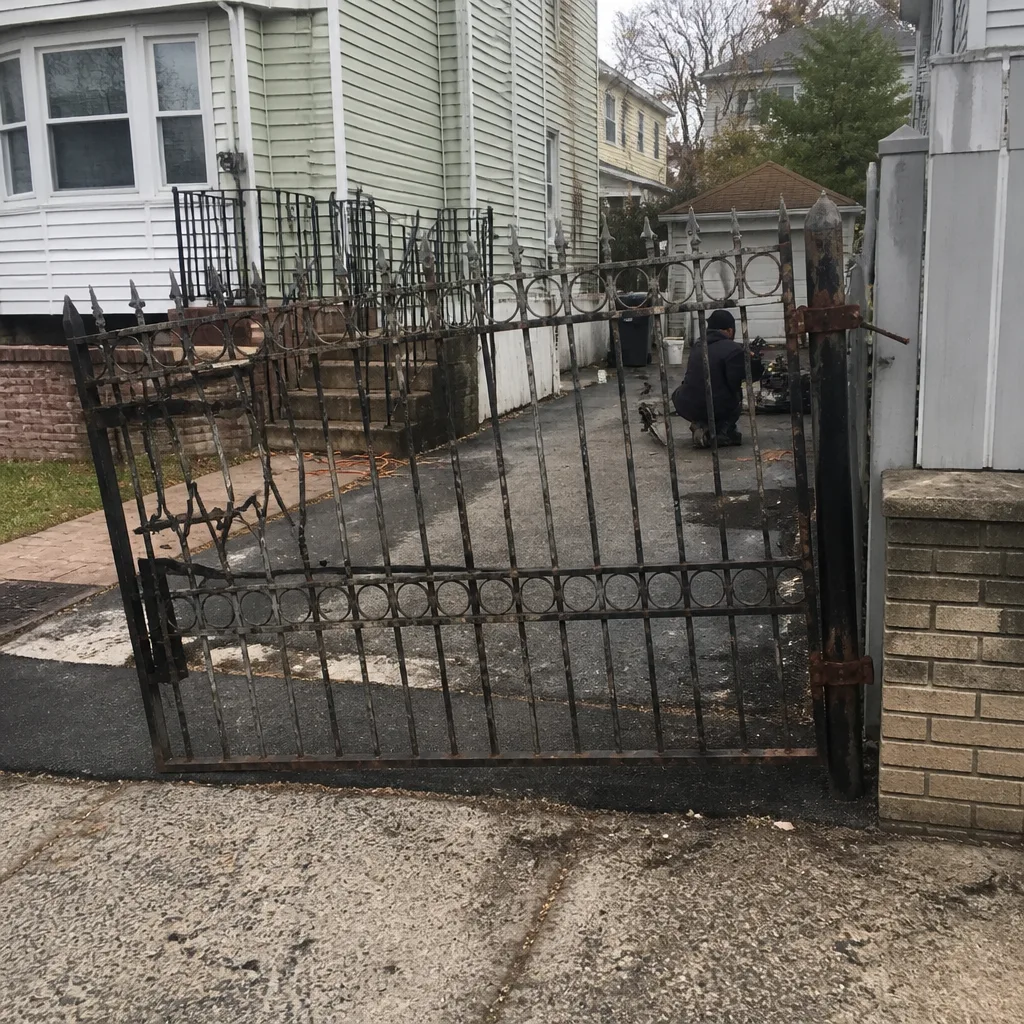
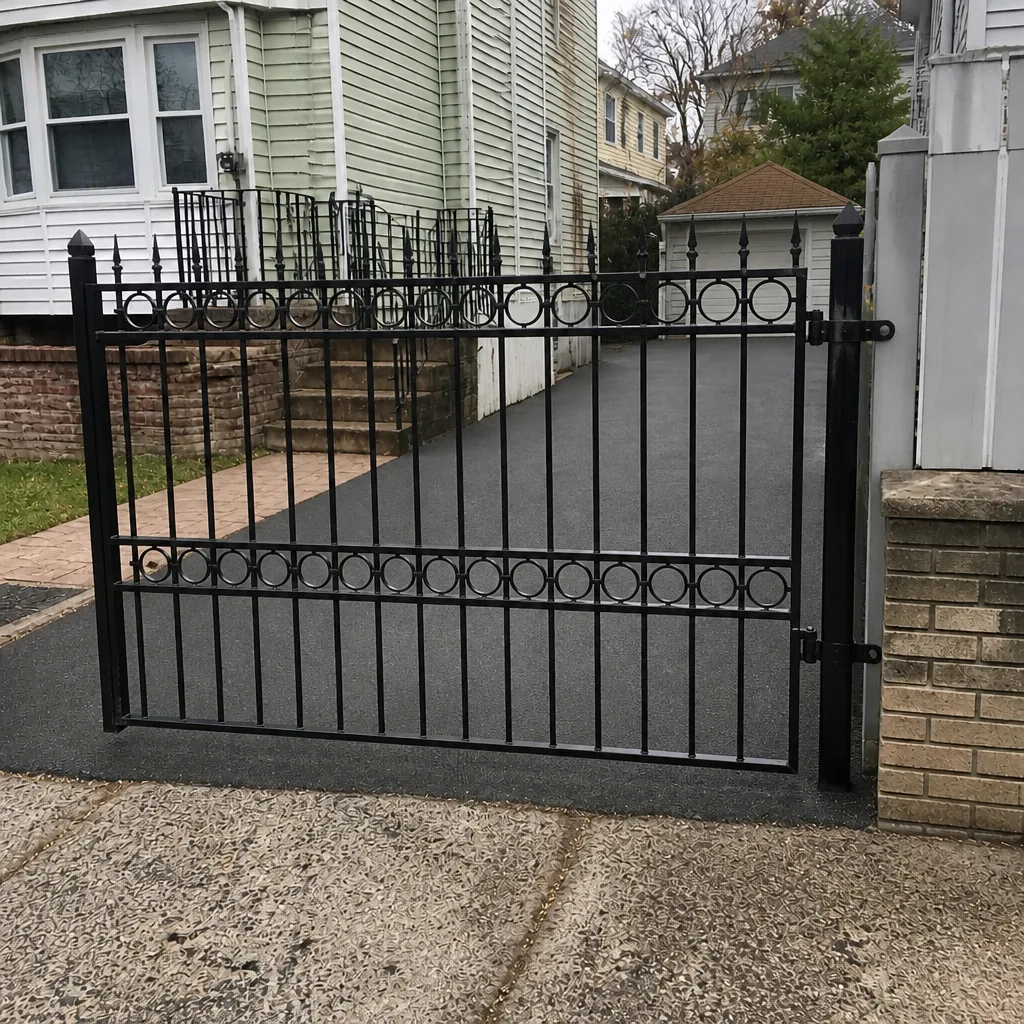
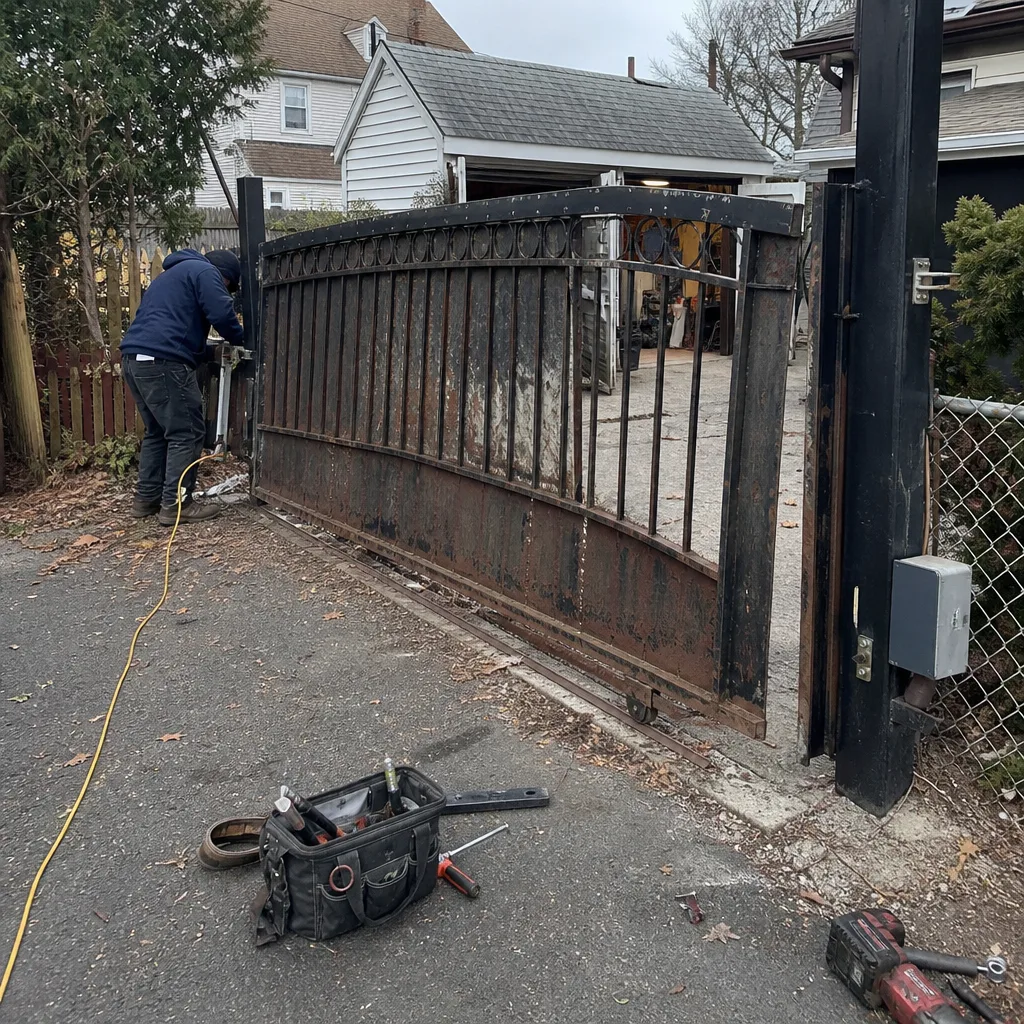
See the difference
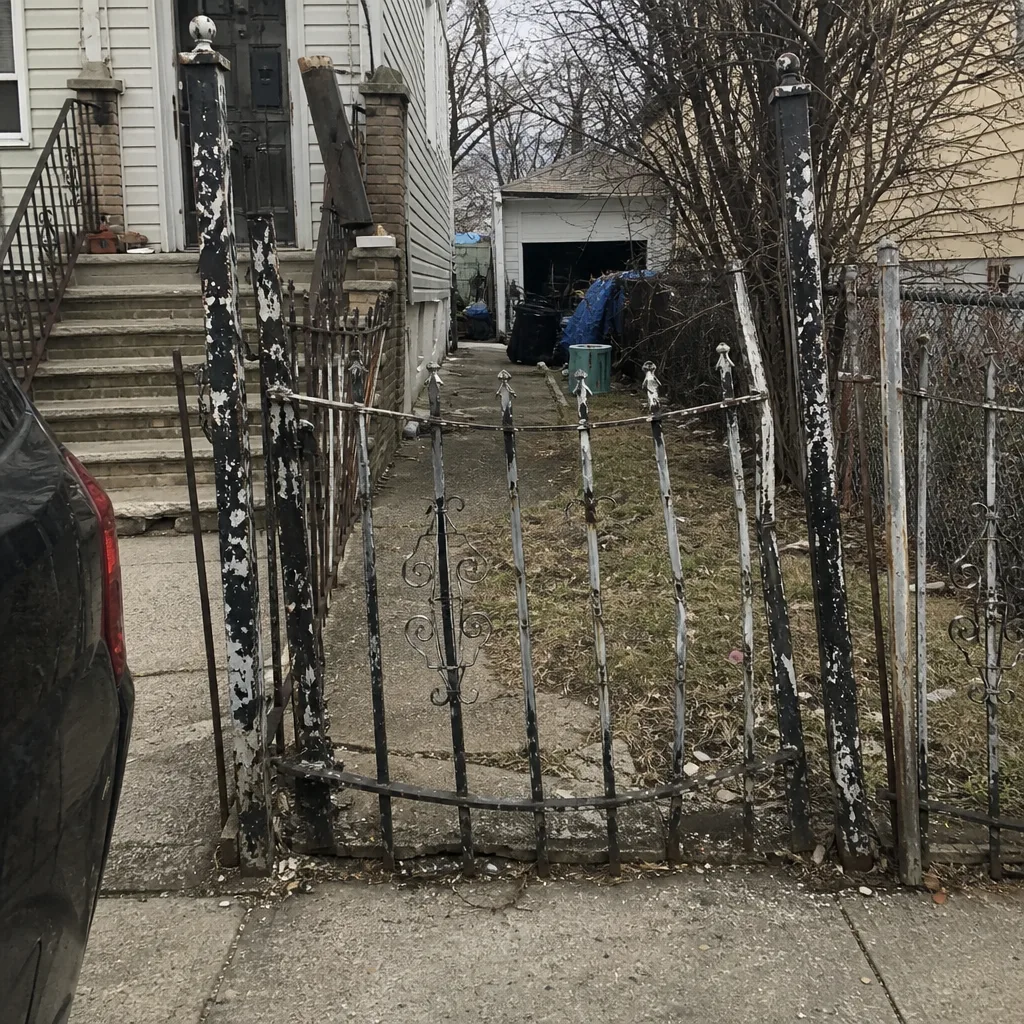 Before
 After
 Before
 After
 Before
 After
Frequently Asked Questions
Only the mechanical parts. Hinges, latches, physical stops, and cosmetic hardware on a manual or automated gate are reasonable DIY jobs if you can support the gate and put the operator in manual release. Anything involving the motor, control board, force settings, or safety sensors should go to a professional because those components control entrapment protection under UL 325.
Wrong lubricant on tracks and rollers, tampering with force limits to force a binding gate to work, and bypassing photo-eyes or safety edges. Each one either masks the real fault and wears out the operator or disables a safety feature. A small mechanical fix can become a motor, board, and sensor replacement. Call (833) 983-2324 for an exact quote – estimates are free.
We don’t give legal advice, and the requirements are the city’s call, not ours. What matters practically is that force limits are part of the operator’s entrapment protection under UL 325, and setting them wrong can make the gate unsafe. For your own safety, leave force calibration and sensor adjustment to a trained technician.
The price is set per job by a written estimate, and we won’t quote a number over the phone before we’ve looked at the gate. That’s also why we offer a free estimate. Call (833) 983-2324, and we’ll take the details, come out, and set the price in writing before any work starts.
Yes. We work on the brand you already have, across the nine major operator brands we service and beyond, including mixed-brand and legacy setups that other providers turn away. A technician troubleshoots the system in front of them rather than a brand’s playbook, so an unusual or nonstandard setup is a normal call for us.
Yes, and it’s worth doing. Identify the operator brand and model from the nameplate, put the gate in manual release and clear of the path, and clear access to the operator and control box. Describe the symptom rather than the diagnosis. That prep shortens the visit, and the diagnosis and repair stay with the technician.
Electric and automated gates are our core work, not an add-on. We cover motors, control boards, safety sensors, loop detectors, and access control components, alongside mechanical repair and new installation. If a fault turns out to be beyond repair, we handle the new installation rather than passing you to another contractor.
The Bottom Line
The DIY decision in Newark gate repair comes down to one line: mechanical work on a manual gate is often fair game, and anything on the automated or electrical side belongs with a professional. Hinges, latches, tracks, and cosmetic hardware you can handle safely with the right tools and prep. Force limits, control boards, photo-eyes, safety edges, and wiring you cannot – the risk isn’t a bigger bill, it’s a gate that stops protecting the people in its path. Our technicians have up to 10 years of experience, we work on the brand you already have, and most gate problems are diagnosable on the first visit. We service gates exclusively, from a jammed arm to a full installation, and we can walk you through what’s safe to do yourself and what isn’t.
Call (833) 983-2324 for a free estimate. We answer 24/7. Fast dispatch from 7am to 7pm, Sunday through Friday. Visit Gate Repair Newark to see the full range of gate services, and if you’re near one of the surrounding communities, we can help you plan the visit from there too. The written estimate sets the final price before any work starts, so you know what you’re approving before a tool comes out of the case.
Written by the team at Gate Repair Newark.