
Last updated November 16, 2026
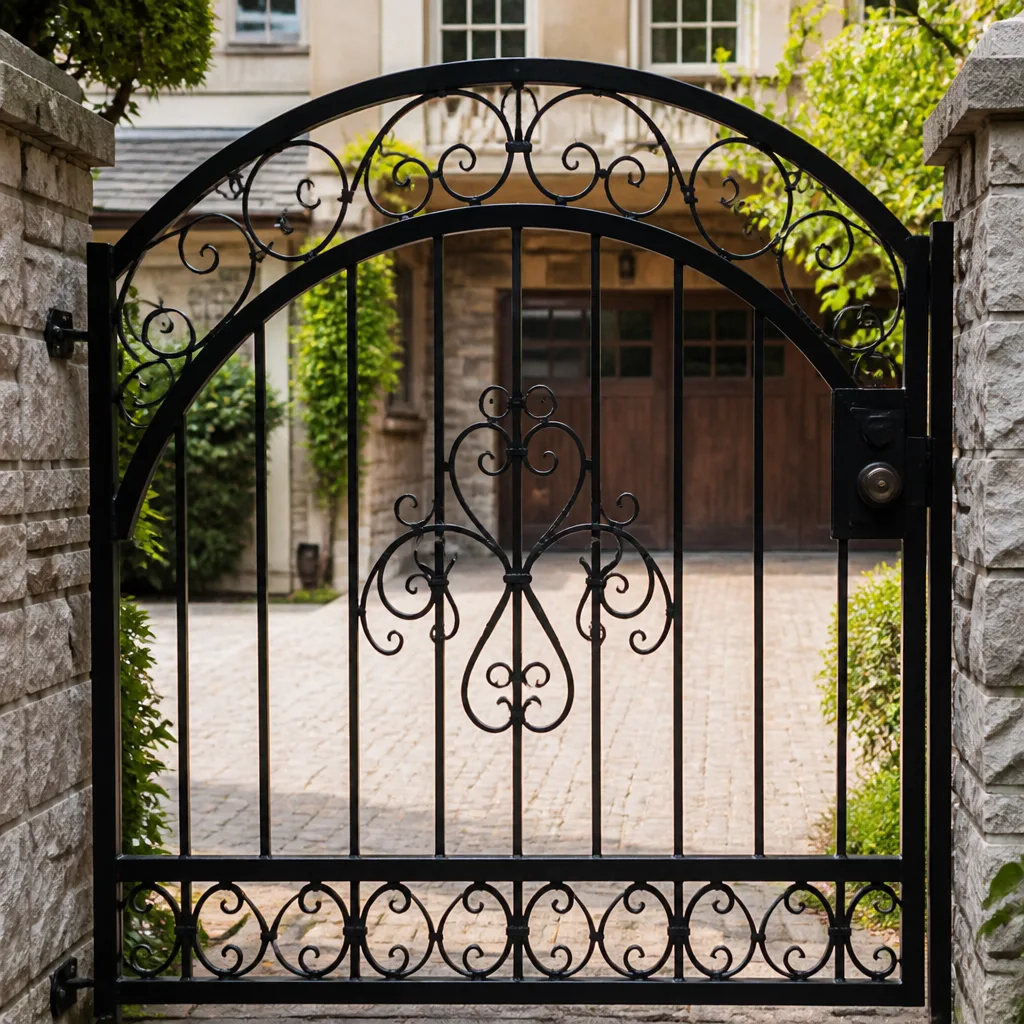 Wrought iron
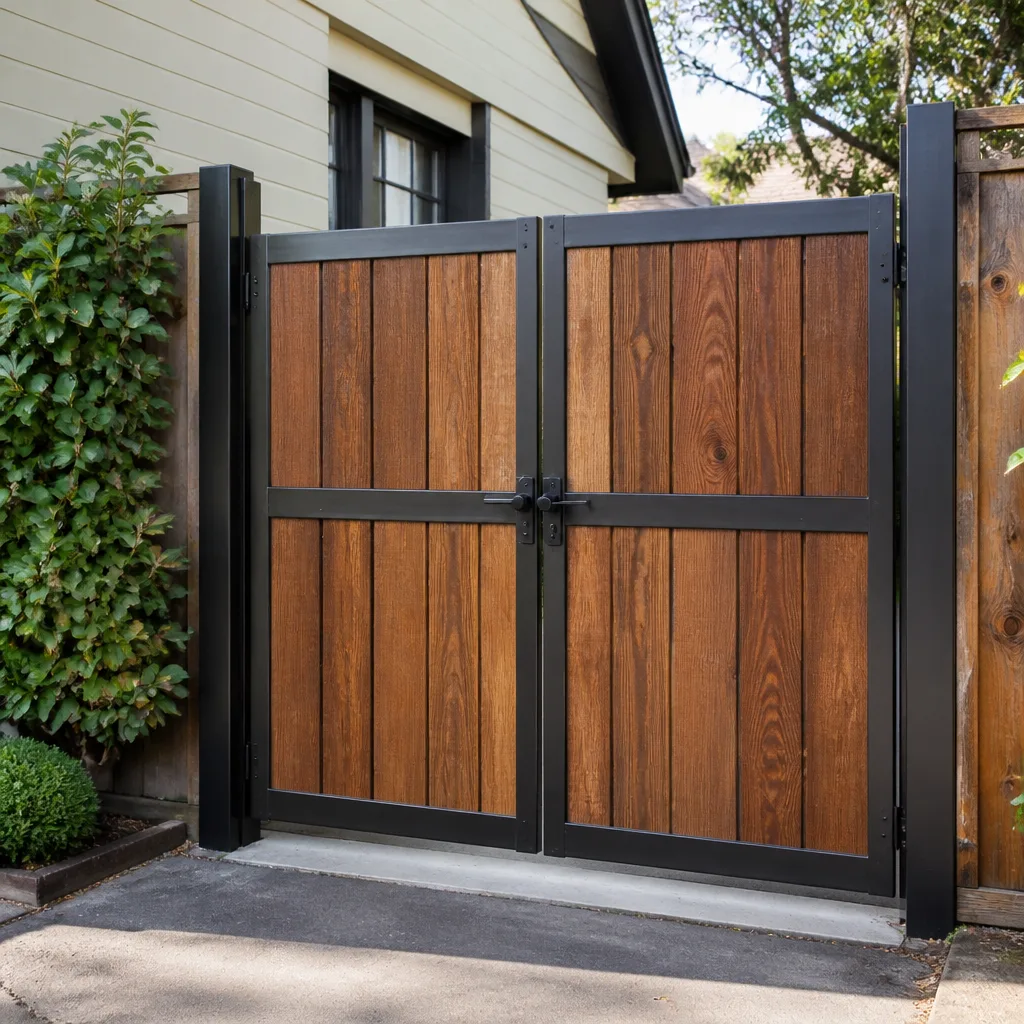 Wood & steel frame
 Farm & ranch
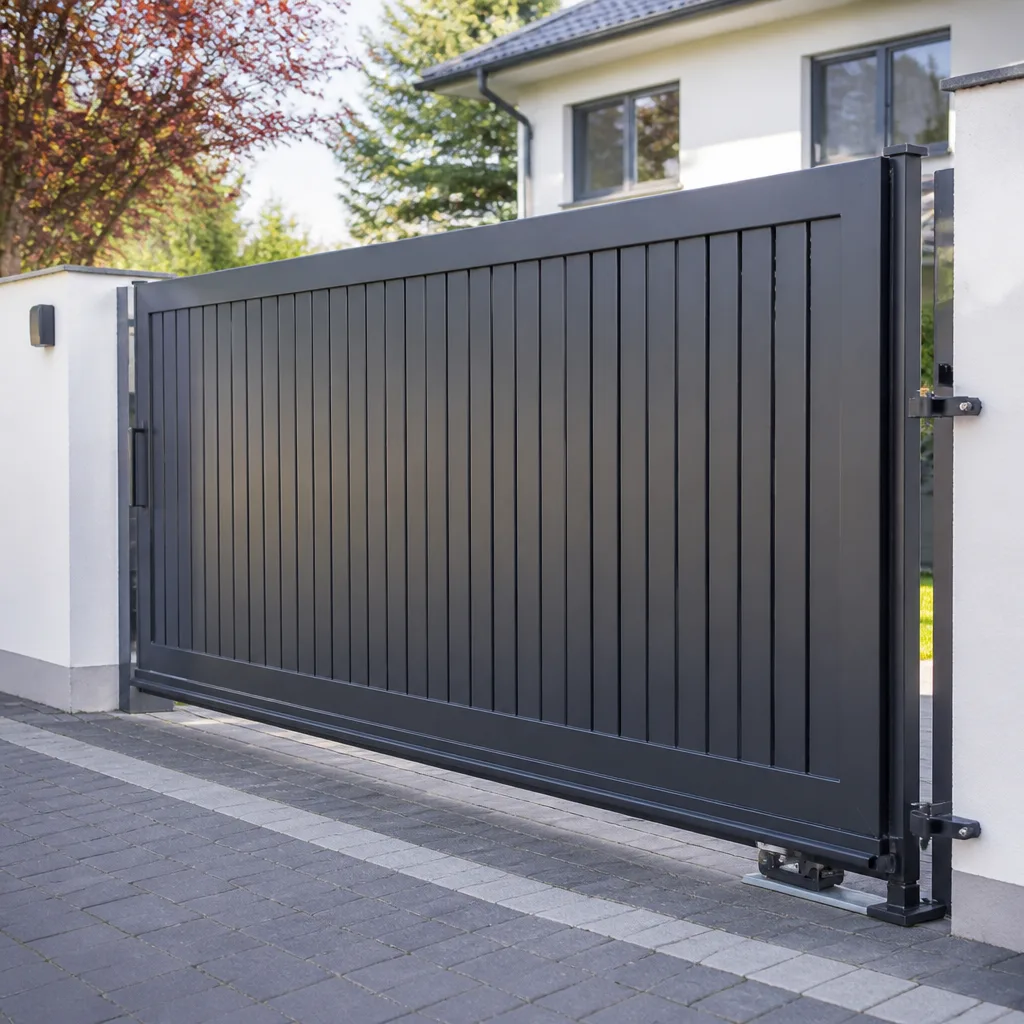 Sliding driveway gates
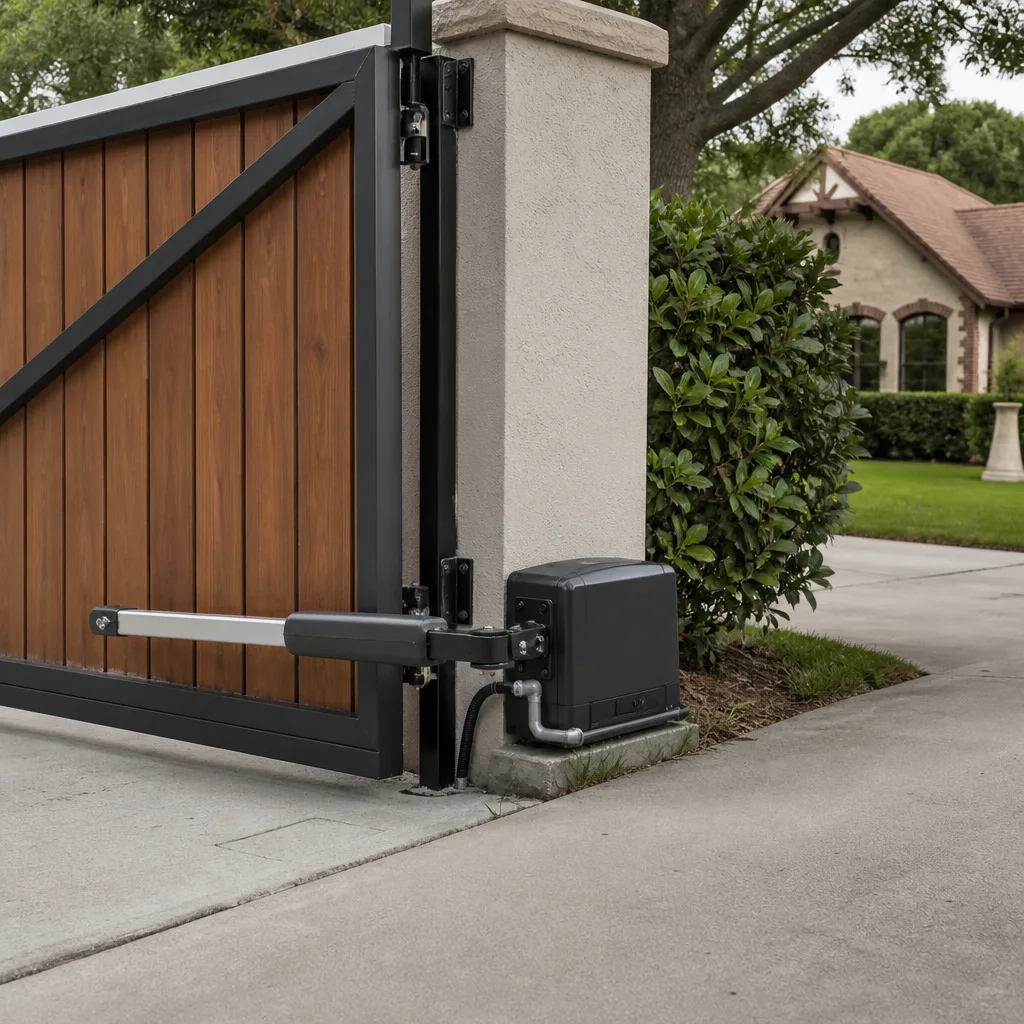 LiftMaster operators
Free on-site gate assessment - hinges, posts, and your LiftMaster or Nice gate operator checked before anything is quoted
The assessment is free and the quote is the invoice.
Get your free estimateGate Repair Troubleshooting in Newark: Common Problems and How to Fix Them
A gate that reverses before it closes isn’t broken. It’s communicating. The photoelectric beam has been interrupted, or the operator’s force setting is reading resistance it doesn’t like, and the system is telling you exactly that through its behavior. Most homeowners hear “broken” and reach for the phone. Most generalists hear “broken” and reach for a replacement quote. Neither reads the symptom. Nearly every gate failure falls into one of three root causes: power, mechanical resistance, or signal interference. Learn which category your gate is in and you cut the diagnostic work roughly in half. This guide teaches you to read your gate the way a technician does, using the climate, wiring, and traffic patterns specific to Newark. You’ll learn what each behavior pattern means, what you can safely check, and when to stop and call. No guessing.
Quick Answer
Gate repair troubleshooting in Newark starts with identifying which of three failure categories your gate is in: power (the operator isn’t getting enough voltage), mechanical resistance (the gate is binding on its track, hinges, or rollers), or signal interference (a sensor, loop detector, or remote is receiving bad input). The gate’s behavior pattern tells you which. A gate that opens but won’t close points to a safety sensor or loop. A gate that stalls mid-travel points to mechanical bind or voltage drop. A gate that’s completely dead points to power supply or control board. Electric gate repair done right starts with reading the symptom, not replacing parts.
Styles & brands we work with
- Wrought iron
- Wood & steel frame
- Farm & ranch
- Sliding driveway gates
- LiftMaster operators
Table of Contents
- The Three Root Causes of Every Gate Failure
- How to Read Your Gate’s Symptoms Like a Technician
- Why Newark’s Climate Creates Mechanical Bind That Gets Misdiagnosed
- The Voltage Drop Test: When Wiring Mimics a Dead Control Board
- Loop Detector Interference from Newark’s Traffic Corridors
- When a DIY Reset Makes the Problem Worse
- Brand-Agnostic Diagnosis: Why the Label on the Motor Doesn’t Matter
- Commercial vs. Residential Gate Problems in Newark
The Three Root Causes of Every Gate Failure
Every gate failure we diagnose traces to power, mechanical resistance, or signal interference. Understanding what each category looks like in practice is the foundation of troubleshooting, and it’s where most homeowners go wrong. They assume “the motor is dead” when the motor is fine and the gate is simply binding on a worn roller. They assume a sensor is broken when a low-voltage wire run is starving the control board. Getting the category right is most of the diagnosis.
Power problems mean the operator isn’t receiving adequate voltage. That could be a failing transformer, a tripped breaker, a corroded battery in a solar or backup setup, or undersized wire runs that can’t carry enough current over distance. Signs: the gate moves slowly, stalls under load, or the operator clicks but doesn’t engage.
Mechanical resistance means the gate itself is fighting the operator. Worn hinges, misaligned tracks, debris in the roller path, or a slide gate that’s jumped its guide all create resistance the operator reads as an obstruction. Signs: the gate moves in jerks, reverses partway through travel, or the operator strains audibly.
Signal interference means the operator is receiving input it shouldn’t. A misaligned photoelectric sensor, a false trigger from a loop detector, a stuck keypad button, or radio interference on the remote frequency. Signs: the gate behaves erratically, opens unprompted, or refuses to close while everything else appears normal.
Here’s the practical version:
- Gate doesn’t move at all: start with power. Check the breaker, the operator’s power LED, and the battery backup if there is one.
- Gate moves slowly or stalls: start with mechanical. Manually release the operator and try to move the gate by hand. If it binds, the problem isn’t the motor.
- Gate reverses or won’t close: start with signal. Inspect the safety sensors and check for anything interrupting the beam.
- Gate behaves randomly: start with signal interference and wiring, especially if the property has old underground runs.
Most gate problems are diagnosable on the first visit when the technician knows which category to test. That’s the difference between a targeted repair and a parts-guessing exercise.
How to Read Your Gate’s Symptoms Like a Technician
The behavior pattern of a failing gate is a diagnostic tool. Technicians don’t guess; they watch the gate cycle and read what it does. Here’s how to do the same thing before you call anyone, so you can describe the problem accurately and skip a wasted visit.
Distinguishing three failures by behavior alone
- Operator failure: The gate doesn’t move at all, or the motor runs but the gate doesn’t respond. You hear the motor turning inside the housing, but nothing happens at the gate. This usually means a broken drive gear, a sheared key, or a failed clutch. The motor isn’t the problem; the connection between the motor and the gate is.
- Control board fault: The gate behaves in sequence violations. It opens, waits, then opens again instead of closing. It cycles twice. It ignores the remote but works from the keypad. A control board that’s lost its logic or has a damaged relay will produce behavior that looks like several problems at once, but always in a consistent pattern.
- Obstruction sensor trigger: The gate opens normally but reverses before closing, or stops partway and returns to open. The safety beam is being interrupted, either by a physical obstruction, a misaligned sensor, or a dirty lens. This is the most common “problem” we see, and it’s often fixed by realigning the sensor bracket.
What separates operator failure from control board fault: operator failure is mechanical and consistent (it always fails the same way). Control board fault is logical and inconsistent (it fails in patterns). Signal interference is random. If the gate’s behavior changes day to day, it’s signal. If it’s the same every time, it’s mechanical or power.
One more distinction worth knowing: if your gate reverses only when the sun is directly on the sensor, it’s a sensor alignment issue, not a failure. Photoelectric sensors lose their beam at certain angles. That’s a bracket adjustment, not a replacement. If your gate reverses only on windy days, the operator’s force setting is too tight and the gate is reading wind resistance as an obstruction.
Why Newark’s Climate Creates Mechanical Bind That Gets Misdiagnosed
Newark’s freeze-thaw cycles are brutal on gate hardware. Water gets into hinge gaps, roller bearings, and track joints, freezes overnight, expands, and pushes metal out of alignment. When it thaws, the gap remains but the alignment has shifted. Repeat that cycle through a Newark winter and you have a gate that binds in places it never bound before. The homeowner hears the operator strain and assumes the motor is failing. The motor is fine. The gate is fighting itself.
Humidity does its own damage. Newark summers are humid enough that untreated steel rollers and hinge pins corrode, and corrosion adds friction that the operator reads as an obstruction. A gate that ran smoothly in April can feel stiff by August with no obvious cause. The operator senses the resistance, hits its force limit, and reverses. The homeowner sees a gate that “won’t close” and calls a repair company expecting a board replacement. What the gate needs is a hinge and roller service and a force setting adjustment.
Road salt drift is the third piece. Newark properties near the major corridors and highway interchanges get salt dust in the air through the winter, and it settles on gate hardware and in the track. Salt accelerates corrosion on any exposed metal surface. It also accumulates in slide gate tracks as a fine grit that creates drag. If your slide gate runs on a ground track, salt grit is a genuine seasonal problem in Newark, and it’s why track cleaning matters more here than in most markets.
How to tell mechanical bind from motor failure without tools:
- Put the operator in manual release mode (most operators have a release lever or key).
- Try to move the gate by hand through its full travel.
- If it moves freely by hand, the problem is power or signal. If it binds, grinds, or requires force, the problem is mechanical.
- Check the hinges, rollers, and track for debris, corrosion, or misalignment while the gate is in manual.
That one test separates half the diagnostic work. Do it before you call anyone, and tell the technician what you found. For gates in older Newark neighborhoods where hardware has been in service for decades, this test is especially useful because the mechanical wear is often the whole story.
The Voltage Drop Test: When Wiring Mimics a Dead Control Board
A gate operator that clicks but doesn’t move, or that cycles weakly and stalls, is often not a failed control board. It’s a control board that isn’t getting enough voltage. Undersized wire runs are common in older Newark properties, especially where a gate was added to a property with existing low-voltage landscaping wiring, or where the run from the house to the gate is longer than the original installer accounted for. When the wire is too small for the distance and the load, voltage drops along the run and the operator starves.
What a starved operator looks like: it receives the command, the board lights up, the relay clicks, but the motor doesn’t have enough current to move the gate. The homeowner sees a board that “isn’t working” and replaces it. The replacement board does the same thing, because the board was never the problem. We’ve seen this misdiagnosis more than any other on older Newark properties, and it’s why we test voltage at the operator before we test anything else.
The voltage drop test in principle: measure voltage at the source and again at the operator’s power terminals while the gate is under load. If the drop is significant, the wire run is the issue. A qualified technician performs this with a meter rated for the circuit and with the operator’s wiring diagram in hand. We don’t recommend homeowners probe live circuits at the operator, because the terminals carry line voltage and the risk isn’t worth it. What you can safely do:
- Check the breaker at the panel and confirm it hasn’t tripped.
- Look at the operator’s power indicator LED. If it’s dim, flickering, or absent while the breaker is on, note that.
- Note the distance between the power source and the gate, and whether the wire run is visible or buried.
- Tell the technician all of this when you call. It shortens the diagnostic.
If your gate was installed by a previous owner and you don’t know the wire gauge or the run length, that’s exactly the situation where a professional voltage check saves you from a wrong board replacement. A gate that’s been “fixed” twice with the same symptom is almost always a wiring problem, not a component problem.
Loop Detector Interference from Newark’s Traffic Corridors
Loop detectors are the buried wire loops that tell an automatic gate a vehicle is present. They’re common on commercial gates and on residential gates near busy streets. In Newark, the combination of heavy traffic corridors, older loop installations, and utility work that disturbs the ground creates a specific problem: false detection. The loop reads a vehicle that isn’t there, or fails to read a vehicle that is, and the gate behaves erratically as a result.
The behavior pattern of loop interference is distinctive. The gate opens on its own with no vehicle present. Or it refuses to close because the loop is reading a phantom vehicle and holding the gate open for safety. Or it closes on a vehicle because the loop failed to detect it. On commercial properties in Newark, this is the single most common access control complaint, and it’s frequently misdiagnosed as a control board failure because the gate’s logic seems scrambled.
You can identify loop interference without specialized equipment by watching for these patterns:
- The gate opens only at certain times of day (traffic-dependent false triggers).
- The gate stays open after a vehicle has left and only closes when another vehicle approaches.
- The problem started after nearby utility work, road repair, or construction.
- The gate works normally when tested with a small object but fails with a full-size vehicle.
- Two gates on the same property interfere with each other’s operation.
If any of those match, the loop is the likely culprit. Loop testing requires a megohmmeter and an understanding of the detector’s sensitivity settings. That’s technician work. But knowing it’s a loop problem before the technician arrives tells them to bring the right equipment, and it prevents the wrong repair. On Newark commercial properties where gate uptime matters, that matters.
When a DIY Reset Makes the Problem Worse
Power cycling an operator is the most common DIY fix, and in some cases it’s the right move. It clears a transient logic error. But in specific scenarios, a reset does real harm, and knowing which scenarios those are saves you a bigger repair bill.
Scenario one: the operator has stored travel limits in memory. Some operators learn their open and close positions during setup and store them in non-volatile memory. A reset that clears that memory leaves the operator not knowing where its limits are. On the next cycle it either over-travels and damages the gate or refuses to move at all. Recovering requires a full limit re-learn procedure, which on some commercial operators (DoorKing among them) is not something to attempt from a manual without the right tool.
Scenario two: there’s an intermittent wiring fault. Power cycling temporarily clears the fault’s symptom but doesn’t fix the wiring. The gate works for a day or a week, then fails again. Each reset hides the underlying problem longer, and the intermittent fault can eventually damage the control board’s relay. What looked like a free fix was a slow path to a board replacement.
Scenario three: the operator is in a fault state that logs the cause. Many commercial operators log their last fault code. Power cycling clears the log. If you reset before a technician reads the log, you’ve erased the evidence. That’s the difference between a targeted repair and a diagnostic visit that starts from zero.
Before you reset anything, do this instead:
- Write down exactly what the gate was doing before it failed. Behavior, timing, conditions.
- Check whether the operator display shows a fault code or error message.
- Photograph the display if it does.
- Check the breaker and the manual release. Confirm the gate moves freely by hand.
- Only then consider a reset, and only if the operator manual says it’s safe.
If the gate has failed more than twice in a month, stop resetting it. That pattern means there’s a real fault, and each reset is hiding it. Call for a diagnostic.
Brand-Agnostic Diagnosis: Why the Label on the Motor Doesn’t Matter
The biggest obstacle to getting a gate fixed in Newark isn’t the complexity of the failure. It’s finding a repair company that will work on the brand you already own. Many companies are single-brand dealers or generalists who only know the two or three operators they install most. When they meet a Ghost Controls on a residential driveway or an Elite on a commercial property, they either decline the job or recommend a full replacement, because that’s easier than learning the system.
We take the opposite approach. Our technicians have up to 10 years of experience and work across at least nine operator brands, including LiftMaster, FAAC, BFT, Linear, Viking, Ghost Controls, DoorKing, Elite, and Mighty Mule. We’re independent and experienced with each of them; the brand on the housing tells us what documentation to pull, not whether we can help. Brand-agnostic diagnosis means we troubleshoot the system in front of us rather than defaulting to a brand-specific playbook. That matters most when a property has a legacy operator, a mixed-brand installation, or a non-standard setup that a dealer would turn away.
What brand-agnostic service looks like in practice:
- We read the fault, not the label, and we test power, mechanical, and signal in that order.
- We stock expertise across the major operator families so a diagnostic visit doesn’t become a parts-ordering delay on the types we know best.
- When a gate is beyond repair, we handle the new installation ourselves rather than handing you to a second company.
- We service both residential and commercial systems, so the same technician can read a driveway operator and an access-controlled commercial gate.
If your gate is a brand you’ve been told is “unsupported” or “too old,” that’s worth a second opinion. Most gate problems are diagnosable on the first visit regardless of what’s on the housing. If it opens and closes a gate, we service it. For a deeper look at our full-service scope, see Gate Repair Newark.
Commercial vs. Residential Gate Problems in Newark
Commercial and residential gates fail differently, and troubleshooting them well means knowing which failure modes are more likely on which side of the property line. In Newark, the split is clear.
Residential gates are more likely to fail on mechanical resistance and power. The typical Newark home gate is a swing or slide gate on a driveway, driven by a residential operator such as a Mighty Mule or a LiftMaster, and the failure is usually a worn hinge, a corroded roller, a solar battery that’s aged out, or a voltage drop on an old wire run. Sensor misalignment happens too, especially after a gate has been bumped or after freeze-thaw has shifted the sensor bracket. Residential gate repair in Newark is dominated by these seasonal mechanical issues.
Commercial gates are more likely to fail on signal interference and access control. DoorKing operators, loop detectors, keypads, intercoms, and card readers all interact, and a failure in one component looks like a failure in another. A faulty keypad can make the gate ignore valid credentials. A disturbed loop can make the gate hold open. A control board with a failing relay can make the gate cycle incorrectly under load. Commercial gate repair in Newark is diagnosis-heavy because the systems have more components and more ways to interact badly.
The shared failure mode is the control board. Both sides have one, and on both sides a control board fault will produce symptoms that look like everything else. That’s why voltage testing comes before component replacement on both residential and commercial work. For commercial properties, our electric gate repair service covers the operator, control board, sensors, and access control components as one diagnostic process rather than four separate visits from four contractors.
Residential or commercial, the sequence is the same: read the behavior, classify the failure, test in order. The difference is which components sit downstream of the test.
Common Mistakes to Avoid
- Replacing the motor when the gate is binding. A strained operator is usually reporting a mechanical problem, not causing it. Release the operator and check whether the gate moves freely by hand before you spend anything on motor work. This is the most common misdiagnosis on older Newark properties.
- Power cycling repeatedly to clear a recurring fault. Each reset hides the underlying issue and can eventually damage the control board’s relay. Two failures in a month is a real fault, not a glitch.
- Ignoring the seasonal pattern. If your gate binds every January and frees up by March, it’s freeze-thaw on the hardware, not an operator problem. Treat the hardware and the pattern stops. Neglect it and the operator eventually fails from the added strain.
- Assuming a dirty sensor is a broken sensor. Photoelectric lenses collect pollen, grit, and salt dust through the year, and a dirty lens reads as an obstruction. Clean the lenses before you call for a sensor replacement.
- Burying the loop detector problem under a control board replacement. If your commercial gate holds open after vehicles leave, the loop is the first thing to test. Replacing the board won’t fix a loop issue.
- Letting a generalist install or repair a system they don’t know. A handyman who works on gates “sometimes” can leave safety edges disconnected or force limits set wrong, which is a genuine danger on a heavy gate. Use a gate specialist.
- Testing live operator terminals yourself. The power terminals inside an operator carry line voltage. A voltage drop test is technician work, and probing it without the right meter and training is how people get hurt.
See the difference
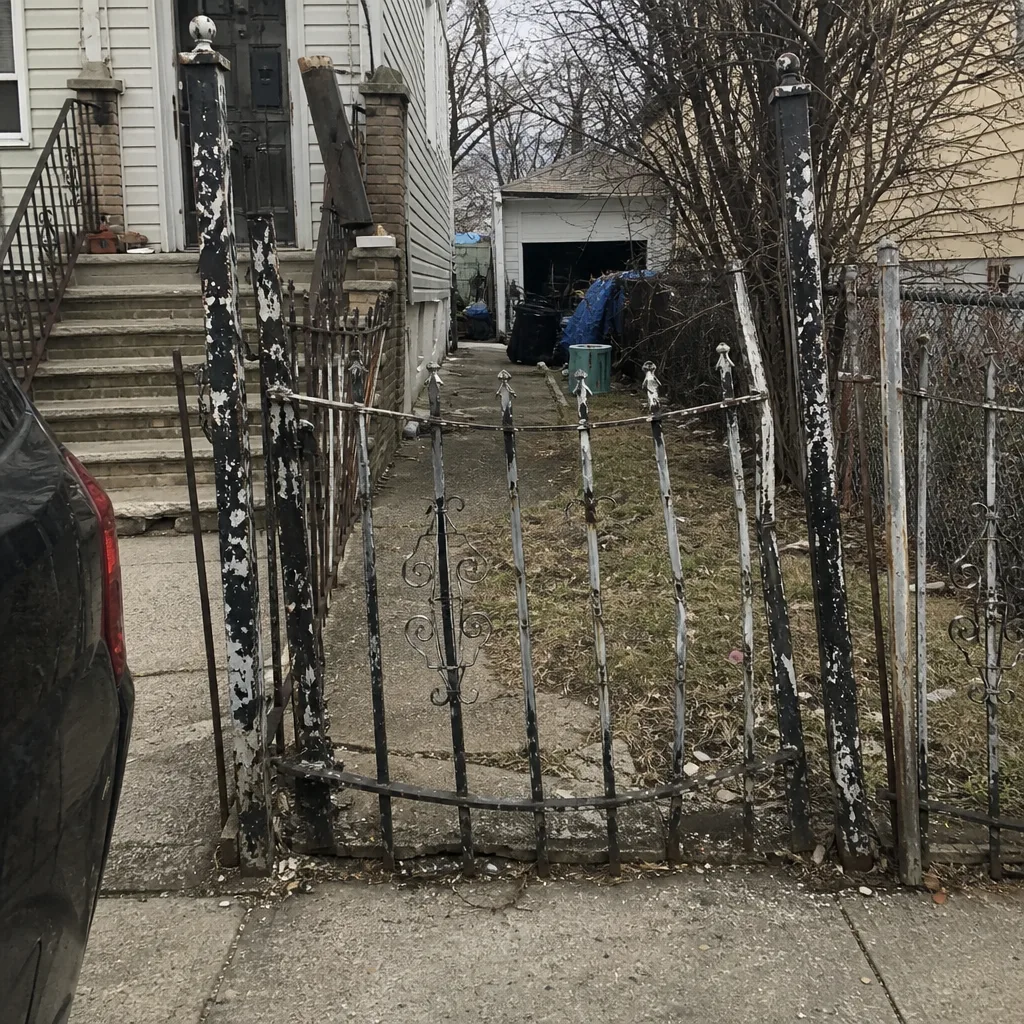 Before
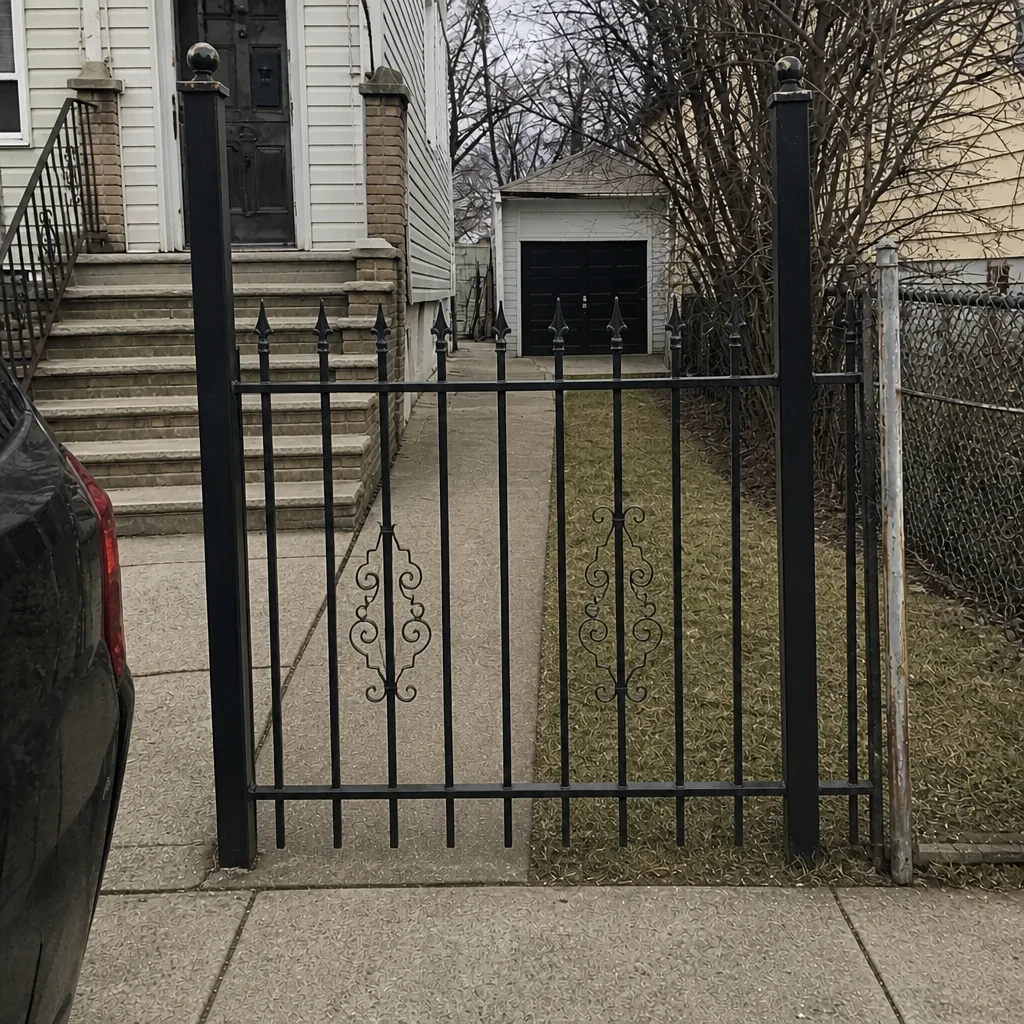 After
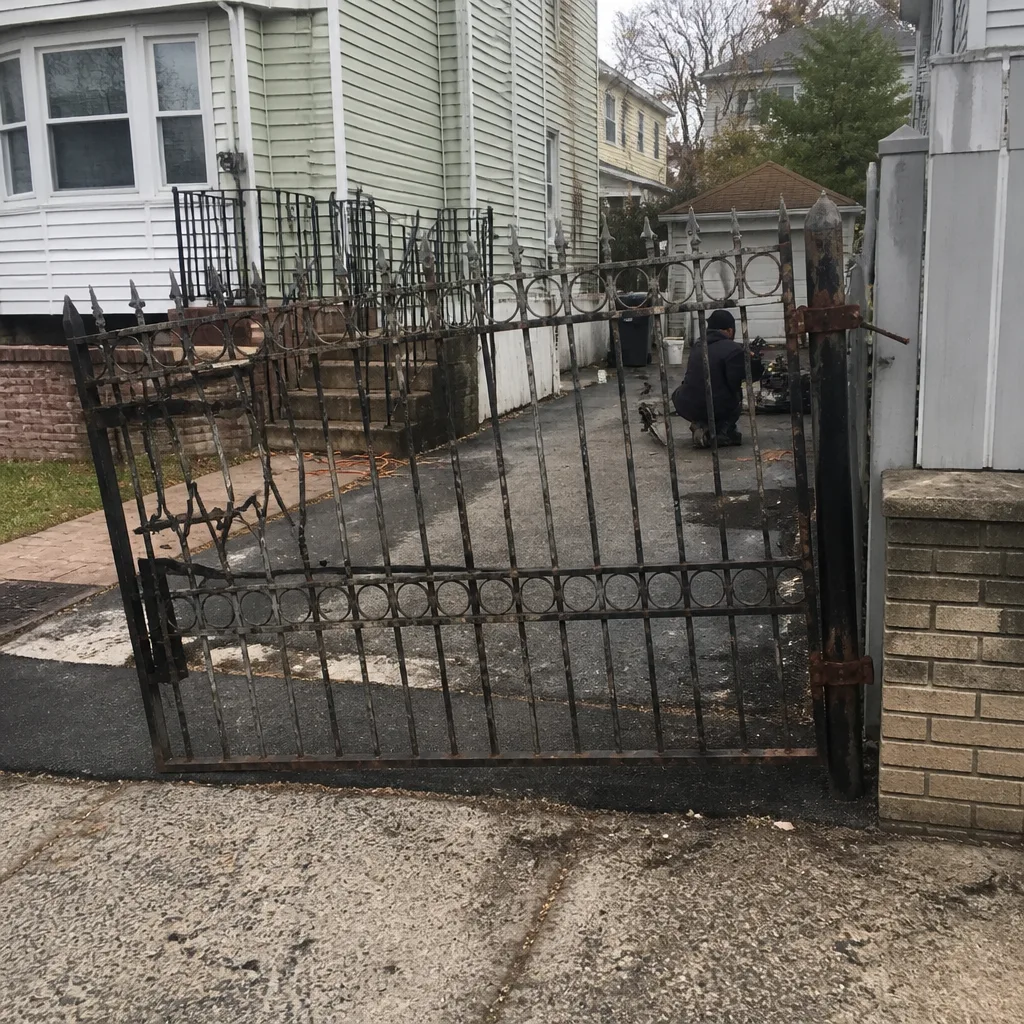 Before
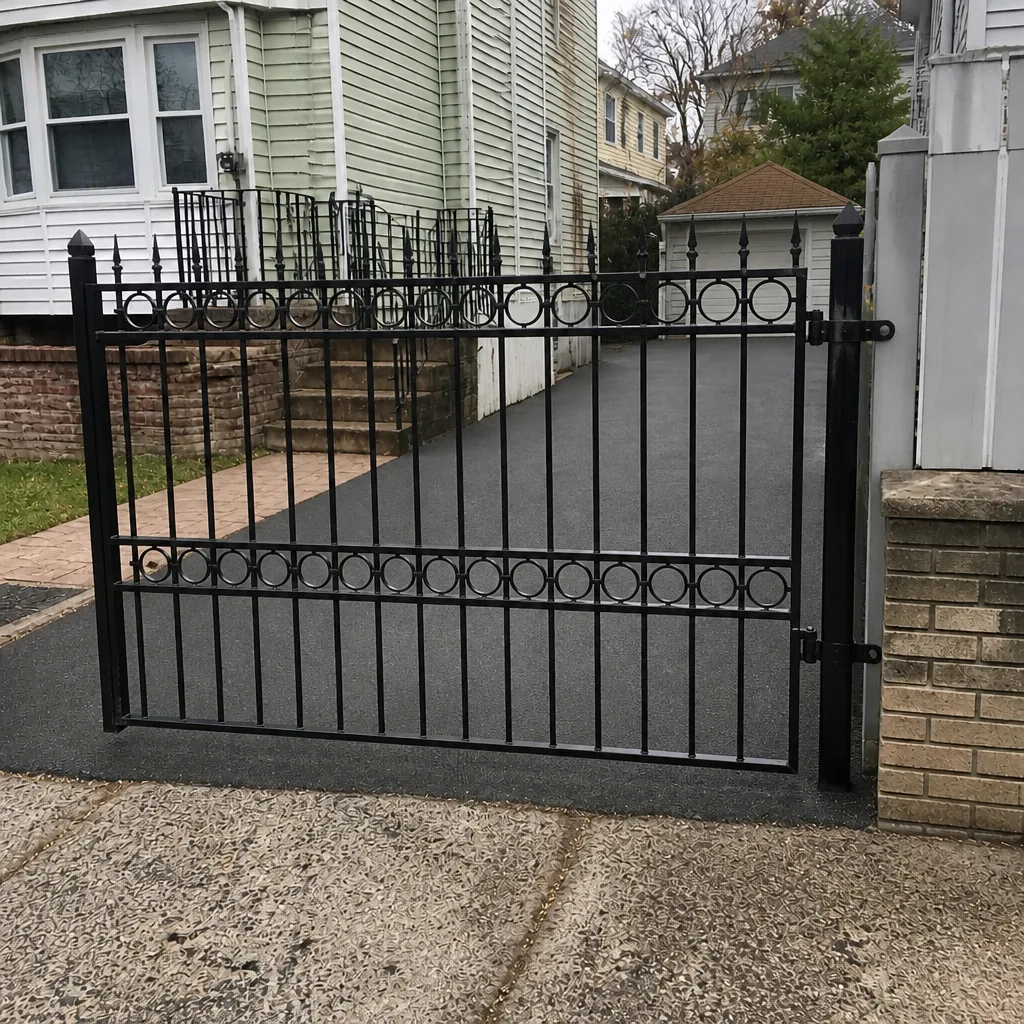 After
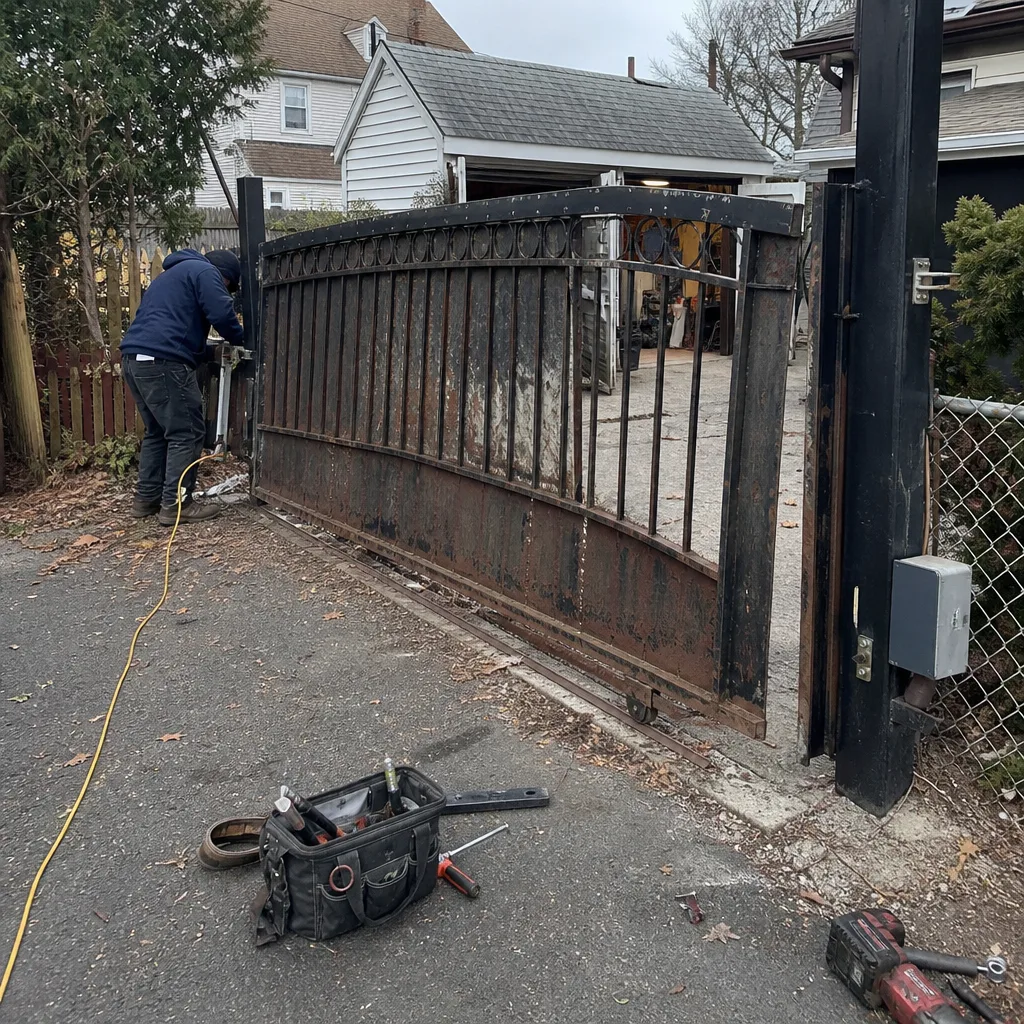 Before
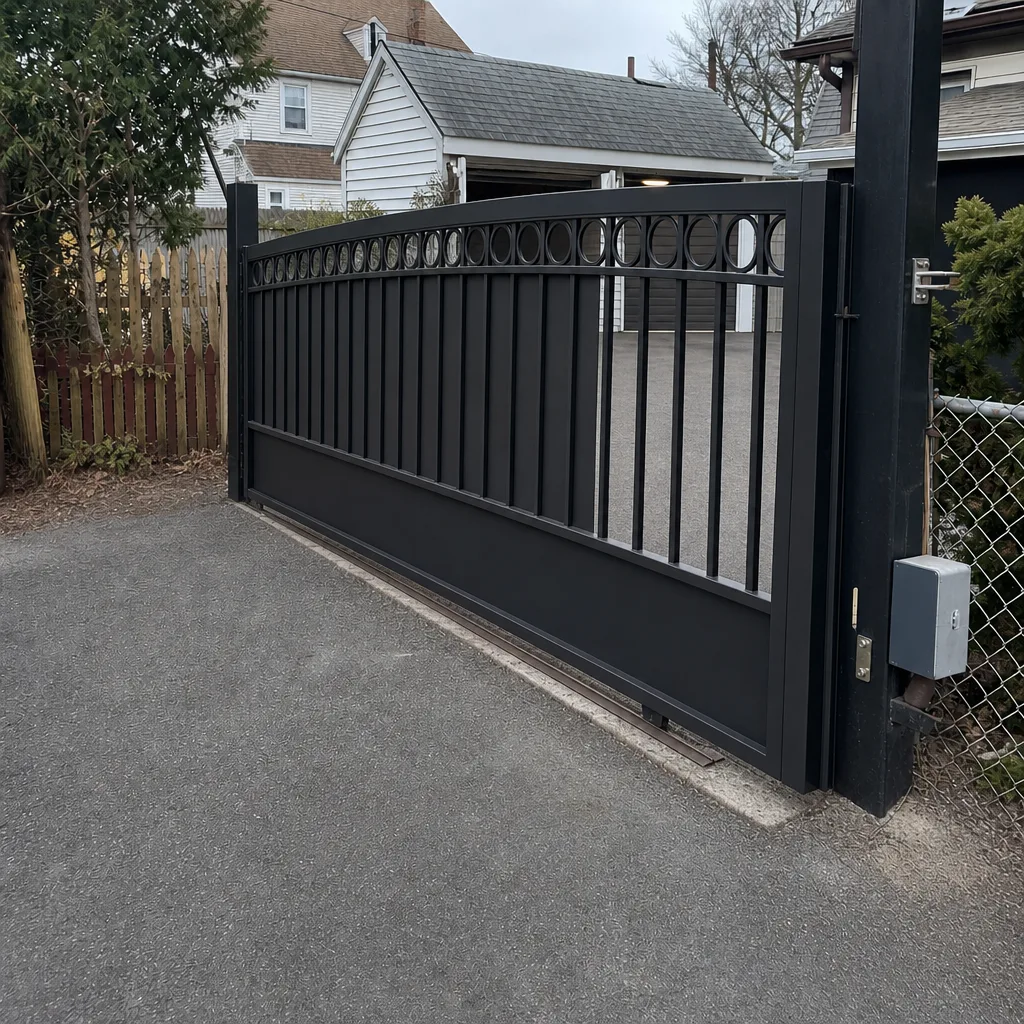 After
When to Call a Professional
Some troubleshooting you can do safely: reading the gate’s behavior, checking the breaker, releasing the operator and moving the gate by hand, cleaning the sensor lenses, and noting the symptoms. Stop there. Call a professional when the gate won’t respond to the remote or keypad at all, when it has failed twice in a month, when you smell burning from the operator housing, when the gate reverses unpredictably, when the gate is a heavy slide or swing panel whose failure could trap or crush someone, or when any part of the power supply or control board needs testing. Heavy gate panels and operator wiring are genuinely dangerous, and a gate that moves when it shouldn’t is a safety problem, not a convenience one. Gate Repair Newark offers free estimates in Newark. Call (833) 983-2324. We answer 24/7. Fast dispatch from 7am to 7pm, Sunday through Friday. Our technicians have up to 10 years of experience, and they work on the brand you already have. Head to gate repair to see what a diagnostic visit includes.
Frequently Asked Questions
A gate that opens but won’t close is almost always a safety sensor or loop detector issue, not a motor or control board failure. The operator is designed to refuse to close when its safety input says something is in the way. Check the photoelectric sensors first: are the lenses clean, are the brackets aligned, is anything interrupting the beam? If the gate is on a property with a loop detector, the loop is the second suspect. If the gate closes fine when you hold the remote down but reverses when you release it, that’s a classic sensor misalignment pattern. Call (833) 983-2324 for an exact quote. Estimates are free.
Gate repair in Newark is priced per job by a written estimate, so the price depends on what the diagnostic finds. A sensor realignment, a hinge service, or a track cleaning is a smaller job than a control board replacement or a motor assembly repair. The written estimate sets the final price, and it’s quoted and agreed before any work starts. That means you know the cost before the technician begins, and there’s no invoice surprise afterward. Call (833) 983-2324 for a free estimate.
Most gate problems are diagnosable on the first visit, and many are repairable on the same visit. The exceptions are jobs that need a part ordered, which happens most often on older or less common operators. Either way, you’ll get a written estimate before any work starts, so you know the scope and the price up front. Call (833) 983-2324. We answer 24/7. Fast dispatch from 7am to 7pm, Sunday through Friday.
We service at least nine major operator brands, including LiftMaster, FAAC, BFT, Linear, Viking, Ghost Controls, DoorKing, Elite, and Mighty Mule, along with legacy, mixed-brand, and non-standard setups. We’re independent and experienced with each of them, which means we troubleshoot the system in front of us rather than defaulting to a brand-specific playbook. If a previous company told you your brand was unsupported, call us for a second opinion. Call (833) 983-2324 for a free estimate.
Yes. A full installation includes the power run, the operator, the safety edges, and the full safety sensor setup so the gate meets code on obstruction detection. Installation work is measured, ordered, and scheduled rather than same-day, so the process starts with a free measure and a written price. The price is quoted and agreed before any work starts. Call (833) 983-2324 to schedule a measure and get your written price.
A gate that stalls mid-travel is usually experiencing mechanical resistance or voltage drop, not motor failure. Newark’s freeze-thaw cycles and humid summers distort hardware and add friction, and older properties often have undersized wire runs that starve the operator. Release the operator and try to move the gate by hand: if it binds, the problem is mechanical, and a hinge or roller service often fixes it. If it moves freely but the operator stalls, the problem is power or the board. Call (833) 983-2324 for a diagnostic and a free estimate.
The Bottom Line
Gate repair troubleshooting starts with reading the symptom, not replacing a part. Every failure is power, mechanical resistance, or signal interference, and the gate’s behavior pattern tells you which. Newark’s freeze-thaw cycles, humidity, and road salt drift create mechanical bind that gets misdiagnosed as motor failure, and older properties’ undersized wire runs mimic control board faults. Before you call, release the operator, move the gate by hand, clean the sensor lenses, and note the exact behavior. That information is worth more to a technician than any guess. When it’s time to call, we work on the brand you already have, and the written estimate is agreed before any work starts. Explore our Newark service coverage for more on how we work.
Call (833) 983-2324 for a free estimate. We answer 24/7. Fast dispatch from 7am to 7pm, Sunday through Friday.
Written by the team at Gate Repair Newark.