
Last updated November 16, 2026
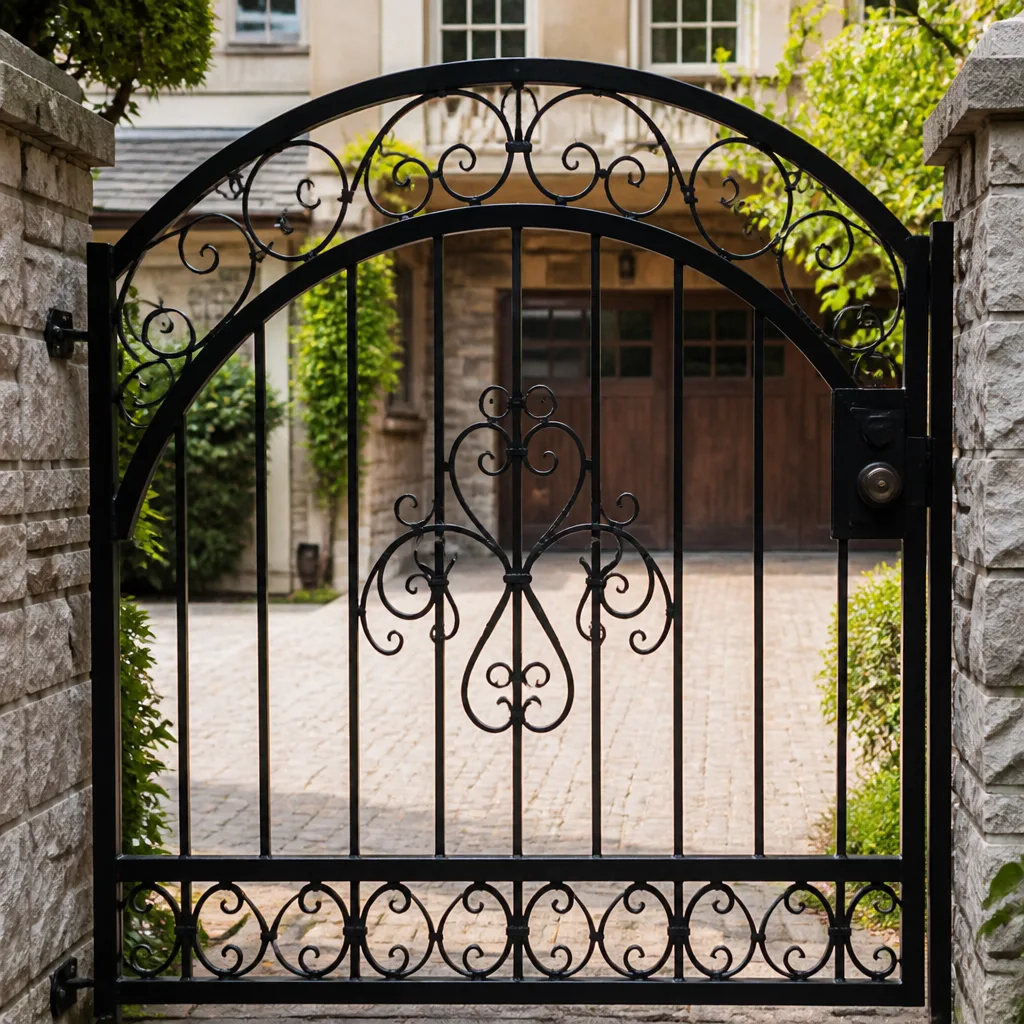 Wrought iron
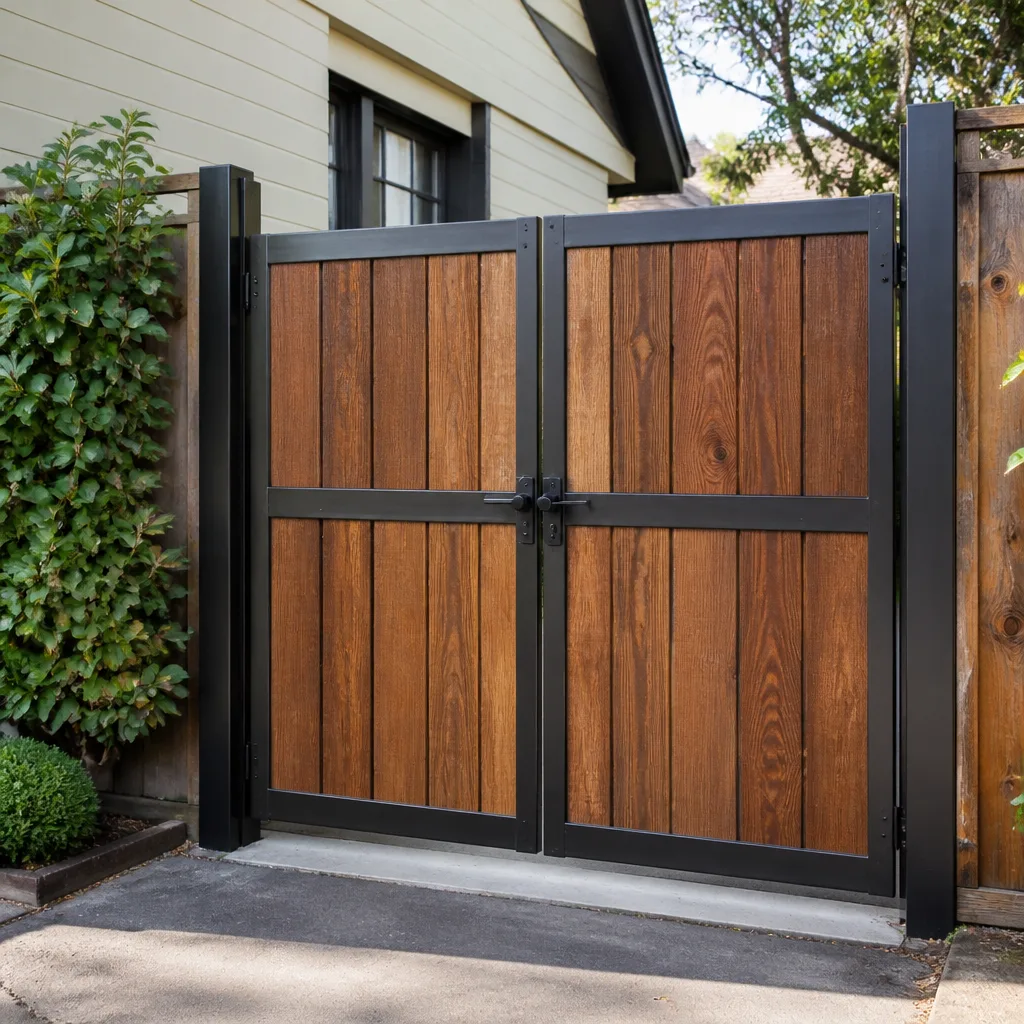 Wood & steel frame
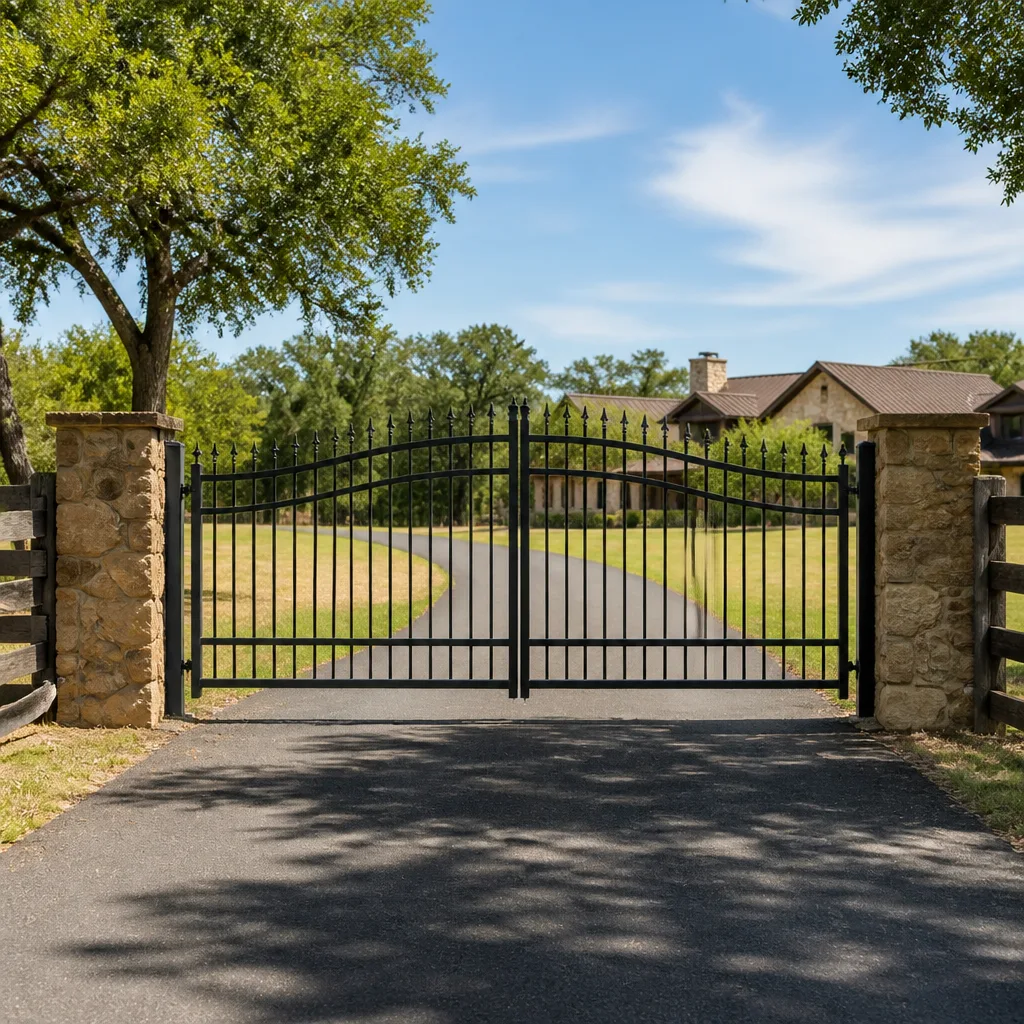 Farm & ranch
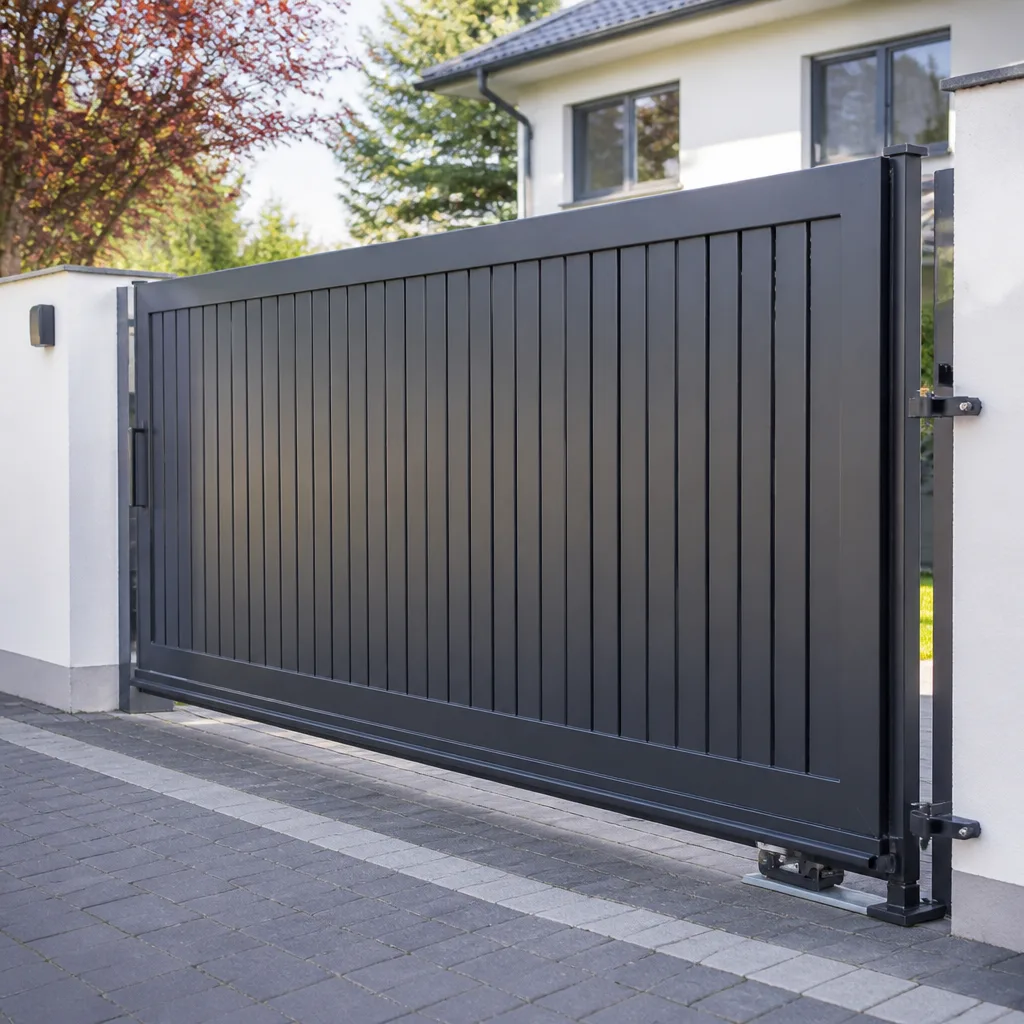 Sliding driveway gates
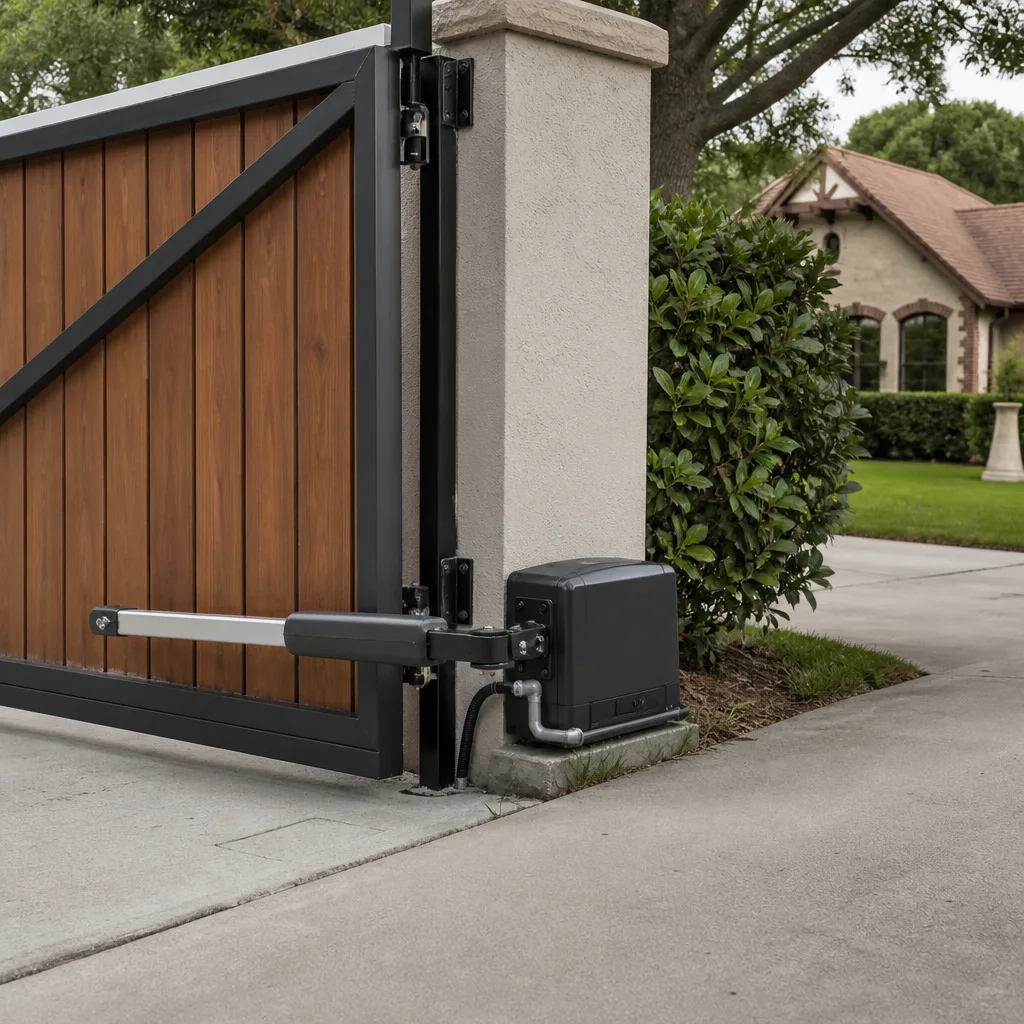 LiftMaster operators
Free on-site gate assessment - hinges, posts, and your LiftMaster or Nice gate operator checked before anything is quoted
The assessment is free and the quote is the invoice.
Get your free estimateGate Repair Warning Signs: A Newark Homeowner’s Reference Guide
A gate that reverses for no apparent reason isn’t malfunctioning. It’s doing exactly what its safety system told it to do, which means something in the entrapment-detection chain is triggering. That’s a diagnostic starting point, not a mystery. Most homeowners in Newark treat every odd noise and stutter as the same vague problem, then either ignore it until the gate quits entirely or call someone who guesses at the fix. Neither works. This guide breaks down gate warning signs by component, so you learn what a grinding noise means on a slide gate versus a swing gate, which rust patterns threaten structure, and which failures let you schedule a repair versus lock the gate out today.
Quick Answer
Gate repair warning signs fall into four groups: audio (grinding, clicking, humming without movement), visual (structural rust, sagging hinges, bent track), behavioral (slow cycles, reversed travel, partial open or close), and control-related (flaky remotes, keypad lag, loop detector faults). The symptom points to a specific component. Grinding on a slide gate usually means the track or rollers, while grinding on a swing gate points to the operator arm or hinge bearings. Any gate that won’t reverse on obstruction, or that moves on its own, should be manually locked out until a technician inspects it. In Newark, we diagnose most gate problems on the first visit.
Styles & brands we work with
- Wrought iron
- Wood & steel frame
- Farm & ranch
- Sliding driveway gates
- LiftMaster operators
Table of Contents
- What Do Audio Warning Signs Tell You About a Failing Gate?
- Which Visual Signs Signal Structural Danger?
- What Do Slow or Reversed Gate Cycles Mean?
- Control and Access System Warnings
- Urgency Triage: Repair Now or Lock the Gate Out?
- Why Brand Matters in Gate Diagnosis
- A Step-by-Step Owner’s Inspection Routine
What Do Audio Warning Signs Tell You About a Failing Gate?
Noise is the earliest signal a gate gives you, and the same sound means different things depending on the gate type and the component under load. On a slide gate, a grinding growl during travel usually points to worn track rollers or debris in the track channel, while the same grinding on a swing gate points to hinge bearings or the arm of the operator grinding against a misaligned mount. Our technicians have up to 10 years of experience and the first thing we do on a Newark service call is walk the gate through a full cycle while listening, because the location of the sound narrows the failure to a handful of parts before anyone touches a wrench.
- Grinding: Slide gate – track, rollers, or a bent bottom rail. Swing gate – hinge bearings, bent operator arm, or a worn gearbox.
- Clicking: Almost always electrical. A relay on the control board trying to engage, a limit switch that’s out of adjustment, or a failing capacitor on the motor.
- Humming with no movement: Power is reaching the motor but the motor can’t turn. Stuck brake, seized gearbox, or a jammed gate panel pressing against the operator.
- Intermittent motor sounds – start, stop, start: The safety circuit is interrupting the cycle. A sensor, loop detector, or reversed limit is telling the operator to stop mid-travel.
- Metal-on-metal scraping on a swing gate: Hinge wear severe enough that the gate is dropping and dragging. This one doesn’t wait.
What you should not do is spray lubricant on every moving part and hope the noise goes quiet. Lubricant on a worn roller or a binding arm can dampen the sound while the wear gets worse underneath it. If a noise returns within a week of greasing, the part is failing. For electric gate repair, the source of the sound matters more than its volume.
Which Visual Signs Signal Structural Danger?
Rust is the trickiest visual sign because not all of it matters. Surface rust that leaves a powdery orange film on the top of a tube is cosmetic – wire-brush, treat, and paint. Structural rust appears at the welded seams and the bottom of the vertical posts, usually where the gate meets the ground. Poke a screwdriver into the base of a post and if it sinks in more than a hair, the steel has lost section thickness. That gate is now a heavy panel balanced on weak legs, and it needs a professional assessment before the next wind event. We see this pattern most on older gates across Newark’s Ironbound and North Ward, where decades of freeze-thaw have driven moisture into the same welds year after year.
Newark’s winters matter here. Repeated freeze-thaw cycles widen hairline cracks in paint and welds, and road salt thrown from nearby streets clings to the bottom rails of gates close to the curb. Salt doesn’t cause structural failure by itself, but it accelerates the corrosion that already started at a chip.
- Surface rust: Orange dust, no pitting, no flaking. Treat and repaint.
- Structural rust: Flaking steel, pitting at welds, screwdriver penetration, gaping at the base. Assess before operating.
- Sagging gate panel: Hinges losing alignment, post leaning, or a bent rail. Different causes, but all point at structural load.
- Bent track (slide gates): Visible deflection, gate jumping in the channel, or ground heave. Get it fixed before the rollers eat the rail.
- Cracked welds: Any hairline that grows when the gate cycles is a real problem, not a cosmetic one.
- Standing water at the base: Undermines the footing and speeds corrosion at the post base. Grading may need to change.
Take photos of anything you can’t read clearly. A photo of a suspect weld or post base sent to a technician saves a return trip and lets us bring the right parts. Gate Repair Newark works on both residential and commercial gates, so post-base failures on a heavy commercial slider in Newark’s downtown corridor get the same attention as a single-family swing gate.
What Do Slow or Reversed Gate Cycles Mean?
Behavioral warning signs are the ones homeowners notice first, and each one is pointing somewhere specific. A gate that slows down is not “just getting old” – friction has increased somewhere in the travel path or the motor is losing torque because a capacitor or the gearbox is failing. A gate that reverses mid-cycle is doing its job. Modern operators reverse when the entrapment sensor detects resistance, and the safety system is telling you something is blocking it or the sensor is misaligned. Slow cycles and reversals are different problems with different fixes.
- Slow travel: Check track/roller friction on a slide gate, hinge drag on a swing gate, then capacitor and gearbox. Lubrication and alignment first, motor service second.
- Reverses immediately on close: An object in the path, a misaligned photoelectric sensor, or a safety loop detecting a false presence. Clear the path, then check sensor alignment.
- Reverses randomly mid-travel: A loose safety edge, a sensor bumped out of adjustment, or a loop detector set too sensitive. This is a safety component, not a nuisance.
- Partial open or partial close: A limit switch that’s slipped, or an operator that thinks it’s reached the end of travel. Troubleshooting starts at the limits.
- Won’t stay open: The reverse control loop is being triggered even when nothing is present. On a residential setup that’s often a misread safety edge; on commercial, a loop fault.
- Moves on its own: A stuck command input from a keypad, a stuck loop, or a control board fault. Lock the gate out and call a technician.
The one behavior that always gets a lockout is spontaneous movement. If a gate opens when nobody has commanded it, you’re one cycle away from a hazard, and this is where a trained professional should look at the control board and the input devices together.
Control and Access System Warnings
The electronics tell you a story before the mechanics do. Remotes that need a second or third press, keypads that take two tries, and gates that respond slowly to access commands are usually pointing at signal transmission, wiring, or control board health rather than the motor. In our experience the single most common cause of flaky remote response on a Newark residential gate is a failing battery in the remote itself or a receiver whose antenna has drifted out of position – both cheap, both worth checking before assuming the operator is bad.
- Inconsistent remote response: Remote battery, receiver antenna position, or radio interference. Rule out the cheap causes first.
- Keypad lag or multiple attempts needed: Worn keypad buttons, weak wiring to the access controller, or a control board input that’s failing under load.
- Loop detector errors: False “vehicle present” signals or a loop that won’t trigger on exit. Loop detectors are common on commercial and apartment-gate setups, and they fail in ways that look like operator failures.
- Gate won’t respond at all: Check the power first, then the control board fuse, then the safety chain. If nothing lights on the board, the problem is upstream of the board.
- Intermittent codes on the operator display: These are gold. Whatever code comes up, write it down and tell your technician. It narrows the diagnosis faster than any other clue.
This is where brand matters. DoorKing access controllers, Elite operators, Ghost Controls gates, and Mighty Mule systems each present faults differently. We service all of them, so the diagnostic path isn’t tied to a single playbook. Call (833) 983-2324. We answer 24/7. Fast dispatch from 7am to 7pm, Sunday through Friday.
Urgency Triage: Repair Now or Lock the Gate Out?
Not every warning sign carries the same weight. Some let you schedule an appointment next week. Others mean the gate should be manually locked out until a technician is on site. The dividing line is whether the gate can be counted on to stop for a person, an object, or a vehicle. Once that confidence is gone, a scheduled repair turns into a hazard, and the smart move is to take the gate out of service.
Lock the gate out today if:
- The gate moves on its own with no command from any remote, keypad, or loop.
- The safety reverse stops working – the gate doesn’t back off an obstruction.
- You hear structural metal-on-metal scraping from hinges or track.
- A post has visible lean, a base weld has cracked, or the gate visibly sags.
- The gate is on a commercial or multi-tenant property and any of the above is true. That’s a liability question, not a comfort question.
Schedule a repair this week if:
- A grinding or clicking noise started recently and is getting worse.
- Remotes or keypads take multiple attempts, but the gate itself works.
- The gate slows down but still travels the full path safely.
- Surface rust has moved into pitting or flaking but the structure is sound.
- The loop detector is “flaky” but the gate still responds reliably to entry commands.
For anything in the second list, the right move is a scheduled visit. Free estimates are available, and the written quote you agree to before any work starts is the number you pay. For anything in the first list, keep the gate manually locked and call us. We answer 24/7. A call outside dispatch hours is booked into the next opening, Sunday through Friday, 7am to 7pm.
Why Brand Matters in Gate Diagnosis
Gate operators aren’t interchangeable on the diagnostic side. A LiftMaster control board reports faults differently than a FAAC, and a DoorKing access system on a commercial property behaves under load in ways a residential operator like Ghost Controls never has to. When a homeowner calls somebody who only knows one brand, the diagnostic path narrows to that one playbook, and mixed or legacy setups get misread. We work on the brand you already have. Our gate repair covers LiftMaster, FAAC, BFT, Linear, Viking, Ghost Controls, DoorKing, Elite, and Mighty Mule, along with legacy and non-standard systems where the brand label is long gone.
Older gates on a property in Newark’s Weequahic or Vailsburg neighborhoods often have mixed parts – an original operator with a newer control board, or a motor swap that left the safety components from two manufacturers on the same gate. A brand-agnostic technician reads the whole system in front of them. A brand-locked technician reads a manual.
- Residential operators: Ghost Controls and Mighty Mule are common on homeowner-installed swing gates. Diagnosing these isn’t the same as diagnosing a commercial system.
- Commercial and multi-tenant: DoorKing and Elite operators on apartment and lot gates carry access controllers, loop detectors, and multi-tenant keypads. Failures cascade.
- Mixed-brand setups: After a repair or a replacement, newer parts often coexist with older ones. Diagnose from the symptoms, not the label.
- Legacy systems: Some parts can’t be sourced new. The fix is repair or upgrade a component, not always a full replacement.
A Step-by-Step Owner’s Inspection Routine
You don’t need to touch safety components, wiring, or the inside of an operator to check whether your gate is warning you about something. A short routine catches most of the visible signals between professional visits. If your gate is newer or unfamiliar, run through this once a season; after a Newark winter or a windy spring, run it again.
- Walk the full gate manual: Unlock the operator (or take it off the automatic mode), open the gate by hand, and walk it through the full travel path. Does it drag? Does it scrape? Does it stop at any point? Note where.
- Listen: Have somebody run the gate through an auto cycle while you stand at the hinge side or the track side. Note the specific sound and where it comes from.
- Look at the base of the posts: Check for rust flaking, standing water, cracks in the concrete footing, and lean. Take a photo if you’re unsure.
- Look at the travel path: Slide gates – check for debris in the track and visible deflection in the rail. Swing gates – check the hinge gap and listen for metal-on-metal.
- Run the safety check: Stand clear of the gate, then have someone – safely – place an object in the path during travel. The gate should reverse. If it doesn’t, lock it out and call.
- Check the electronics: Press every remote and every keypad entry once. Note which ones work first time and which ones lag. Weak responses point to the input device, not the operator.
- Write the operator’s error code down: If the display shows one, record it. If the operator has no display, power cycle it once and see if the fault returns. If it does, tell your technician the exact condition.
That’s the whole routine. Don’t move on to the dangerous stuff. The power wiring, the safety edges, and the internals of the operator are not things to diagnose by hand. Our technicians have up to 10 years of experience and we should be the ones inside that operator. If a step in the routine above turns up a sound or movement that concerns you, stop and book a service visit.
For a broader look at how the trade handles these systems in Newark, see our Newark service overview, which covers new installation, complete service cycles from diagnosis to repair, and how we work through legacy setups.
Common Mistakes to Avoid
- Greasing every moving part and calling it repair. Lubricant hides a worn roller or binding arm for about a week before the noise comes back louder. Diagnose the source, then lubricate the correct parts.
- Assuming a noisy gate is a broken motor. Most grinding and clicking we see on Newark service calls is mechanical – track, rollers, hinges, or limits – not the motor. Replacing the operator over a worn roller wastes money.
- Ignoring rust at the base of the posts. Surface rust is cosmetic. Flaking, pitting, or a screwdriver that sinks into a weld means the structure is compromised and the next wind event is a real concern. Treat base rust as urgent.
- Adjusting safety sensors by eye and walking away. Photoelectric sensors and safety edges have to be tested with the gate running. A sensor that looks aligned can still be reading a false reflection.
- Letting a gate that moves on its own stay in service. A gate that operates without a command is waiting for someone to be in the wrong place. Lock it out and call a technician.
- Calling a general handyman for an electric gate. Control boards, loop detectors, and access controllers need a technician who works on these systems daily. A generalist guesses and comes back.
- Skipping the written estimate. Any gate repair should start with a written price you’ve agreed to before work begins. If a technician won’t put it in writing, that’s the mistake.
See the difference
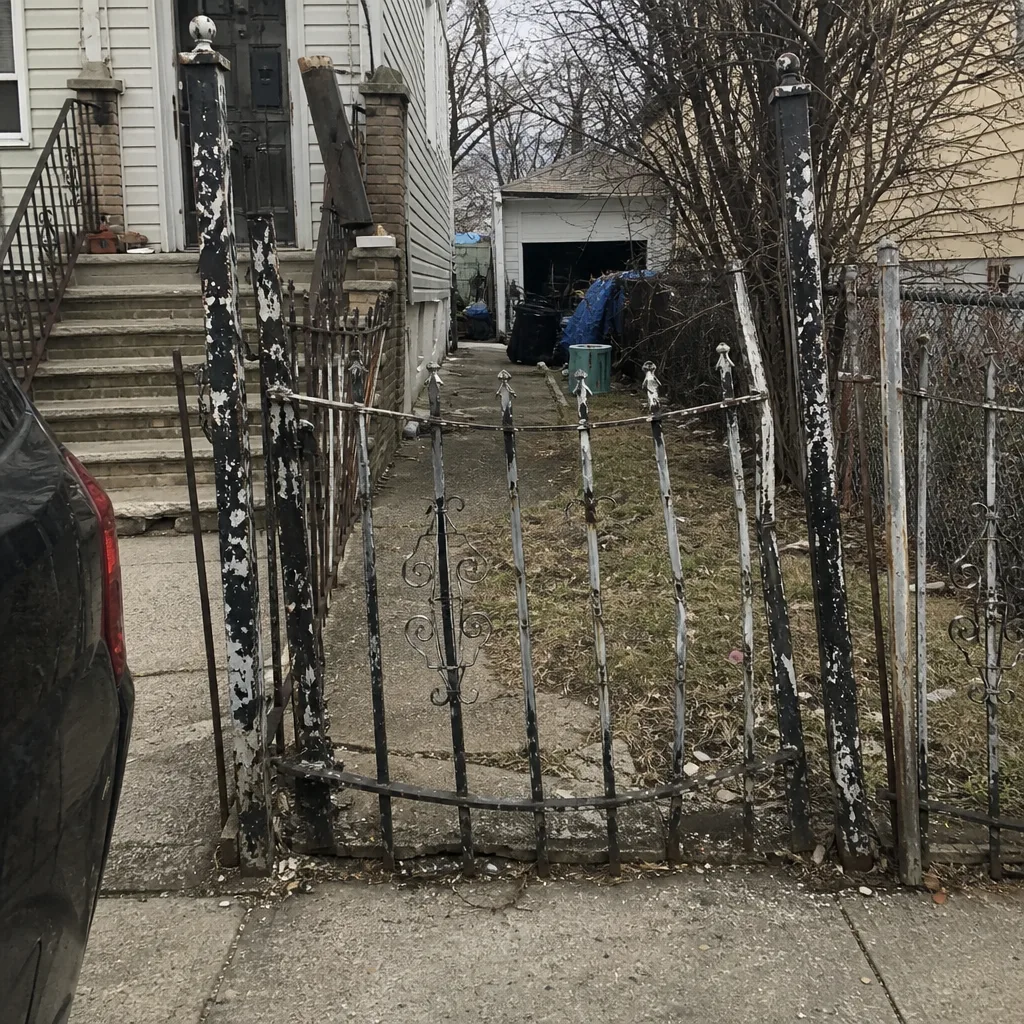 Before
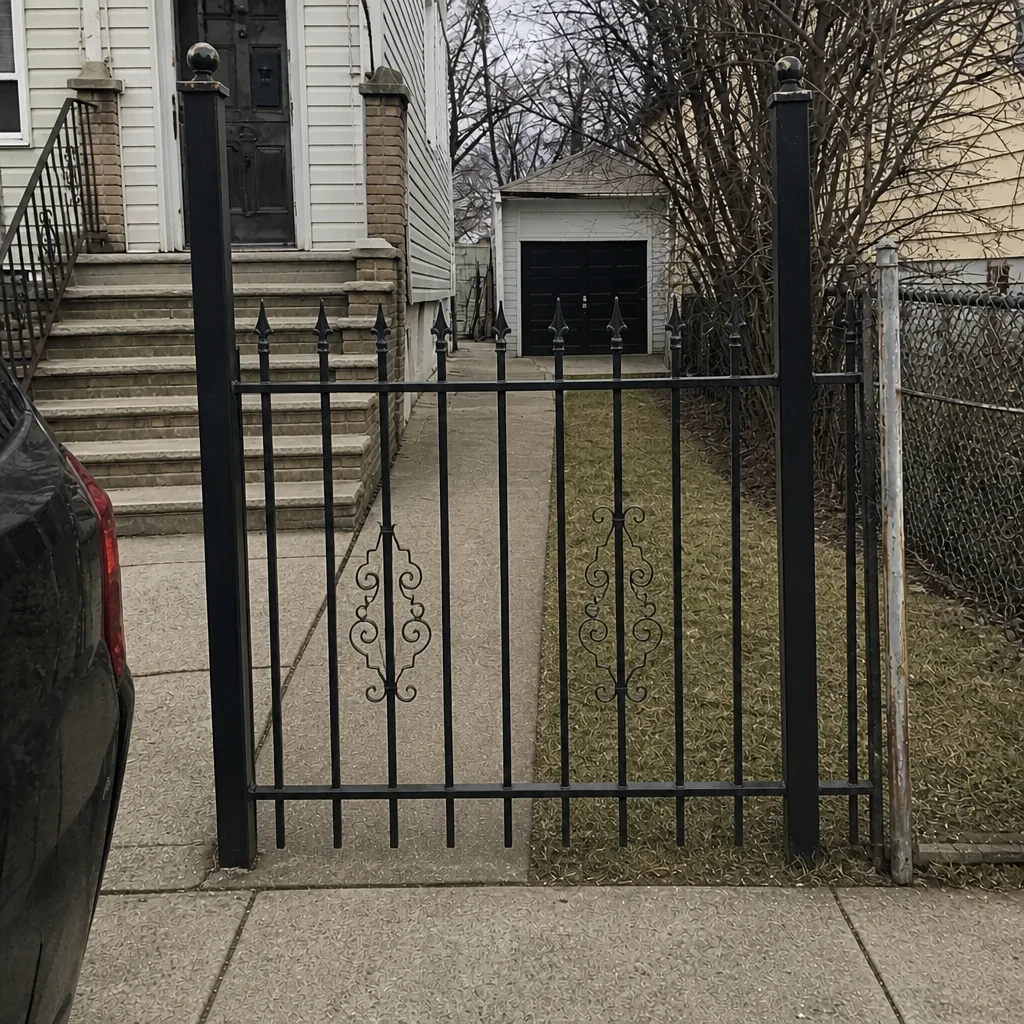 After
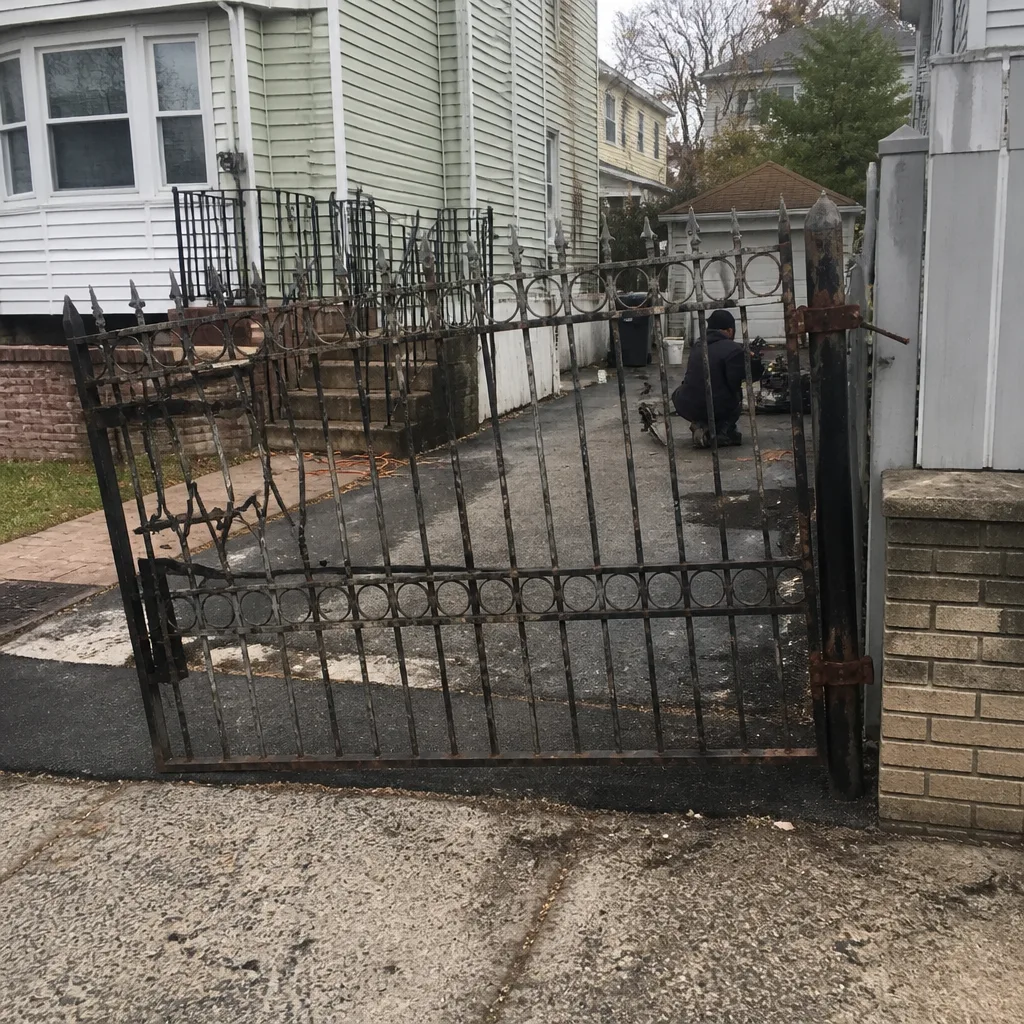 Before
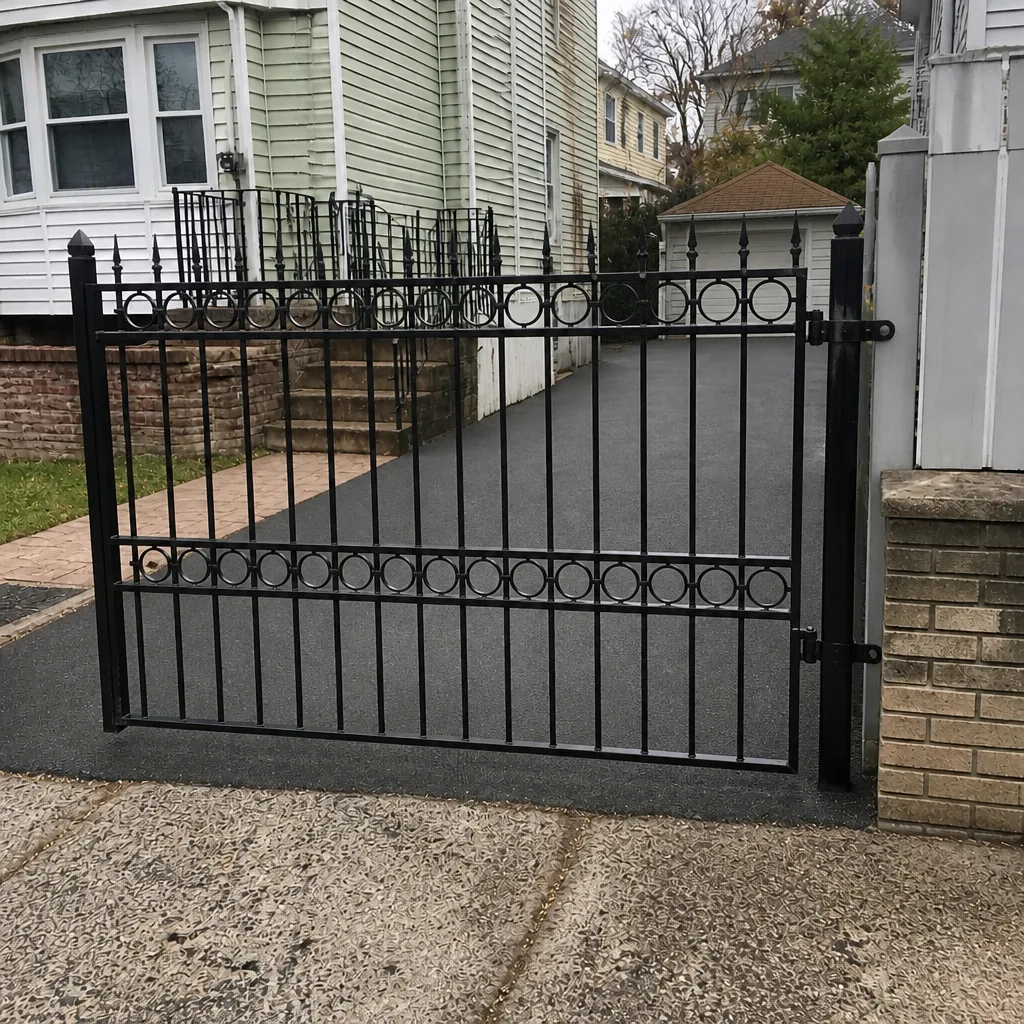 After
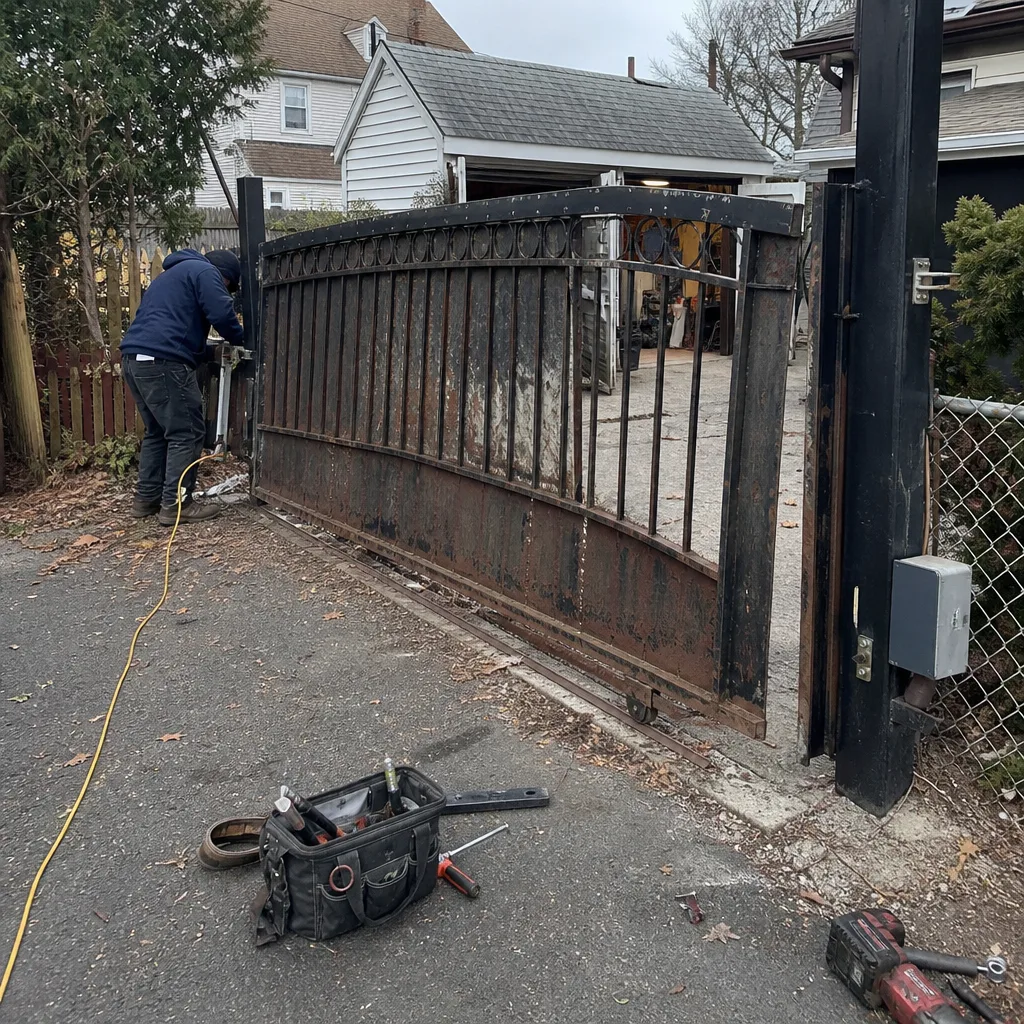 Before
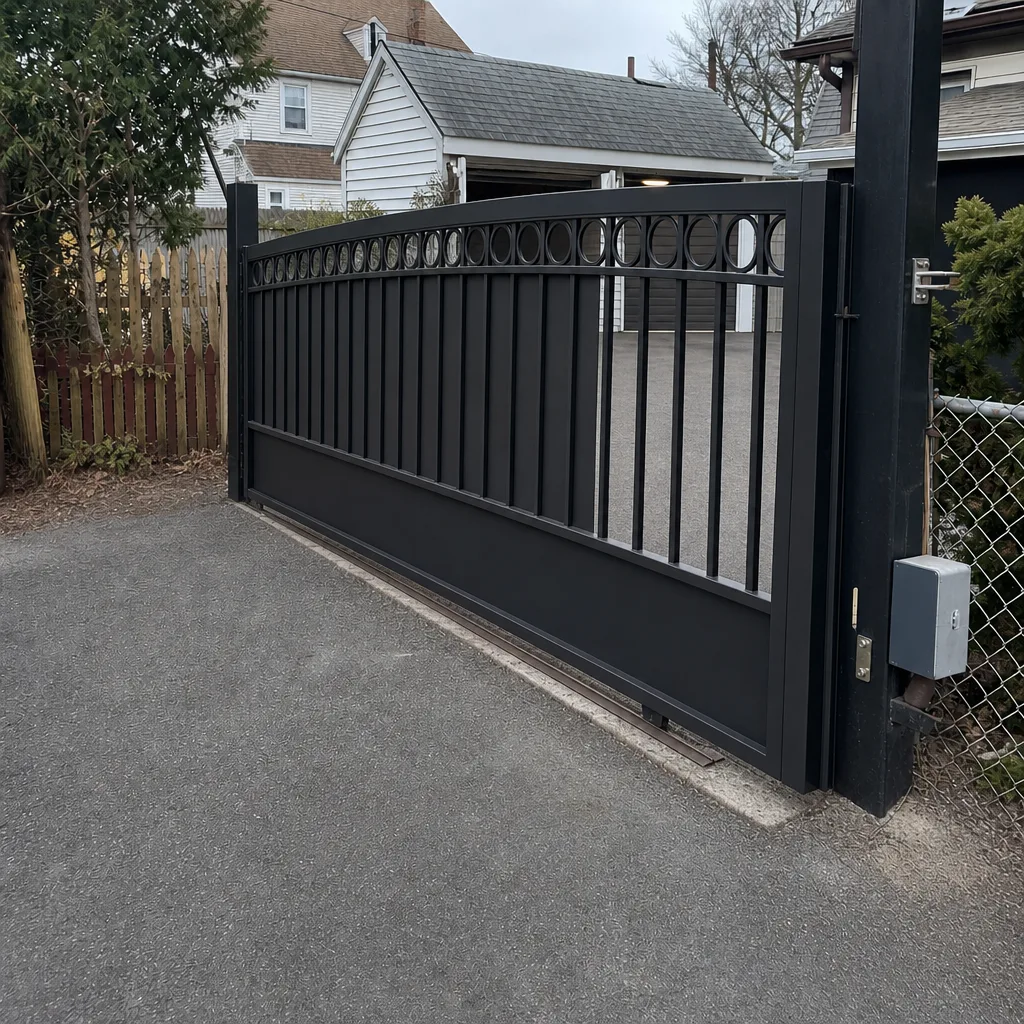 After
When to Call a Professional
Call a professional when the gate won’t reverse on obstruction, when it moves on its own, when hinges or track make metal-on-metal sounds, when a post base is compromised, or when the operator shows a fault code you can’t clear. Also call when a commercial or multi-tenant gate misbehaves – liability on shared property is different from a homeowner’s frustration. Gate Repair Newark offers free estimates in Newark and can be reached at (833) 983-2324. We answer 24/7. Fast dispatch from 7am to 7pm, Sunday through Friday.
Frequently Asked Questions
Usually a new noise or a change in cycle speed. A grinding sound on a slide gate points to the track or rollers, while the same sound on a swing gate points to the hinge bearings or the operator arm. Catch the noise early and the fix is usually a small part, not a full operator replacement.
It’s the entrapment-detection chain doing its job, so it’s not a mystery – it’s a signal. Something in the safety system (photoelectric sensor, safety edge, or loop detector) is triggering a reverse. Get it looked at, because a false reverse today is often a missed reverse after an adjustment goes wrong. Call (833) 983-2324 – estimates are free.
Cosmetic rust is a powdery orange film with no pitting and no flaking – treat and repaint. Structural rust shows at welds and the base of posts, with flaking steel, pitting, or a screwdriver that sinks into the metal. If it’s on the second list, get the gate assessed before operating it.
Usually not. Inconsistent remote response points to the remote’s battery, the receiver antenna, or radio interference – not the operator or the motor. Test the keypad. If the keypad is reliable and the remote isn’t, it’s the remote side, not the gate.
No. A gate that won’t reverse on obstruction should be manually locked out until a technician inspects it. This is the most important safety call on the whole system, and it applies equally to a residential gate and a commercial parking gate in Newark.
We service LiftMaster, FAAC, BFT, Linear, Viking, Ghost Controls, DoorKing, Elite, and Mighty Mule, along with legacy and mixed-brand setups. If it opens and closes a gate, we service it. We work on the brand you already have, and if it’s old or mixed, we diagnose from the symptoms.
The Bottom Line
Warning signs on a gate are component-specific, not generic. Match the symptom to the part and you diagnose in minutes what others miss for weeks. Audio cues point at mechanical wear. Visual cues split into cosmetic rust versus structural compromise. Behavioral cues tell you whether the safety chain or the limits are involved. Control and access warnings usually live in the electronics, not the operator. When the gate moves on its own, won’t reverse, or has noticeable structural damage, lock it out and call. For everything else, Gate Repair Newark handles from a jammed arm to a full installation and free estimates keep the decision cheap to make. Call (833) 983-2324. We answer 24/7. Fast dispatch from 7am to 7pm, Sunday through Friday.
Written by the team at Gate Repair Newark.