
Last updated November 16, 2026
 Wrought iron
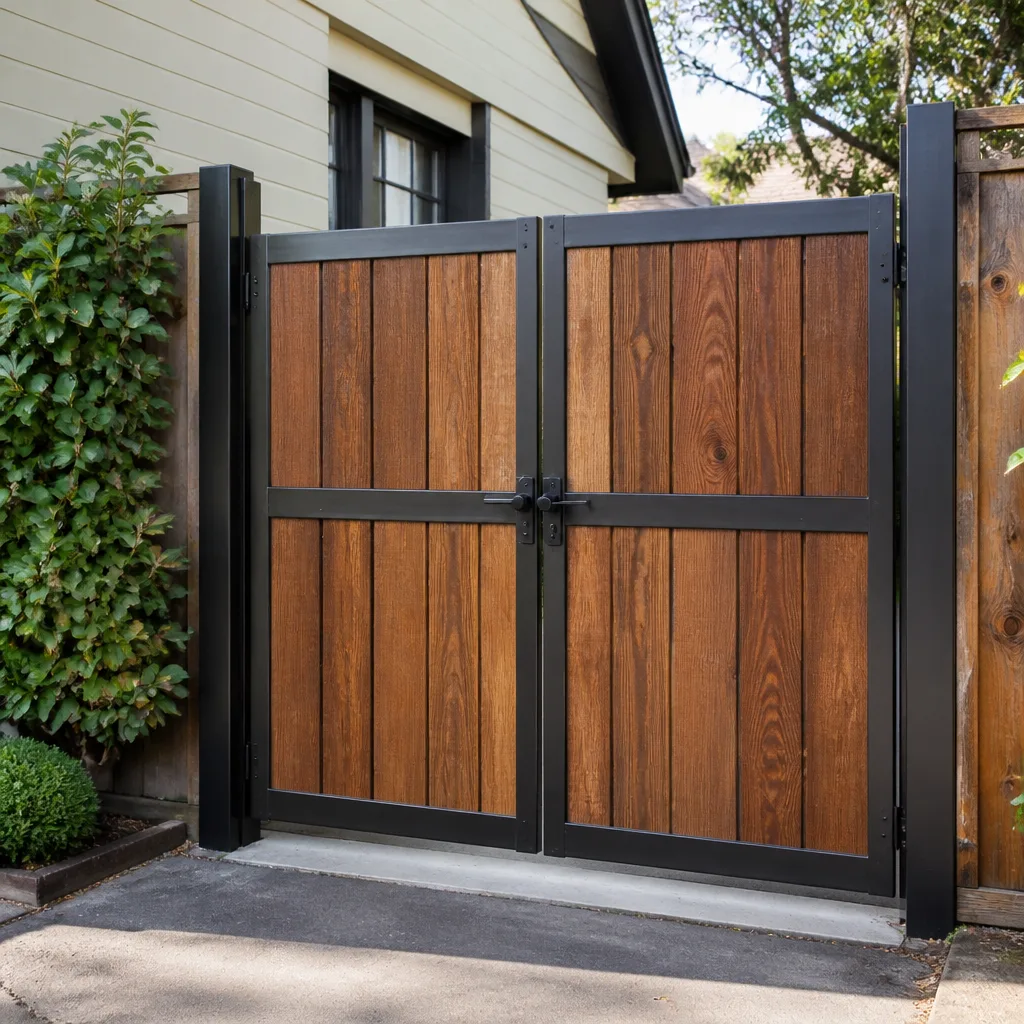 Wood & steel frame
 Farm & ranch
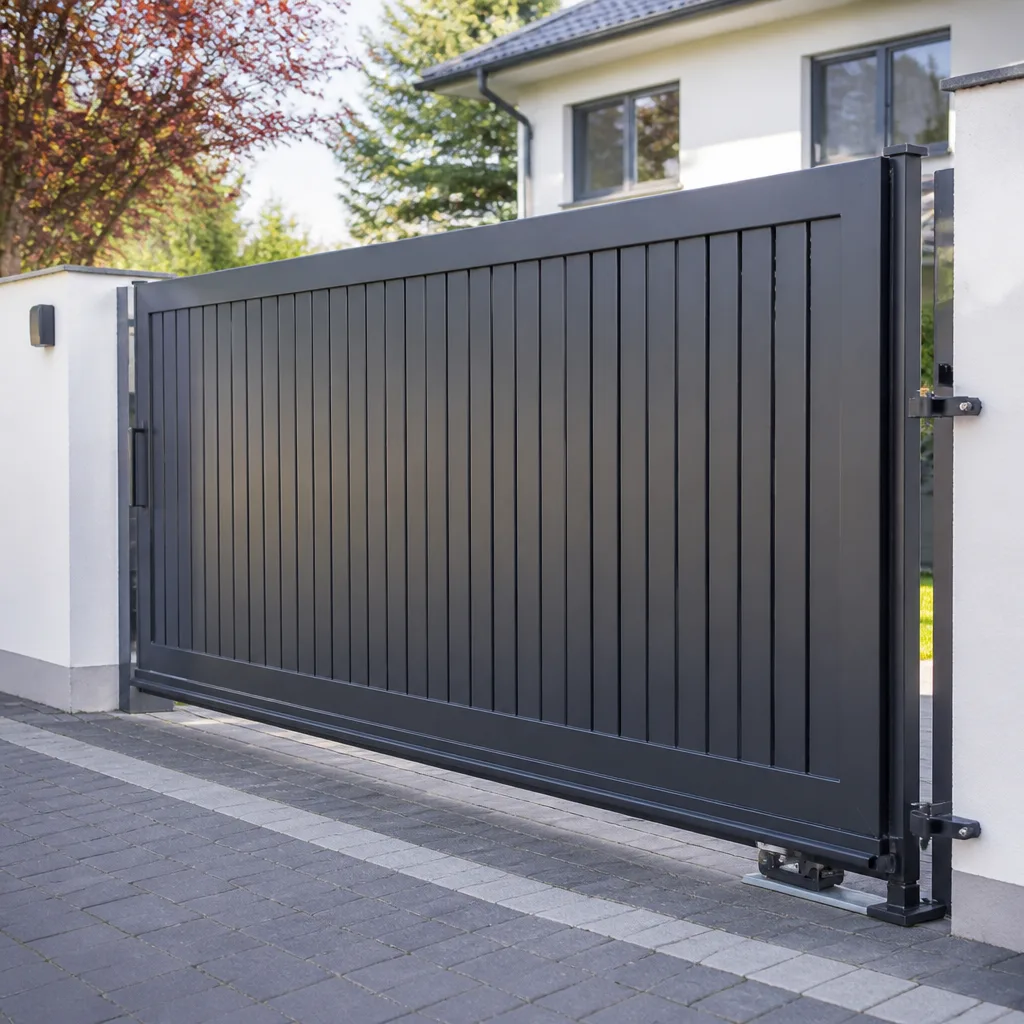 Sliding driveway gates
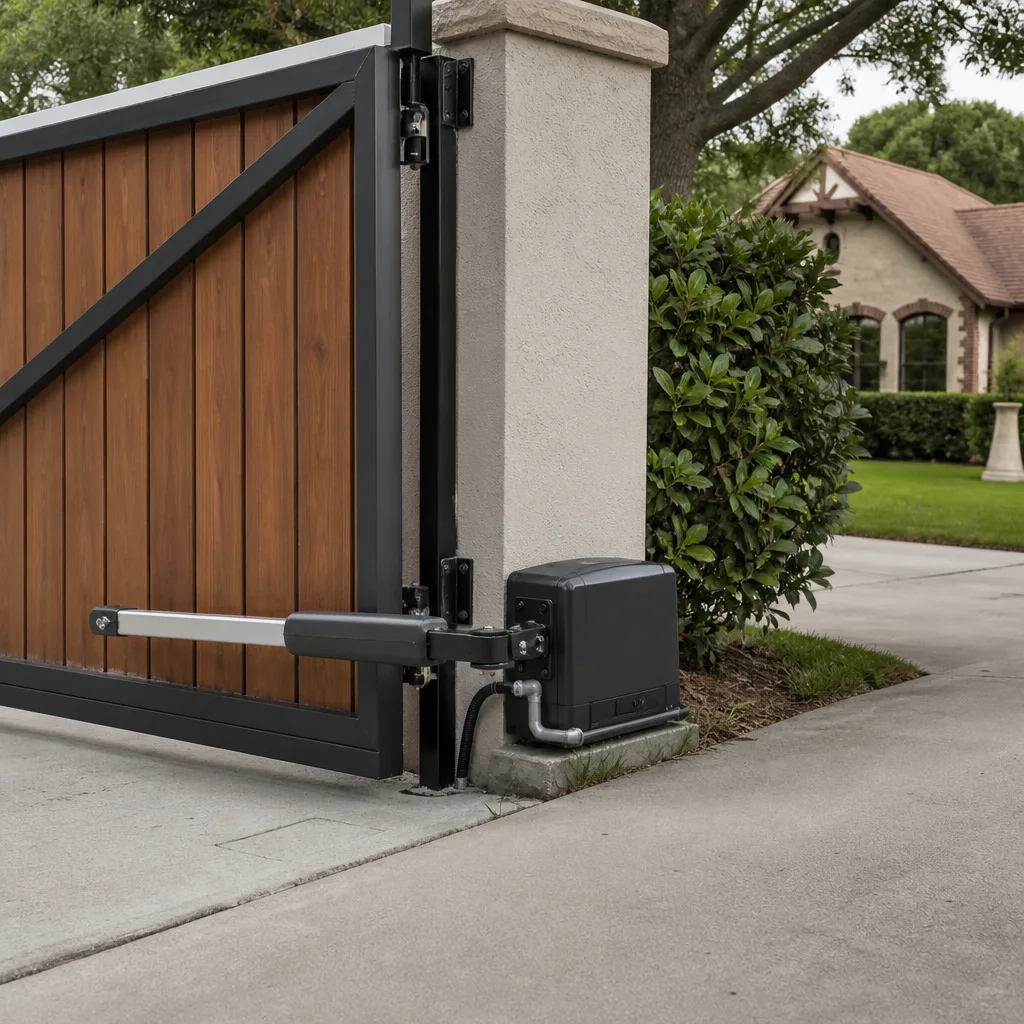 LiftMaster operators
Free on-site gate assessment - hinges, posts, and your LiftMaster or Nice gate operator checked before anything is quoted
The assessment is free and the quote is the invoice.
Get your free estimateGate Repair Emergency Preparedness Guide for Newark Homes
The worst time to learn how your gate works is the moment it stops working. Most Newark homeowners know their gate opens and closes at the push of a button, but very few know what happens when that stops being true. A dead motor, a blown control board, or a gate stuck closed with a car trapped inside turns a minor inconvenience into an urgent problem fast. This guide will walk you through the systems, safety steps, and simple habits that separate a manageable gate failure from a real emergency. The key is building a plan before you need it.
Quick Answer
Preparing for a gate emergency in Newark means building a plan before the emergency happens. Your plan should cover three things: understanding your operator system, testing your gate’s manual release, and scheduling a fast, accurate call to a specialist. Knowing your gate’s operator brand, where its manual release is located, and how its battery backup works allows you to respond calmly and safely when it fails.
Styles & brands we work with
- Wrought iron
- Wood & steel frame
- Farm & ranch
- Sliding driveway gates
- LiftMaster operators
Table of Contents
- Why You Need to Know Your Gate Operator Before an Emergency
- The Manual Release: Your Most Important Gate Feature
- How to Secure a Gate Stuck in the Open Position
- Power Outage and Battery Backup Protocols
- What a Newark Gate Repair Tech Needs Before Arriving
- Building Your Gate Emergency Reference Card
- Pre-Emergency Checks: The Difference Between a Fix and a Failure
- Common Mistakes to Avoid
Why You Need to Know Your Gate Operator Before an Emergency
When a motorized gate fails at night with someone inside who needs to leave, the first question we ask is always, “What brand of operator do you have?” Most homeowners don’t know. That’s the single biggest delay in getting a gate back online. Knowing your operator brand is the foundation of your emergency plan because different systems have different manual releases, battery backups, and diagnostic behaviors.
Newark’s housing stock is a mix of historic homes, modern townhomes, and properties with custom-built or legacy gate systems. We regularly encounter mixed-brand setups where the operator, the control board, and the safety sensors don’t all match. This is common in homes that have had multiple owners or piecemeal upgrades over the years. A general contractor will often struggle with these non-standard systems, but a specialist can sort them out.
Walk to your gate today and look for a manufacturer label on the operator housing. It’s often a metal plate or a sticker on the motor arm or the main control box. Write down the brand and any model number you see. The lists we most frequently work with include LiftMaster, FAAC, BFT, and Linear, but many other systems exist. From a jammed arm to a full replacement, we work on the brand you already have.
If there’s no label, take two clear photos: one of the operator unit and one of the control board if it’s accessible. A specialist can often identify the system from these photos alone, which means they can load the right diagnostic tools and potentially the right parts before they even leave. For homes in busy neighborhoods like Ironbound or along the Passaic River, this preparation dramatically shortens the time between your call and a working gate.
The Manual Release: Your Most Important Gate Feature
Every automatic gate has a manual release that lets you operate it by hand during a power failure or motor problem. It’s the emergency brake of your gate system, and it’s the one feature you must locate and test before you need it. The common failure we see is a manual release that was never tested, then painted over, rusted shut, or simply forgotten. When the gate stops working, that release is your only way to open or close it safely.
The location and style of the release depend on the operator brand and model. Here are the general procedures for common systems:
- LiftMaster and Linear swing operators: Look for a mechanical key release on the operator arm itself. You insert a key, turn it, and then lift or pull a release lever to disconnect the motor from the gate.
- FAAC and similar swinging systems: The release is often a lever or a key-operated mechanism on the operator housing near the pivoting arm. You may need to open a small cover to access it.
- Sliding gate operators: The release is typically a lever on the operator that disengages the drive gear, or a manual clutch knob you turn to free the gate for hand operation.
- BFT and Viking operators: These may use a locking key release or a manual override lever on the motor housing. Check the unit for a small keyhole or a release handle.
Once you find your release, don’t just look at it. Test it while your gate is working fine. With the gate in the open position and the motor off, practice disconnecting the operator and moving the gate by hand. Then re-engage the operator. This confirms the mechanism actually works and shows you how much force it takes. If it’s stiff or doesn’t release completely, that’s a maintenance issue to address now, not during a crisis.
This is one of the most important safety components on your property. Never force a jammed release or attempt to dismantle the operator housing yourself. If it won’t budge, a professional needs to free it and service the mechanism. Our technicians have up to 10 years of experience with these systems and can walk you through identifying your release type. When you call Gate Repair Newark, one of the first things we’ll ask is whether you’ve located and tested your manual release.
How to Secure a Gate Stuck in the Open Position
A gate stuck open leaves your property exposed to both security risks and the elements. The goal is to secure the opening without causing damage to the operator arm, the track, or the gate panel itself. You don’t want to force the gate closed against a motor that’s trying to hold it open, as this can burn out the operator or break a gear.
Before you secure anything, confirm the operator is truly offline. Switch off the power at the gate’s dedicated breaker if possible. Then, if your manual release is working, disengage the operator so the gate moves freely by hand. You can then close the gate and secure it. If the release is jammed, don’t force the gate against the motor.
To hold a manual gate closed, use these methods:
- A heavy-duty ratchet strap: Loop it around the gate frame and a sturdy, fixed post. Ensure the anchor point is solid, not a decorative fence post that can be pulled loose.
- A chain and padlock: Wrap a chain through the gate’s structural frame and around a secure anchor. This is simple, strong, and quickly removable when help arrives.
- A temporary brace: For swing gates, a weighted base or a cinder block positioned at the gate’s lower corner can hold it steady, but only on a hard surface where the weight won’t shift.
Never use a thin rope or bungee cord as your primary securing method. It will stretch, slip, or break, and the gate will swing freely, potentially damaging the operator arm or striking a person or vehicle. If your gate is on a slope, be especially careful, as a freed gate can swing open with significant force. For gates in neighborhoods near Weequahic Park or Branch Brook Park, where high winds are common, securing a gate is critical to keep it from slamming.
If the gate won’t close because a track is damaged or an arm is bent, do not attempt to fix these components yourself. The heavy panels and the operator’s wiring are dangerous to handle without training. A specialist should assess the damage. This is a common scenario we handle: the gate is stuck open, the homeowner secures it with a strap, and we arrive to diagnose and repair the underlying fault.
Power Outage and Battery Backup Protocols
Gate operators in Newark face real seasonal challenges. Summer thunderstorms can knock out a local grid in minutes, while winter storms can keep the power down for hours. A gate with a functional battery backup will keep operating when the grid goes dark. Your protocol for an outage depends entirely on whether your operator has a backup battery, and how healthy that battery is.
Battery backup systems are not designed to run a gate indefinitely. Most are designed to maintain operation for a limited number of cycles during an outage. A healthy battery will typically manage several open and close cycles so you aren’t trapped, but it’s not a long-term power solution. In our experience, a common failure is an old battery that has been drained by repeated short outages and can no longer hold enough charge to run the gate for even a single cycle. When a battery is depleted, the gate simply won’t move, even if the power is out for only a short time.
Here is a practical outage protocol:
- Check the battery: If you know your operator has a backup, locate the battery box. Check for a test button, or look for a status light on the control board. Many systems will flash an error code when the battery is low.
- Conserve cycles: If the power is out and the gate is operating on battery, open it once, then leave it open until power is restored. This preserves the remaining charge for when you truly need the gate to open.
- Use the manual release: If the battery is already depleted, you must use the manual release to operate the gate by hand. Do not try to force the motor.
- Test and replace: After a power event, test the battery. If it fails to hold the gate for more than one or two cycles, it needs replacing. Regular battery replacement is one of the simplest ways to prevent a gate emergency. Ask your technician about the correct replacement battery for your specific model, such as a LiftMaster or FAAC unit.
During a Newark winter, batteries also discharge faster in the cold, so a battery that works fine in summer may fail on the first freezing night. A depleted battery is not a dead operator. It’s a replaceable component. This is why we recommend having your battery checked as part of any maintenance visit. It’s one of the most common calls we get, and it’s one of the easiest to resolve once you have the right battery ready.
What a Newark Gate Repair Tech Needs Before Arriving
When your gate fails, the goal is to get a professional on-site with the right parts and knowledge as fast as possible. The information you provide when you call can significantly shorten the diagnostic process. Having these details ready before the call means the difference between a first-visit fix and a return trip.
Before you dial, gather the following and have it written down:
- The operator brand and model: This is the most critical information. If you followed the first section of this guide, you already have it. If not, a photo of the operator label is your best asset.
- The gate type: Is it a single swing, a double swing, a sliding gate, or a barrier arm? This tells the technician which part of their diagnostic process to prioritize.
- The symptom: Be specific. Is the gate completely dead, does it move a little and stop, does it reverse immediately, or are the safety sensors beeping continuously? This narrows the fault to an electrical, mechanical, or safety-system problem.
- The age of the system (if known): Older systems may have legacy components that need special handling.
- Your location and access details: If your property is on a narrow street in the North Ward or has a steep driveway, tell the dispatcher. It helps with scheduling and routing.
When you have this information, call (833) 983-2324. We answer 24/7, and our fast dispatch from 7am to 7pm means we can get a technician out to diagnose the problem. We service electric gate repair for all types of systems, and we are familiar with the broad range of operators found across Newark. We can work with your insurer if the damage is related to a covered event, but our first priority is getting your gate working. Our free estimate helps you understand the repair path before any work begins.
Building Your Gate Emergency Reference Card
A gate emergency reference card is a simple, physical card you post near your gate’s operator or inside your home. It condenses all your critical information into one place, so you or anyone else in your household can respond correctly in a panic. When your gate fails and you’re in a rush, having this card means you don’t have to search for a manual or guess.
Your card should be a single sheet of paper, laminated if possible, and it should contain exactly four things:
- Operator details: The brand, model, and any serial number of your gate operator. Include a photo of the label if you have one.
- Manual release instructions: A short, clear description of where the manual release is and exactly how to operate it. Write it in your own words after you’ve tested it.
- Specialist contact: The number for a specialized gate repair service. Write it in large, clear numbers. Our number is (833) 983-2324.
- Winter and storm protocol: A brief note reminding you to check the battery before a storm and to use the manual release if the power is out. Add a reminder to avoid forcing the gate against the motor.
Post one copy near your operator’s power switch and another inside your home, perhaps on a bulletin board or inside a kitchen cabinet. If you have a property manager or a family member who might be the one to discover a problem, give them a copy. This simple card replaces panic with a plan. It’s a tool that makes a real difference, especially if your gate is on a busy street and a stuck-open gate blocks a driveway. A gate emergency is stressful enough without having to figure everything out from scratch.
For more detailed information on gate repair and maintenance, our dedicated gate repair page covers what to expect during a service call.
Pre-Emergency Checks: The Difference Between a Fix and a Failure
Most gate emergencies don’t happen without warning. They are the result of a small problem that was ignored until it became a complete failure. A few simple checks can prevent the majority of emergency calls we see. The goal is to catch a failing component before it fails entirely.
Perform these checks monthly:
- Listen to the gate: Does it sound the same as it always has? A grinding, squealing, or straining noise points to a mechanical issue like a dry hinge or a failing gear. A smooth, consistent sound is the goal.
- Check the safety sensors: Walk in front of the gate’s sensors while it’s closing. The gate should stop or reverse immediately. If it doesn’t, the sensors are misaligned or faulty. This is a serious safety hazard and needs professional attention right away.
- Inspect the battery: If your operator has a backup battery, check its terminals for corrosion. Battery life is limited, and a failed battery is a common emergency trigger.
- Look at the gate’s hardware: Check hinges, rollers, and tracks for wear. A wobbly gate or a track with a piece of debris can cause a jam that burns out a motor.
During a Newark winter, these checks become even more important. Debris from storms can jam a track. Cold weather can make batteries fail and mechanical components stiffen. If your gate is on a property near the Ironbound or in a newer development, taking a few minutes each month to check these points is the best way to avoid a costly emergency call. For any electric gate repair, a specialist can perform a routine check that covers these components and gives you a clear picture of your system’s health. The technicians at electric gate repair in Newark can check the operator, sensors, and battery during a single visit.
Common Mistakes to Avoid
- Never force a jammed manual release: If the release mechanism won’t turn or lift, it’s likely rusted or seized. Forcing it can break the internal linkage or the key, leaving you with no way to open the gate. Call a professional to free it safely.
- Don’t ignore a continuously beeping safety sensor: A beeping sensor is a malfunction, not a minor annoyance. It means the gate’s safety system is compromised, and continuing to operate the gate risks damage to the operator or a serious injury.
- Avoid performing your own electrical diagnosis: The internal components of your gate’s control board carry a shock risk. Poking around inside the operator housing can damage the delicate electronics further and is dangerous. Diagnose from the outside, then call a specialist.
- Don’t use the gate during an outage if the battery is dead: Repeatedly trying to open a gate that has no power and no battery charge will not work and may drain the last bit of battery life. Switch to the manual release immediately.
- Don’t assume a general handyman has gate expertise: A general contractor may know how to fix a gate’s mechanical parts, but the operator, control board, and safety sensors are a specialty. A technician who works on gates every day has the diagnostic experience to fix the problem on the first visit.
- Don’t let the manual release go untested for years: The most common emergency failure we see is a release that was never tested and is now rusted solid. Test it while the gate is working, then re-engage it.
- Don’t overlook the battery before winter: A battery that works fine in the summer is often the first component to fail in the cold. A failing battery is one of the most common causes of a gate that won’t open during a winter storm.
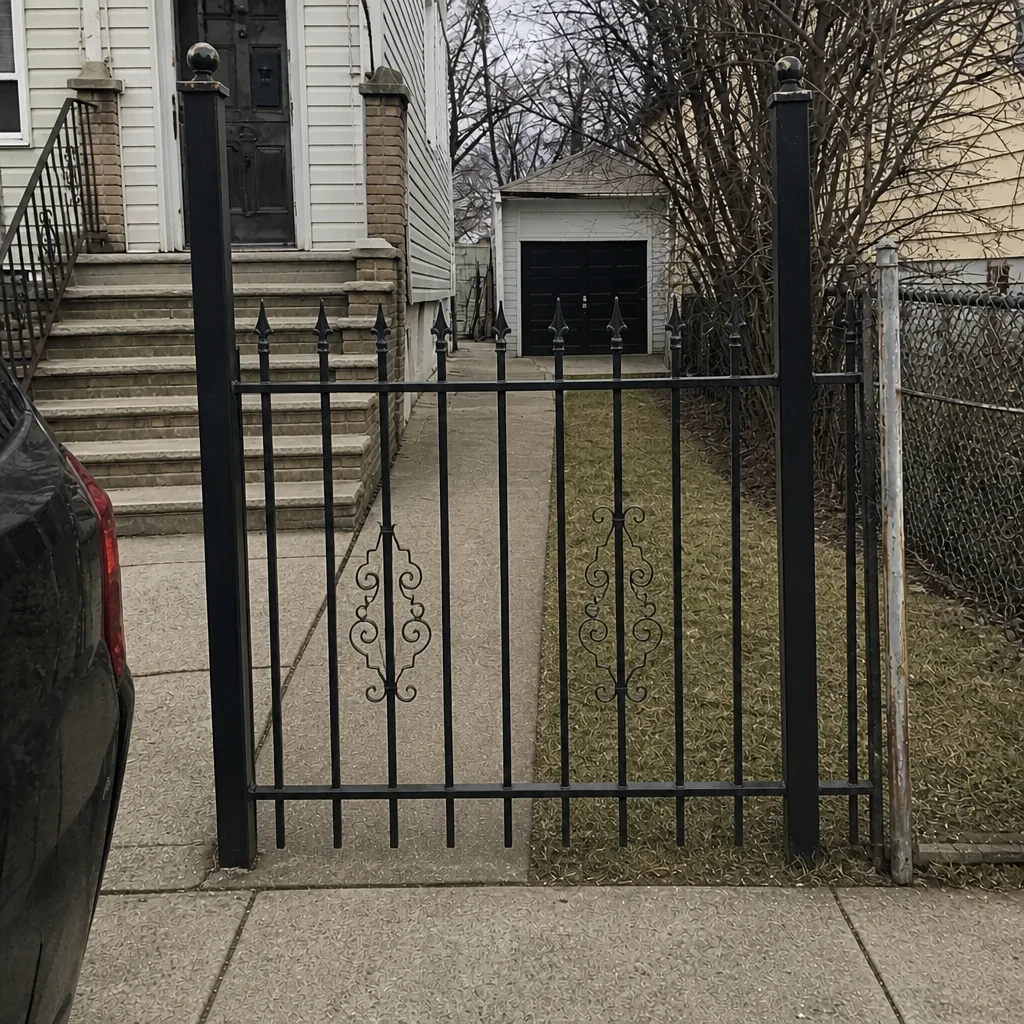
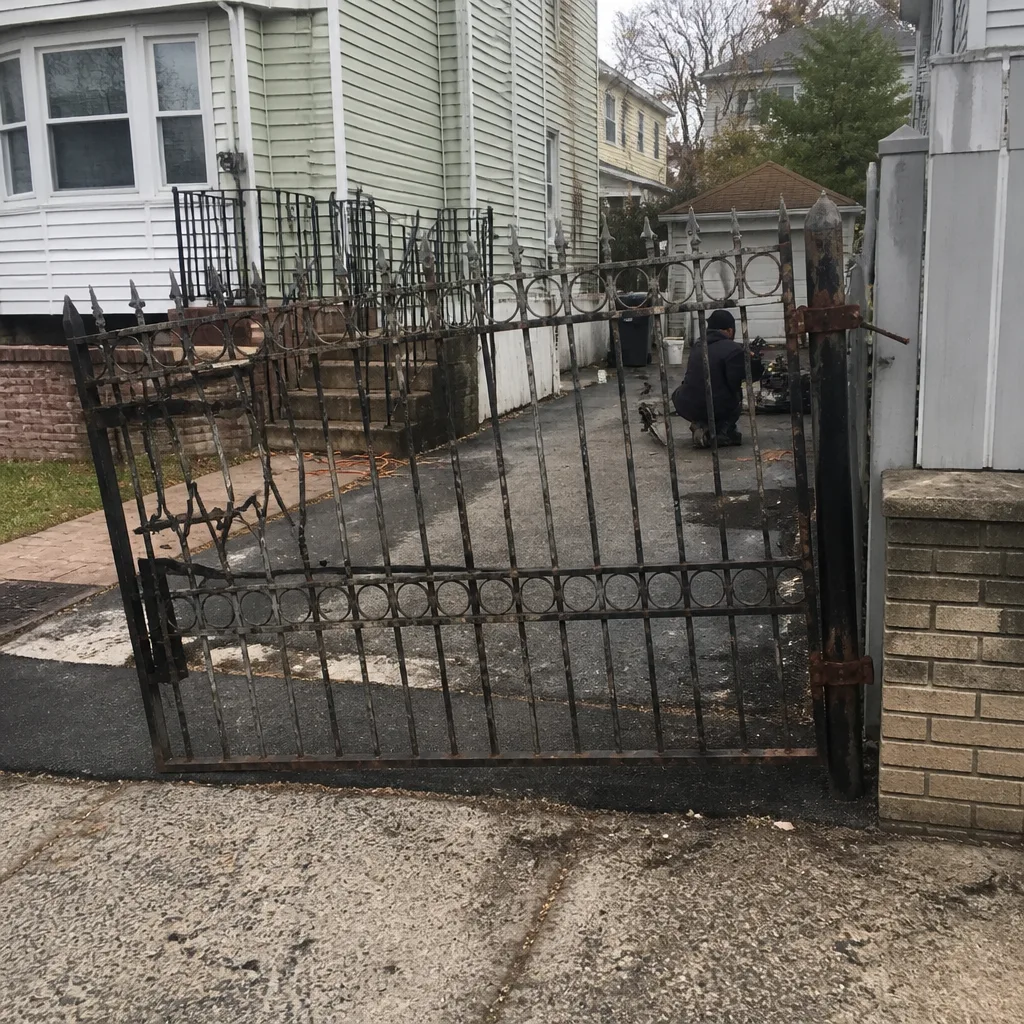
See the difference
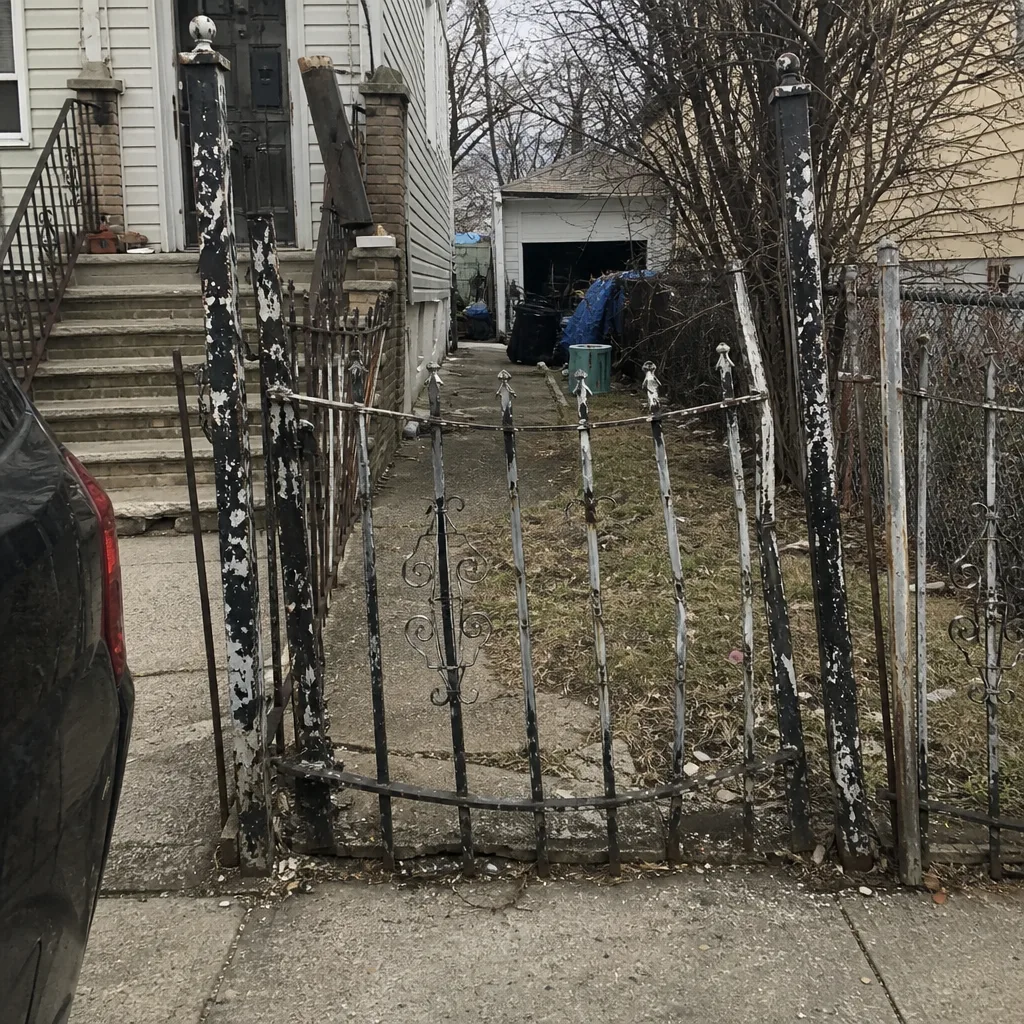 Before
 After
 Before
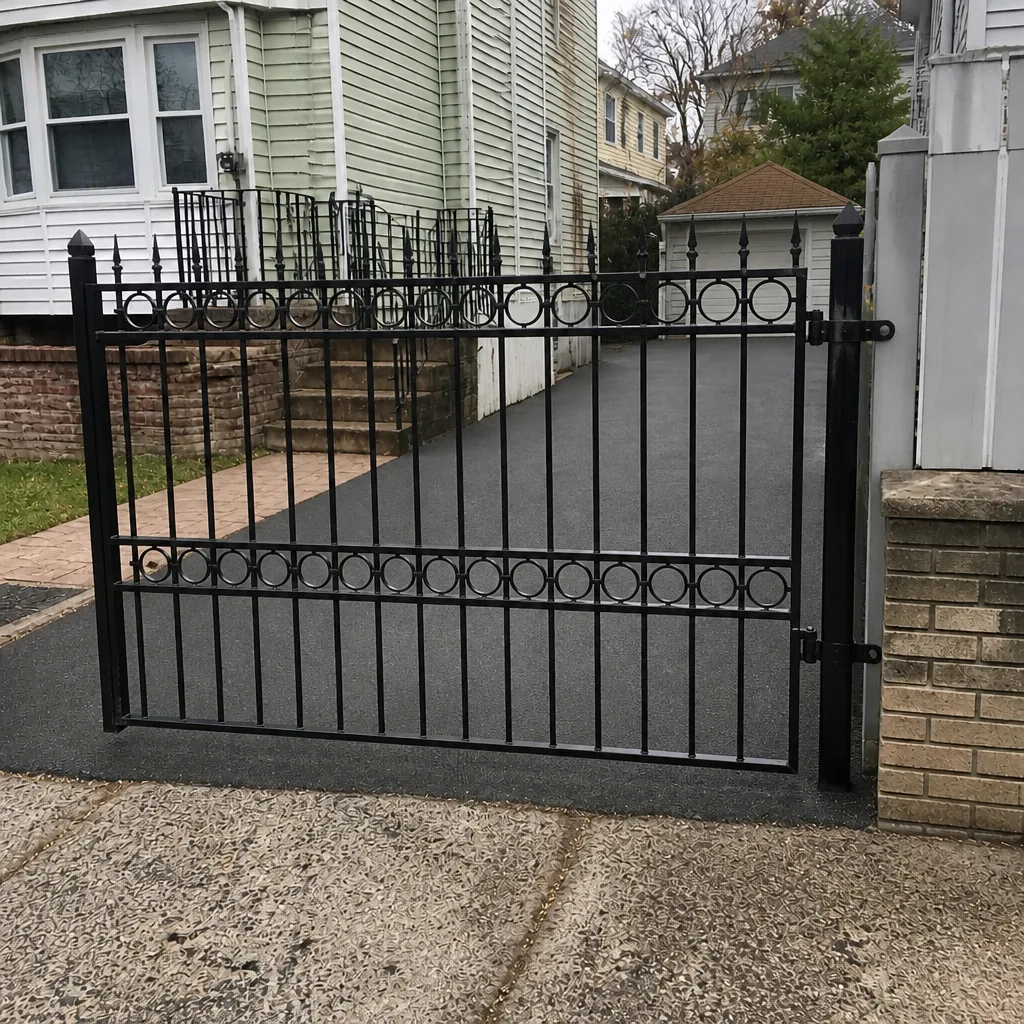 After
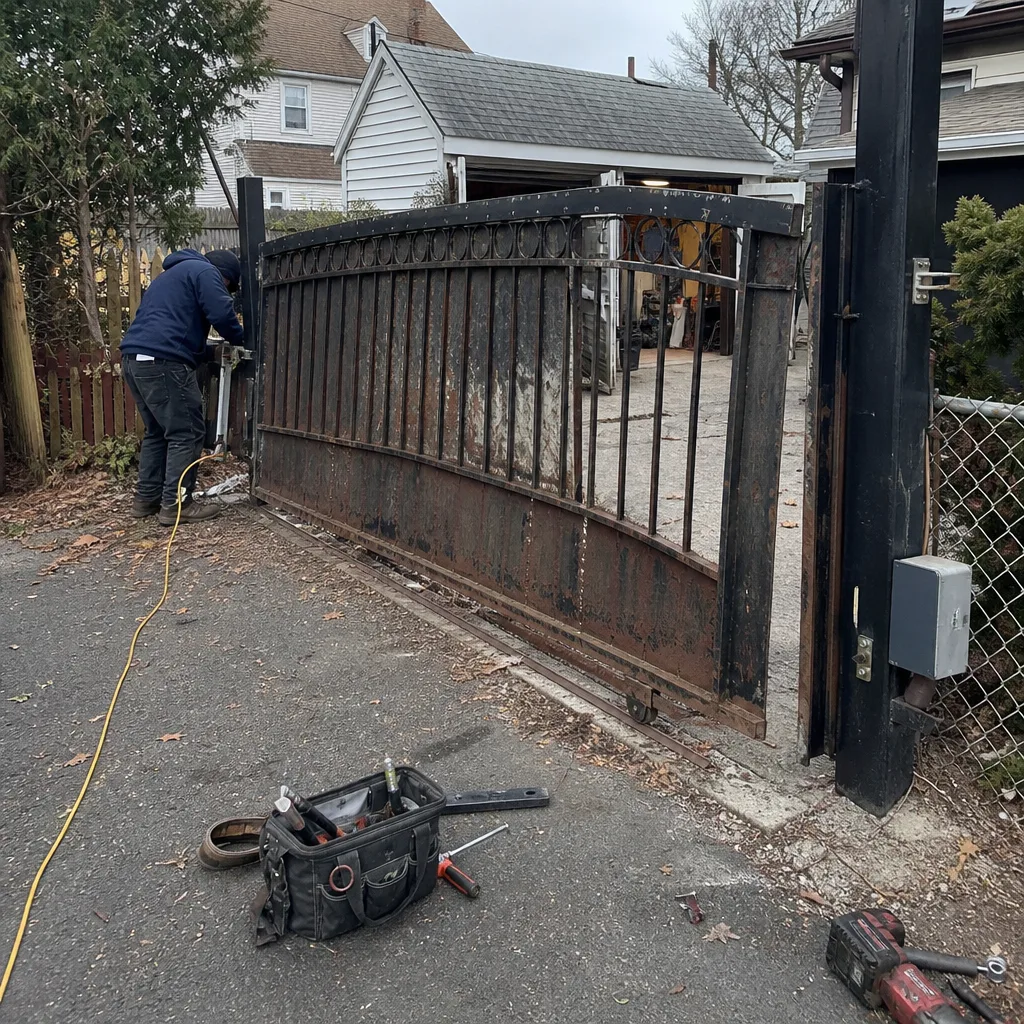 Before
 After
When to Call a Professional
You should call a professional when a gate problem goes beyond a simple visual check. Specific scenarios include: the manual release won’t operate, the gate moves erratically or reverses without warning, the control board shows error codes, the safety sensors fail a test, or the motor makes a grinding or straining noise. If the gate is completely dead, a specialist can diagnose whether the issue is a fuse, a battery, or a failed board. Any accidental damage, such as a car hitting the gate or a fallen branch, is also a professional job.
Call Gate Repair Newark for a free estimate in Newark. Our specialists handle diagnostic and repair work for all gate types. Call (833) 983-2324. We answer 24/7, and with fast dispatch from 7am to 7pm, we can get a technician to your property to assess the problem and get your gate back online.
Frequently Asked Questions
The location depends on the operator brand. It’s typically a key-operated lever or a mechanical handle on the motor arm or housing. Check the operator unit for a small keyhole or a release lever, and consult your owner’s manual for the exact procedure. If you can’t find it, our technicians can identify it for you during a visit.
First, try the manual release. If your release works, disengage the motor and open the gate by hand. If the release is jammed, do not force it. Call a gate repair specialist for assistance. We answer 24/7 and can dispatch a technician for fast dispatch from 7am to 7pm. A stuck gate can often be resolved on the first visit.
Battery backup is designed for short-term use, typically enough for several cycles, not continuous operation. Cold weather in Newark winters can shorten the effective life of a battery significantly. If the battery is old or already weak, it may fail after a single cycle. Test your battery regularly and replace it when it no longer holds a charge.
You can secure a gate safely with a heavy-duty ratchet strap or a chain and padlock anchored to a solid post. First, ensure the operator is off and, if possible, use the manual release to free the gate. Do not force the gate against a motor that is trying to hold it open, as that can damage the operator. For any structural damage, call a professional.
Have your operator brand and model, the gate type (swing or slide), and a clear description of the symptom. Also note your location and any access issues. This information helps the dispatcher and the technician prepare for the visit. Call (833) 983-2324 with these details ready.
Yes. We have experience with a broad range of operators, including LiftMaster, FAAC, BFT, Linear, Viking, Ghost Controls, DoorKing, Elite, and Mighty Mule. We diagnose the system in front of us, which matters for legacy and mixed-brand setups that other providers may turn away. If it opens and closes a gate, we service it.
The Bottom Line
Gate emergencies are predictable and preventable. The core of your plan is knowing your operator, testing your manual release, understanding your battery backup, and having a reference card posted where you can find it. The difference between a minor inconvenience and a real emergency is preparation. For any problem beyond a visual check, call a specialist who works on gates every day. If you need help with Newark gate repair, our team is ready to assist. Call (833) 983-2324 for a free estimate. We answer 24/7, with fast dispatch from 7am to 7pm.
Written by the team at Gate Repair Newark.